The 2026 Toyota bZ4X marks a significant evolution for Toyota’s electric SUV lineup, bringing meaningful improvements in range, charging speed, and overall driving experience. Since its 2022 debut, the bZ4X has aimed to deliver practical electric mobility, and the 2026 model year refines this promise with upgraded batteries, expanded charging networks, and noticeably better performance across the board. If you’re in the market for a spacious, family-friendly electric SUV with Toyota’s legendary reliability, the 2026 bZ4X deserves serious consideration.
Key Specifications at a Glance
Engine & Motor Options:
- Front-Wheel Drive: 168 hp (base XLE) or 221 hp (XLE Plus and Limited)
- All-Wheel Drive: 338 hp (dual motors)
Battery Capacity:
- 57.7 kWh (entry-level)
- 74.7 kWh (premium options)
Driving Range:
- FWD 57.7 kWh: 256 miles EPA estimated
- FWD 74.7 kWh: 314 miles EPA estimated
- AWD: 288 miles (XLE), 278 miles (Limited)
Transmission: Direct-drive automatic
Dimensions:
- Length: 184.6 inches
- Width: 73.2 inches
- Height: 65.0 inches
- Wheelbase: 112.2 inches
Boot Space: Approximately 28 cubic feet
Fuel Type: 100% Electric
Safety Rating: Toyota Safety Sense 3.0, 8 airbags, ABS, EBD, traction control
Starting MSRP: $34,900 (FWD XLE with smaller battery)
Exterior Design: Sharp, Modern, and Purpose-Driven
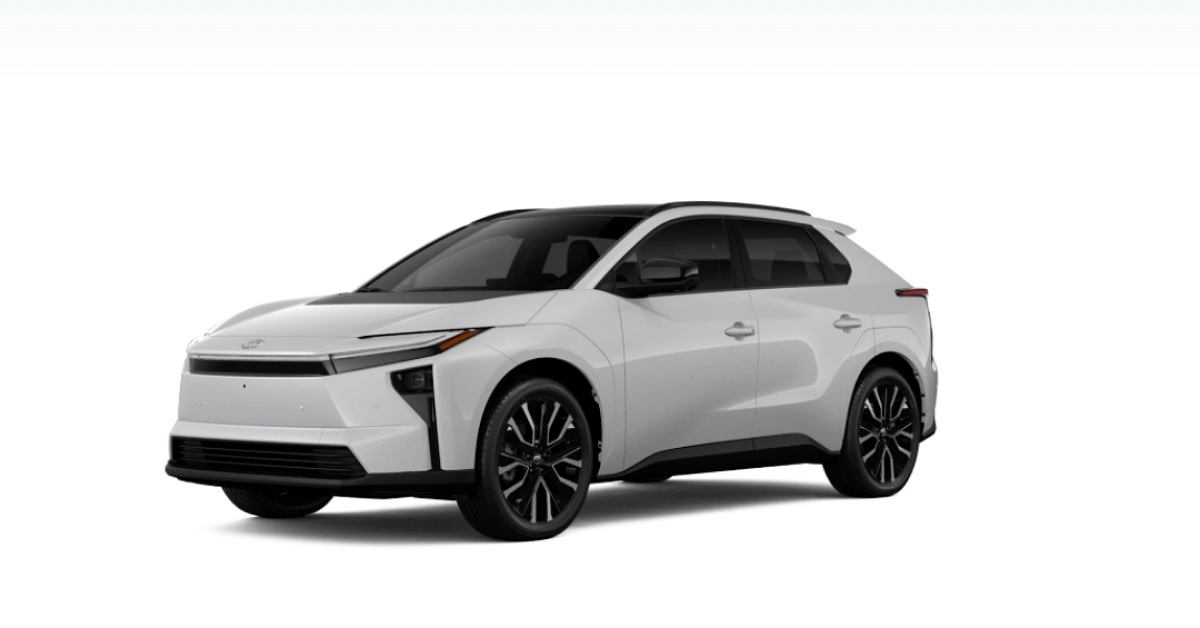
The 2026 bZ4X showcases a sleek, contemporary design that captures the essence of modern electric vehicles without sacrificing practicality. The front end features a fully closed grille—a hallmark of EVs—with slim LED headlights that convey sophistication. Below, horizontal accent lines and a lower front bumper with integrated air vents emphasize the car’s aerodynamic profile, which Toyota refined to optimize energy efficiency.
The sides are defined by muscular body lines and thick black wheel arches that run along the profile, giving the bZ4X a taller, commanding stance on the road. The optional 20-inch alloy wheels add an upscale touch, though even the standard wheels look contemporary and fit the vehicle’s proportions well. Toyota offers the bZ4X in a range of appealing colors, from classic Pearl White and Wind Chill Pearl to deeper, more personality-driven options like Magnetic Gray and Blueprint.
The rear design maintains visual balance with a clean deck lid and a ducktail spoiler that contributes both aesthetically and functionally to aerodynamic performance. Integrated LED taillights mirror the front design language, creating a cohesive look from bumper to bumper. Overall, the exterior presents an approachable yet premium appearance that doesn’t try too hard—it simply looks modern without being polarizing.
Interior Review: Premium Comfort Meets Practicality
Step inside the 2026 bZ4X, and you’ll immediately notice Toyota’s attention to quality. The cabin uses a mix of soft-touch materials, sustainable fabrics, and piano black accents that elevate the perceived value. The dashboard features a clean layout with a 12.3-inch touchscreen display that integrates seamlessly into the overall design without overwhelming the interior space.
The infotainment system supports Apple CarPlay and Android Auto, making smartphone integration straightforward and intuitive. Unlike some rivals, the bZ4X doesn’t over-complicate the interface—physical buttons for climate control remain, which many drivers appreciate. The wireless smartphone chargers (standard on higher trims) are conveniently located, and the system responds quickly to inputs.
Seats are well-padded and supportive, with available heated and ventilated options on the Limited trim—a genuine comfort feature for four-season driving. The driver’s seat offers adequate adjustability, and the steering wheel is leather-wrapped on most trims. Rear legroom is surprisingly generous for the class, providing comfortable space for adults on longer drives. The rear seats fold flat to reveal a 28-cubic-foot cargo area, perfect for groceries, luggage, or weekend gear.
Storage is thoughtfully distributed, with door pockets, an under-seat storage compartment, and an overhead console. The automatic climate control works efficiently, and the optional panoramic moonroof on the Limited trim enhances the sense of spaciousness. Ambient cabin lighting can be customized to your preference, creating a welcoming atmosphere. Overall, the interior strikes a nice balance between premium feel and practical functionality—you’re not paying for unnecessary frills, but you get genuine quality where it matters.
Performance & Driving Experience: Surprisingly Quick and Composed
The 2026 bZ4X’s driving dynamics represent a meaningful improvement over previous generations. The base FWD model with 168 horsepower accelerates adequately for everyday driving and merging on highways, though it’s not thrilling. However, step up to the XLE Plus or Limited with 221 horsepower, and the car feels noticeably quicker—0-60 mph arrives in approximately 7.5 seconds, which is respectable without being sport-car fast.
The real excitement comes with the all-wheel-drive version, which delivers 338 horsepower from dual motors and hits 60 mph in around 4.9 seconds. This transforms the bZ4X from practical family hauler into genuinely quick electric SUV. Even in everyday driving, the AWD’s added power feels rewarding when accelerating from a standstill or merging into fast-moving traffic.
Electric motors excel in delivering instant torque, and the bZ4X capitalizes on this trait. The direct-drive transmission (no gearshifts) creates smooth, linear acceleration without the gear-change interruption you’d feel in a traditional automatic. Regenerative braking is effective, allowing you to slow the vehicle using paddle shifters and recovering energy that would otherwise be wasted. Over time, one-pedal driving becomes second nature, reducing brake wear and extending brake fluid intervals.
The suspension strikes a solid balance between comfort and composed handling. On city streets, the bZ4X absorbs bumps with a soft, compliant motion that soaks up imperfections without excessive body roll. On highways, it settles into a stable, planted stance with minimal pitch and dive during acceleration and braking. The steering is responsive and weighted appropriately—it doesn’t feel artificially light or overly heavy. Cornering is composed, and the vehicle tracks straight without wandering, even in crosswinds.
Noise levels are impressively low, a major advantage of electric powertrains. Wind and road noise are well-controlled, thanks to strategic sound dampening materials. The overall driving experience feels refined and mature—not exciting in a thrilling sense, but confidently capable and thoroughly adult in its execution.
Features & Technology: Modern Without the Complexity
The 2026 bZ4X comes equipped with Toyota Safety Sense 3.0, which includes adaptive cruise control, pre-collision warning, lane-keeping assist, and automatic emergency braking. These systems work seamlessly without being intrusive or overly cautious, which frustrates some drivers in other vehicles. You can adjust sensitivity levels, and the systems generally stay out of your way until genuinely needed.
The 12.3-inch touchscreen is large enough to be functional without dominating the dashboard. Graphics are sharp and menus are organized logically—you won’t spend five minutes hunting for the climate control or radio settings. Wireless smartphone integration means you can leave your phone in your pocket and still access navigation, messaging, and music. The eight-speaker audio system provides decent fidelity, though audiophiles might want the optional JBL upgrade.
The digital instrument cluster displays driving mode (Eco, Normal, Sport), battery percentage, efficiency metrics, and estimated range. While range estimates can fluctuate—sometimes dramatically—most drivers quickly learn to interpret the data realistically. The 360-degree surround-view camera (available on higher trims) is genuinely useful for tight parking situations, displaying multiple angles simultaneously.
Convenience features include available ambient lighting with multiple color options, a power-adjustable panoramic moonroof, and push-button start. The dual-voltage charging cable (included) works with both 120V and 240V outlets, simplifying charging flexibility. For premium trim levels, heated rear seats and ventilated front seats make four-season driving genuinely comfortable.
Charging & Range: The Game-Changing Improvement
This is where the 2026 bZ4X truly shines. The major headline is the adoption of the NACS (North American Charging Standard) port, replacing the previous CCS1 connector. This shift grants access to Tesla’s extensive Supercharger network—over 25,000 additional plugs across North America. For many potential buyers, this single upgrade justifies considering the new model.
The 2026 bZ4X uses a 150 kW DC fast charger peak capability, enabling a 10% to 80% charge in approximately 30 minutes under ideal conditions. The new onboard AC charger is rated at 11 kW (up from 7.6 kW), meaning faster charging at home or public Level 2 chargers. Battery pre-conditioning—a system that optimizes battery temperature ahead of DC charging—is included on all models and can be activated automatically via navigation or manually through the Toyota app.
Real-world range on the smaller 57.7 kWh battery sits around 256 miles for FWD models, while the larger 74.7 kWh battery delivers up to 314 miles of EPA-estimated range. Previous bZ4X owners reported real-world figures of 227-250 miles, so the 2026 model’s improvements are genuine and not merely marketing fiction. Highway range is slightly lower than combined figures, but still respectable for the class.
The Plug & Charge capability—available at Tesla Superchargers and expanding to IONNA, ChargePoint, and EVgo—eliminates the need to register separately at each charging network. Simply plug in after one-time app enrollment, and charging initiates automatically. For the average American driver, this represents a meaningful quality-of-life improvement.
Real-World Mileage & Efficiency
EPA ratings claim up to 131 MPGe city for the FWD models, with 107 MPGe on the highway. The AWD version registers 112 MPGe city and 92 MPGe highway. Real-world efficiency depends heavily on driving style, climate, and road conditions. Eco mode prioritizes efficiency over responsiveness, recovering more energy through regenerative braking and limiting power output. Normal mode balances efficiency and performance, while Sport mode prioritizes acceleration at the cost of range.
Cold weather significantly impacts range—expect 10-15% losses in winter conditions. Highway driving at sustained 65+ mph speeds reduces range compared to city driving, where regenerative braking constantly recovers energy. Typical drivers report achieving 3.5-4.0 miles per kWh in mixed driving, which translates to approximately $0.03-0.04 per mile in electricity costs (depending on local rates). This represents substantial savings versus gasoline vehicles.
Charging time varies: a Level 1 charger (standard 120V outlet) requires 48+ hours for a full charge—impractical for daily use. A Level 2 charger (240V) takes 8-10 hours for a full charge, making overnight charging feasible for most households. DC fast charging via Superchargers or comparable networks provides 200-250 miles in 25-30 minutes, sufficient for road trips.
Safety Review: Toyota’s Proven Commitment
The bZ4X comes equipped with eight airbags, including frontal, side, and curtain bags for comprehensive occupant protection. The frame incorporates strategic crumple zones designed to absorb impact energy while preserving the cabin structure. ABS (anti-lock braking) and EBD (electronic brake force distribution) prevent wheel lockup during emergency braking, while traction control and stability control keep the wheels gripping in challenging conditions.
Toyota Safety Sense 3.0 includes adaptive cruise control, pre-collision warning, lane-keeping assist, automatic emergency braking, and road-sign assist. These systems generally operate without annoying false alerts—a quality that distinguishes Toyota systems from some competitors. However, NHTSA and IIHS safety ratings for the bZ4X are not yet finalized, though Toyota’s historical safety performance suggests strong results.
The battery is encased in a protective underbody structure that isolates it from collision forces, and high-voltage systems include multiple safety cutoffs designed to disconnect power in accident scenarios. Overall, the safety package is comprehensive and thoughtfully integrated.
Price & Trim Breakdown: Strong Value for the Segment
The 2026 bZ4X pricing starts at $34,900 for the base XLE with the smaller 57.7 kWh battery and front-wheel drive. Here’s the complete lineup:
- XLE FWD (57.7 kWh): $34,900 — Best for budget-conscious buyers prioritizing value
- XLE FWD (74.7 kWh): $37,900 — Adds 60 miles of range, recommended sweet spot
- XLE Plus FWD (74.7 kWh): $37,900 — Identical specs to XLE Plus trim
- XLE AWD (74.7 kWh): $39,900 — Dual-motor performance, improved winter capability
- Limited FWD (74.7 kWh): $43,300 — Premium interior, panoramic moonroof
- Limited AWD (74.7 kWh): $45,300 — Ultimate capability and features
Federal tax credits up to $7,500 may be available for qualified buyers, effectively reducing prices in the $27,400-$37,800 range depending on battery and drivetrain selection. Check current eligibility requirements, as they evolve based on battery sourcing and assembly location.
The XLE Plus FWD represents the best balance of cost and capability for most buyers, offering the larger battery’s improved range while avoiding the AWD premium. If winter driving is a regular concern, the XLE AWD provides meaningful traction advantages without stretching the budget excessively.
Pros: What Makes the bZ4X Worth Serious Consideration
The 2026 Toyota bZ4X delivers several genuine strengths. First, the new NACS charging standard and access to Tesla’s Supercharger network is transformative for long-distance travel confidence. Previously, bZ4X owners faced a patchwork of different charging networks; now, a single integrated solution covers most scenarios.
Second, the 25% range improvement over the 2025 model—reaching 314 miles on the larger battery—addresses a historical criticism. Most bZ4X owners can now comfortably complete daily commutes and weekend trips without constant anxiety about range.
Third, Toyota’s build quality and reliability reputation carries weight. The bZ4X benefits from Toyota’s engineering expertise and manufacturing standards. Resale value, warranty coverage, and dealer service networks provide genuine peace of mind compared to less-established brands.
Fourth, the interior materials and design emphasize quality without excess. You’re not paying for flashy tech theater; instead, you get substantive materials and logical controls that age well.
Fifth, the driving experience strikes an attractive middle ground. The bZ4X isn’t the quickest electric SUV, but it’s composed, refined, and genuinely pleasant over long distances. The AWD model’s 4.9-second 0-60 performance delivers surprising excitement at a reasonable price point.
Finally, the pricing is competitive, particularly after federal tax credits. The 2026 bZ4X undercuts the Hyundai Ioniq 5 and Volkswagen ID.4 on base pricing while offering comparable features and performance on similarly equipped models.
Cons: Areas Where the bZ4X Falls Short
Despite its strengths, the bZ4X has notable limitations. First, performance enthusiasts will find the FWD variants underwhelming—7.5+ seconds to 60 mph feels glacial compared to gas-powered rivals. Only the AWD model delivers genuinely quick acceleration, but it comes with a premium.
Second, the cargo area, while adequate, lags behind some competitors. The bZ4X offers 28 cubic feet compared to the Volkswagen ID.4’s impressive 40+ cubic feet. If maximum cargo flexibility is essential, competitors offer more flexibility.
Third, highway range remains a consideration. While 314 miles sounds impressive in spec sheets, real-world highway driving at 70+ mph consistently returned 250-280 miles before range anxiety sets in. This is acceptable for most trips but requires planning on extended cross-country drives.
Fourth, the 11 kW onboard charger, while improved, still trails competitors like the Hyundai Ioniq 5 (11 kW) and Volkswagen ID.4 (11 kW) that offer comparable rates. For home charging scenarios, the difference is academic, but it matters in commercial Level 2 charging networks.
Fifth, infotainment responsiveness, while acceptable, occasionally feels slightly sluggish compared to the Ioniq 5’s faster-responding system. The interface isn’t intuitive for all users, particularly those expecting smartphone-like responsiveness.
Sixth, the Nightshade trim appears to be discontinued or unavailable on certain configurations in the 2026 model year, limiting mid-range options for buyers seeking aggressive styling without the full Limited trim premium.
Finally, driving range estimates fluctuate dramatically, sometimes dropping 30-50 miles unexpectedly during a single trip. While this reflects all EVs to some degree, the bZ4X’s estimates seem more volatile than competitor systems.
Competitors Comparison: How the bZ4X Stacks Up
| Specification | 2026 bZ4X XLE Plus | Hyundai Ioniq 5 SE | Volkswagen ID.4 Standard |
|---|---|---|---|
| Starting Price | $37,900 | $43,750 | $38,995 |
| EPA Range (FWD) | 314 miles | 303 miles | 275 miles |
| Horsepower (FWD) | 221 hp | 225 hp | 201 hp |
| 0-60 Time (FWD) | ~7.5 seconds | ~7.4 seconds | ~8.0 seconds |
| DC Fast Charge (10-80%) | ~30 minutes | ~18 minutes | ~30 minutes |
| Onboard AC Charger | 11 kW | 11 kW | 11 kW |
| Cargo Volume | 28 cu ft | 27.2 cu ft | 40.3 cu ft |
| Warranty | 3yr/36k | 5yr/60k | 3yr/36k |
| Infotainment | 12.3″ touchscreen | 12.3″ touchscreen | 12″ touchscreen |
What This Means for Buyers:
The Hyundai Ioniq 5 edges the bZ4X in charging speed and warranty coverage, though at a higher starting price. The Ioniq 5 also offers more sophisticated infotainment and a sportier driving character. However, the bZ4X undercuts on price while offering comparable range and range practicality through NACS/Supercharger access.
The Volkswagen ID.4 emphasizes cargo volume and established brand heritage but offers less range than the bZ4X’s smaller battery. The ID.4 appeals more to buyers prioritizing practicality over performance or range.
For most buyers, the bZ4X represents the best balance of price, range, charging infrastructure access, and Toyota reliability. The Ioniq 5 is the performance-oriented choice, while the ID.4 suits cargo-prioritizing shoppers.
Final Verdict: Should You Buy the 2026 bZ4X?
The 2026 Toyota bZ4X is genuinely worth serious consideration if you value reliability, practical charging accessibility, and solid all-around capability. The NACS charging standard is transformative—it fundamentally resolves the previous model’s Achilles heel and makes road trips genuinely feasible for most drivers.
The 314-mile range on the larger battery addresses historical range anxiety, while the improved power delivery—particularly in the AWD variant—makes daily driving feel satisfying rather than compromised. The price point, especially after federal tax credits, represents authentic value in an increasingly crowded electric SUV segment.
This car is ideal for: Families seeking a practical electric SUV with strong reliability pedigree, buyers confident in home charging infrastructure, and those who value Toyota’s proven ownership experience over cutting-edge infotainment systems or extreme performance.
Skip the bZ4X if: You prioritize maximum cargo volume (ID.4 wins), seek the quickest acceleration in its class (Ioniq 5 wins), or demand the latest and most responsive infotainment technology.
Best value recommendation: The XLE Plus FWD at $37,900 (or $30,400 after the $7,500 tax credit) offers the perfect balance of capability, range, and affordability. The jump to Limited adds convenience features and an upscale interior but isn’t essential for most buyers. The AWD is worthwhile if winter driving is regular and budget allows.
The 2026 Toyota bZ4X delivers meaningful improvements that address previous criticisms while maintaining Toyota’s commitment to quality, reliability, and understated sophistication. It’s not the flashiest or quickest electric SUV, but it’s the most sensible choice for buyers prioritizing practicality, value, and proven dependability over maximalist performance or prestige branding.
What do you think about the 2026 Toyota bZ4X? Are you considering making the switch to electric, or does this SUV address your primary concerns about EV adoption? Share your thoughts in the comments below—we’d love to hear from current owners and potential buyers alike!
Frequently Asked Questions About the 2026 Toyota bZ4X
Is the 2026 bZ4X good for family use?
Absolutely. The spacious interior provides comfortable seating for five passengers, and the convenient charging infrastructure (particularly with NACS access) makes daily commuting and weekend trips stress-free. The comprehensive safety features and stable driving dynamics make it ideal for families.
What is the real-world mileage of the bZ4X?
EPA ratings claim 314 miles for the larger battery on FWD models, though real-world highway driving typically returns 250-280 miles before range concerns emerge. Mixed city/highway driving achieves closer to the EPA estimates under normal conditions.
What is the maintenance cost for the bZ4X?
Electric vehicles require significantly less maintenance than traditional gas cars—no oil changes, transmission fluid, spark plugs, or timing belts. Brake fluid checks, tire rotations, and cabin air filters are the primary maintenance items. Estimated annual maintenance costs are 40-50% lower than gas vehicles, approximately $150-250 annually.
How long does it take to charge the 2026 bZ4X?
Level 1 (120V outlet): 48+ hours for full charge. Level 2 (240V home charger): 8-10 hours for full charge. DC fast chargers (Supercharger): 25-30 minutes to reach 80% battery capacity.
Can I use Tesla Superchargers with the 2026 bZ4X?
Yes. The 2026 bZ4X features the NACS charging inlet, which is Tesla-compatible. Over 25,000 Tesla Supercharger plugs are now accessible to bZ4X drivers across North America.
Is the AWD worth the extra cost?
For mild climates, the FWD performs adequately. However, if winter driving is regular, the AWD’s improved traction and the 338-horsepower dual-motor setup deliver meaningful advantages. The $2,000-$8,000 premium is justified for snowy regions.
How does the bZ4X compare to the older 2025 model?
The 2026 model offers 25% better range, upgraded NACS charging infrastructure (vs. CCS), a 3,400-pound increase in gross vehicle weight capacity, slightly better 0-60 times on the AWD (4.9 seconds vs. 5.1 seconds), and improved overall refinement. It’s a worthwhile upgrade if considering new purchase.