Discover the complete 2025 RAV4 Plug-in Hybrid review—explore its 302 hp performance, 42-mile electric range, 94 MPGe efficiency, features, safety, and real user experience. Find out if it’s the right SUV for you.
Introduction
The 2025 Toyota RAV4 Plug-in Hybrid (also known as the RAV4 Prime) represents one of the most impressive entries into America’s growing plug-in hybrid market. With a commanding 302 horsepower hybrid system, an impressive 42-mile all-electric driving range, and a striking 94 MPGe efficiency rating, this midsize crossover SUV challenges the notion that electrified vehicles must sacrifice performance or practicality. Launched to bridge the gap between traditional hybrids and fully electric vehicles, the RAV4 Plug-in Hybrid delivers a compelling combination of power, efficiency, and versatility. Whether you’re a daily commuter seeking to minimize fuel stops or an outdoor enthusiast who wants the freedom of long-distance travel, the 2025 RAV4 Plug-in Hybrid offers a sophisticated solution that checks multiple boxes. Let’s explore what makes this vehicle one of Toyota’s most talked-about SUVs in 2025.
Key Specifications Overview
Engine: 2.5L 4-Cylinder Hybrid with Dual Electric Motors
Combined System Power: 302 net horsepower
Torque: 165 lb-ft (gas engine) + electric motors
Transmission: 2-Speed CVT (Continuously Variable Transmission)
Drive Type: All-Wheel Drive (Standard)
All-Electric Range: 42 miles (estimated)
Battery Capacity: 18 kWh
Combined Fuel Economy: 94 MPGe (electric equivalent)
Gas-Only MPG: 38 combined
Towing Capacity: 1,500 lbs
Seating Capacity: 5 passengers
Cargo Space: 37.6 cubic feet (rear seats up) / 69.8 cubic feet (rear seats folded)
Fuel Tank: 14.5 gallons
Charging Time: Approximately 4.5 hours (level 2 charger)
Starting MSRP: $43,865 (SE trim)
Available Trims: SE, XSE
Exterior Design Review
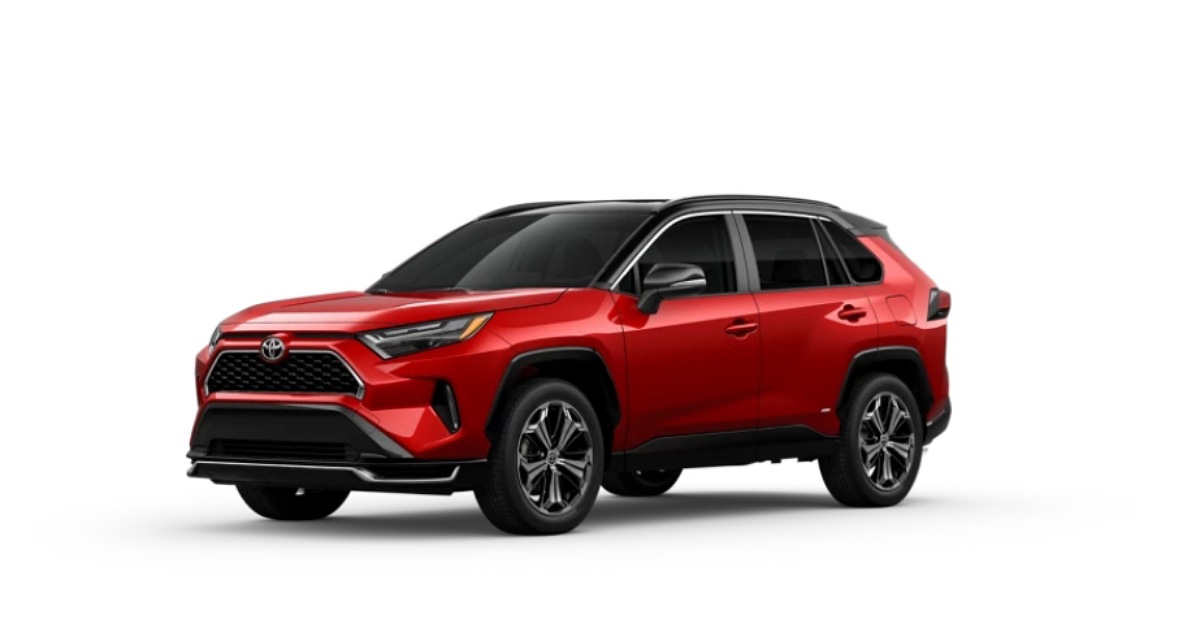
The 2025 RAV4 Plug-in Hybrid maintains Toyota’s signature chiseled aesthetic while adding touches that hint at its electrified nature. The front fascia strikes an aggressive stance with refined LED headlights and daytime running lights that create an energetic first impression. The hood features pronounced contours, giving the vehicle a muscular appearance that immediately distinguishes it from the standard RAV4 lineup.
The body lines are crisp and purposeful, flowing seamlessly from the front quarter panels to the rear. The all-wheel-drive system is evident in the slightly elevated ride height and wider stance compared to front-wheel-drive competitors. Available alloy wheel designs range from practical 18-inch designs to more aggressive multi-spoke options that enhance curb appeal on the XSE trim.
Build quality throughout feels solid, with tight panel gaps and consistent paint application across all available colors. The 2025 model year offers eight color choices, including Blueprint, Ice Cap, Magnetic Gray Metallic, Midnight Black Metallic, Silver Sky Metallic, Supersonic Red, and Wind Chill Pearl—most available with a Midnight Black Metallic two-tone roof option for added visual interest. The available power liftgate and panoramic glass roof options create an upscale exterior presentation that rivals luxury brands in this segment.
Interior Review
Step inside the RAV4 Plug-in Hybrid, and you’re immediately struck by the thoughtful cabin design that balances functionality with refinement. The dashboard layout is intuitive, with controls logically positioned for driver accessibility. The available 10.5-inch touchscreen dominates the upper center console, offering crisp graphics and responsive performance for infotainment tasks. Standard 8-inch displays on SE trims provide adequate functionality, though stepping to the XSE for the larger screen is well worth the investment.
The front bucket seats offer decent support for daily commuting, with the SE trim featuring manual adjustment and the XSE upgrading to power-adjustable seats with lumbar support. The available heated and ventilated front seats, along with the leather-wrapped steering wheel, add premium touches that enhance the driving experience during extended journeys. Rear seat passengers enjoy 37.8 inches of legroom and 38.2 inches of headroom, making this vehicle comfortable for five-person road trips. However, some owners have noted that the standard cushioning could be slightly more generous for ultra-long drives—adding an aftermarket seat pad might be worth considering if you frequently take 8+ hour journeys.
Storage is abundant, with front door bins, rear beverage holders, and an overhead console providing practical places for personal items. The cabin features quality materials throughout, with soft-touch plastics on upper surfaces and durable materials on high-contact areas. Climate control comes as standard dual-zone automatic air conditioning, allowing driver and passenger to set independent temperatures—a feature that really shines on long road trips. Wind and road noise isolation is impressive, creating a refined atmosphere that makes highway driving feel less fatiguing than competitor vehicles in the same price range.
Performance & Driving Experience
Here’s where the 2025 RAV4 Plug-in Hybrid truly impresses. The combined 302 horsepower system delivers quick acceleration that catches many drivers off guard for an SUV in this category. The 0-60 mph time hovers around 5.7 seconds—genuinely quick for a family-focused crossover and significantly better than traditional RAV4 variants. That instantaneous electric motor torque provides immediate response off the line, making city driving and highway merging feel effortless.
In all-electric mode (EV mode), the RAV4 Plug-in Hybrid operates almost silently, with only tire noise and wind resistance present. The electric-only driving experience is refined, offering smooth acceleration and responsive regenerative braking that captures energy during deceleration. For drivers with short commutes—under 42 miles daily—this means potentially weeks of driving on gasoline engine support alone, significantly reducing fuel costs and environmental impact.
When the gas engine engages (either automatically when the battery depletes or when driving aggressively), the transition is seamless. The engine operates quietly for a 2.5-liter design, though aggressive acceleration does produce some familiar four-cylinder noise. The continuously variable transmission eliminates traditional gear hunting, providing smooth power delivery across the entire rev range.
City driving is where this vehicle excels. The responsive steering feels alive compared to some competitors, and the compact dimensions (just 182.3 inches long) make parking and maneuvering through tight spaces straightforward. Highway performance is equally composed, with the adaptive suspension handling road imperfections well. However, it’s worth noting that handling is tuned more for comfort than sporting dynamics—don’t expect this to carve through mountain roads like a performance-oriented crossover. Body roll is noticeable during aggressive cornering, and the steering feel becomes somewhat vague at higher speeds, preferring stability and isolation over driver feedback.
The braking system is adequate but not exceptional. The brake pedal feel is somewhat soft, and emergency stopping distances from 70 mph are slightly longer than some competitors. This isn’t a safety concern—it simply reflects Toyota’s priority on ride comfort over sport-oriented performance characteristics.
Features & Technology
The 2025 RAV4 Plug-in Hybrid comes loaded with technology designed for modern connectivity and convenience. The standard infotainment system includes both Apple CarPlay and Android Auto wireless connectivity, allowing seamless smartphone integration. Navigation comes standard on higher trims, with turn-by-turn guidance displayed on the touchscreen or optional head-up display.
The available JBL premium audio system delivers impressive sound quality with clear dialogue and impactful bass response—a worthwhile upgrade if you spend significant time driving. Wireless smartphone charging (Qi-compatible) keeps devices powered throughout the day, eliminating the frustration of dead batteries mid-journey.
Advanced driver assistance features come through Toyota Safety Sense 3.0, which includes Pre-Collision System with pedestrian detection, Lane Departure Alert with steering assist, adaptive cruise control that maintains safe following distances, and automatic high-beam operation. These features work together to reduce driver fatigue during extended highway driving and provide an extra safety net in emergency situations.
The digital gauge cluster (standard on higher trims, available on SE) displays 12.3 inches of information, presenting driving modes, battery charge status, electric range remaining, and efficiency metrics. This real-time feedback helps drivers optimize their driving patterns to maximize electric range.
Climate features like available heated rear outboard seats and heated steering wheel prove invaluable in cold-weather climates, keeping all passengers comfortable during winter months. The available panoramic glass roof creates an airy cabin ambiance that passengers genuinely appreciate.
Safety Review
Toyota Safety Sense 3.0 represents one of the comprehensive driver assistance packages available in the compact SUV segment. The Pre-Collision System uses both radar and camera sensors to detect potential collision threats ahead and automatically applies braking if the driver doesn’t respond. Pedestrian detection extends this capability to urban driving scenarios where pedestrians are common.
The standard package includes eight airbags positioned strategically throughout the cabin—dual front, front side, front knee, and overhead curtain airbags that protect occupants in frontal, side-impact, and roll-over scenarios. The frame structure itself incorporates advanced safety cell design that absorbs impact energy while maintaining cabin integrity.
Stability control, traction control, and ABS braking work together to help maintain control during emergency maneuvers or slippery road conditions. The available rear cross-traffic alert warns drivers of approaching vehicles when backing up, and blind spot monitoring alerts occupants to vehicles in traditionally difficult-to-see areas.
Toyota’s warranty coverage for the hybrid system includes 10-year/150,000-mile protection on the traction battery—an important consideration given the vehicle’s plug-in hybrid nature. This extensive coverage reflects Toyota’s confidence in their electrified components’ reliability. The bumper-to-bumper warranty covers 3 years/36,000 miles, with powertrain coverage extending to 5 years/60,000 miles.
Safety-oriented buyers should note that the RAV4 Plug-in Hybrid hasn’t received NHTSA or IIHS ratings specific to this model year, though the platform shares structure with extensively tested standard RAV4 variants that earned high marks.
Fuel Efficiency & Electric Range
The 2025 RAV4 Plug-in Hybrid stands out dramatically in efficiency metrics. The EPA-estimated 94 MPGe rating represents outstanding efficiency when operating in electric mode or with combined gas-and-electric driving. For context, this means the vehicle delivers the equivalent of 94 miles per gallon when considering electric energy consumption.
The 42-mile all-electric driving range means that many American commuters—whose average daily drive hovers around 40 miles—could commute on electric power alone, driving weeks between gas engine usage. This translates to dramatic fuel cost reductions: at national average electricity rates around $0.15 per kWh, charging from empty costs approximately $2.70. Compared to gasoline at $3.50 per gallon, the cost-per-mile advantage is substantial.
When operating on gasoline alone, the vehicle achieves 38 combined MPG—respectable for a 302 hp SUV, though not exceptional. Real-world combined driving (mixing electric and gas operation) typically yields efficiency in the 50-60 MPGe range for drivers without consistent charging access, still meaningfully better than comparable gas-only RAV4 variants.
Charging from empty on a Level 2 home charger takes approximately 4.5 hours—perfectly suited for overnight charging. Public Level 3 DC fast chargers can replenish significant battery capacity in 20-30 minutes, making road trip charging feasible during lunch breaks. For comparison, the gas-only RAV4 offers 28 combined mpg, making the plug-in hybrid’s efficiency advantage substantial over the vehicle’s lifetime.
Price & Variant Details
The 2025 RAV4 Plug-in Hybrid launches at $43,865 for the SE trim, positioning it as a premium option within the compact SUV segment. The XSE trim, with enhanced features and technology, carries an MSRP starting around $46,900 (exact pricing varies by market and dealer).
SE Trim ($43,865 starting MSRP) includes:
- 2.5L hybrid powertrain with 302 hp
- All-wheel drive standard
- 18-inch alloy wheels
- 8-inch touchscreen
- Apple CarPlay/Android Auto
- Toyota Safety Sense 3.0
- Dual-zone automatic climate control
- Cruise control and adaptive cruise control
- Remote keyless entry with push-button start
- Blind spot monitoring
XSE Trim (approximately $46,900 MSRP) adds:
- 10.5-inch touchscreen
- Wireless Apple CarPlay/Android Auto
- Synthetic leather upholstery
- Wireless smartphone charging
- Available JBL premium audio system
- Heated front seats option
- More premium interior materials
- Additional convenience features
The price difference between SE and XSE trims justifies the upgrade through enhanced comfort and technology—particularly the larger touchscreen, which improves infotainment usability during daily driving. However, both trims represent a significant premium over standard RAV4 variants ($28,850-$37,155), reflecting the sophisticated plug-in hybrid technology, additional electric motors, and substantial battery pack.
Pros & Cons
Pros:
- Exceptional Fuel Efficiency: 94 MPGe rating and 42-mile electric range mean minimal fuel consumption for many drivers, particularly commuters with short daily drives.
- Strong Performance: 302 horsepower delivers genuine acceleration (0-60 in 5.7 seconds) that feels quick for an SUV, especially when operating in full-power hybrid mode.
- Spacious Interior: Five-passenger seating with 69.8 cubic feet of cargo space accommodates families and road trips with ease.
- Comprehensive Safety: Toyota Safety Sense 3.0 includes useful driver assistance features, and the 10-year/150,000-mile battery warranty provides exceptional peace of mind.
- Quiet Electric Operation: All-electric driving provides serene cabin ambiance ideal for urban commuting and early morning/late evening drives.
- Practical Design: The all-wheel-drive system, adequate ground clearance, and traction management make winter and light off-road driving manageable.
- Refined Handling: While comfort-focused rather than sport-oriented, the suspension isolates road noise effectively and provides stable highway cruising.
Cons:
- Premium Pricing: Starting at $43,865, the RAV4 Plug-in Hybrid commands a significant premium over standard RAV4 variants and some competitor plug-in hybrids.
- Limited Electric Range: The 42-mile all-electric range requires frequent charging for daily commutes exceeding 50 miles and doesn’t enable true all-electric highway touring.
- Lackluster Handling Dynamics: Body roll during cornering and vague high-speed steering reveal this vehicle prioritizes comfort over driving engagement.
- Soft Brake Feel: Braking performance lacks the responsive feedback some drivers prefer, and emergency stopping distances exceed some competitor benchmarks.
- Front Seat Comfort Issues: The standard seat cushioning could be more generous for ultra-long drives—some owners report leg numbness after 3-4 hours of continuous driving.
- Complex Charging Infrastructure: Maximizing efficiency benefits requires reliable access to Level 2 charging at home or work—without this, you’re essentially driving an economical hybrid.
- Modest Cargo Space Behind Rear Seats: With rear seats up, cargo capacity drops to just 37.6 cubic feet, limiting weekend trip versatility.
Competitors Comparison
| Feature | 2025 RAV4 Plug-in Hybrid | 2025 Jeep Wrangler 4xe | 2025 Honda CR-V Hybrid |
|---|---|---|---|
| Starting Price | $43,865 | Similar (varies) | Approximately $36,000 |
| Combined Horsepower | 302 hp | 375 hp (off-road capable) | 204 hp (hybrid only) |
| All-Electric Range | 42 miles | 22 miles | 0 miles (traditional hybrid) |
| EPA Efficiency (Electric) | 94 MPGe | Lower (fewer EV miles) | 40 MPG combined |
| Driving Experience | Comfort-focused | Off-road oriented | Balanced efficiency/comfort |
| Fuel Tank Capacity | 14.5 gallons | Similar | 14 gallons |
| Towing Capacity | 1,500 lbs | 3,500+ lbs (4xe more capable) | 1,000 lbs |
| AWD System | Standard | Standard (true off-road) | Available |
| Cargo Space | 69.8 cu ft (seats folded) | Less cargo-focused | 74.3 cu ft (seats folded) |
| Best For | Daily commuters seeking efficiency | Off-road enthusiasts | Fuel-economy focused buyers |
The Jeep Wrangler 4xe offers greater off-road capability and higher overall power output but delivers only 22 miles of all-electric range, making it less practical for daily electric commuting. The Honda CR-V Hybrid provides excellent fuel efficiency (40 MPG) at a lower price point but lacks plug-in hybrid capability, meaning you can’t drive electrically for short trips. The RAV4 Plug-in Hybrid occupies the middle ground—better all-electric range than the Jeep, more powerful and practical than the Honda hybrid, and representing a balanced approach for buyers wanting both efficiency and performance.
Final Verdict
Is the RAV4 Plug-in Hybrid Worth Buying?
The 2025 Toyota RAV4 Plug-in Hybrid represents an excellent choice for a specific buyer profile: someone who values efficiency, appreciates strong performance, and has reliable charging access. This vehicle genuinely excels for daily commuters with drives under 50 miles, offering the potential to operate almost entirely on electricity while maintaining the range security that full electric vehicles can’t provide.
The $43,865 starting price isn’t budget-friendly, but it reflects sophisticated technology, proven Toyota reliability (including an exceptional 10-year/150,000-mile battery warranty), and a compelling blend of efficiency and performance. For buyers who plan 5+ year ownership and drive 12,000-15,000 miles annually, the fuel savings alone can offset the price premium compared to standard RAV4 variants.
Best For:
- Urban and suburban commuters with 25-40 mile daily drives
- Buyers with home or workplace Level 2 charging access
- Families prioritizing fuel efficiency without sacrificing performance
- Environmentally conscious drivers seeking genuine emissions reduction
- Tech enthusiasts appreciating Toyota’s safety and infotainment features
Should You Buy It or Skip It?
Purchase the RAV4 Plug-in Hybrid if you have consistent charging access, appreciate advanced technology, and want to significantly reduce fuel expenses while enjoying spirited acceleration. Skip it if your commute exceeds 60 miles daily without charging access, you prioritize sport handling dynamics, or you need maximum cargo flexibility. For buyers without those specific needs but seeking solid SUV value, the standard gas-only RAV4 or even the Honda CR-V Hybrid might better match your priorities.
Frequently Asked Questions
Is the 2025 RAV4 Plug-in Hybrid good for families?
Absolutely. The five-seat configuration accommodates families, generous cargo space (69.8 cubic feet with rear seats folded) handles weekend trips, and comprehensive safety features including 8 airbags and Toyota Safety Sense 3.0 provide confidence for family road trips. The quiet electric operation also means less cabin noise during long drives with children. However, some families report that front seat cushioning could be more generous for multi-hour journeys, so adding an aftermarket seat pad might enhance comfort.
What is the real-world mileage for the 2025 RAV4 Plug-in Hybrid?
Real-world efficiency depends heavily on driving patterns and charging access. For drivers with consistent home charging and commutes under 50 miles daily, 70-90 MPGe is realistic. Mixed driving (combining electric and gas operation) typically yields 40-60 MPGe. Drivers without regular charging access will see 35-40 MPG (gas only), making the plug-in hybrid advantage diminished.
What is the maintenance cost compared to a standard RAV4?
Maintenance costs are comparable to standard RAV4 variants for routine items like oil changes, filter replacements, and tire rotations. The hybrid system adds no significant maintenance burden—regenerative braking means brake pads last longer than conventional vehicles. The traction battery warranty (10 years/150,000 miles) covers any potential battery issues, providing exceptional peace of mind.
How long does charging take, and what do I need at home?
Level 2 charging (the most practical home solution) takes approximately 4.5 hours from completely empty. You’ll need to install a 240-volt charger at your residence—most installations cost $500-$2,500 depending on electrical infrastructure. Level 3 DC fast chargers at public stations can replenish 80% capacity in 20-30 minutes, making road trip charging feasible.
Is the RAV4 Plug-in Hybrid worth the premium over the standard RAV4?
For drivers with daily commutes under 50 miles and home charging access, absolutely. The fuel savings alone (essentially free daily commuting on electricity) can offset the $15,000+ price premium over 5-7 years. For buyers without reliable charging access, the standard RAV4 offers better value—you’re essentially paying for hybrid efficiency you won’t fully utilize.
What’s the difference between RAV4 Plug-in Hybrid and RAV4 Hybrid?
The plug-in hybrid has a larger battery (18 kWh), can drive up to 42 miles on electricity alone, charges externally, and produces 302 horsepower. The standard hybrid has a smaller battery, can’t drive on electricity only, relies on regenerative braking for charging, and produces 219 horsepower. Choose the plug-in hybrid if you have charging access and want all-electric capability; choose the standard hybrid if you want better fuel economy without charging requirements.
Call to Action
The 2025 Toyota RAV4 Plug-in Hybrid represents a mature, practical approach to electrified driving that genuinely delivers on efficiency promises without compromising practicality. Whether this vehicle aligns with your lifestyle depends on your daily driving patterns, charging access, and priorities—but for the right buyer, it’s a compelling choice.
Have you test-driven the 2025 RAV4 Plug-in Hybrid, or are you considering this vehicle for your next purchase? What factors matter most in your SUV decision? Share your thoughts and experiences in the comments below—your perspective helps others make informed choices about this impressive plug-in hybrid crossover!