When you’re shopping for a compact SUV that balances practical space, proven reliability, and cutting-edge safety tech, the 2025 Toyota RAV4 stands out as the segment’s commanding presence. This midsize crossover continues Toyota’s legacy of dependable vehicles while stepping up its game with enhanced connectivity and advanced driver-assistance features that make every commute feel smarter. Whether you’re navigating bustling city streets or tackling weekend adventures, the RAV4 delivers the everyday competence American families have trusted for over two decades.
The 2025 model year marks a refresh that doubles down on what the RAV4 does best—combining rugged styling, spacious interiors, impressive fuel economy, and technology that actually makes sense. Did you know the RAV4 has consistently ranked as one of the top-selling SUVs in America? That’s not coincidence. It’s the result of Toyota’s relentless commitment to building vehicles that simply work, year after year.
Key Specifications at a Glance
Here’s what powers the new RAV4 and keeps it competitive in a crowded market:
| Specification | Details |
|---|---|
| Engine | 2.5L four-cylinder |
| Horsepower | 203 hp @ 6,600 RPM |
| Torque | 184 lb-ft @ 5,000 RPM |
| Transmission | Eight-speed automatic |
| Drive Type | Front-wheel drive (standard), all-wheel drive (optional) |
| 0-60 mph | 8.3 seconds |
| City/Highway Mileage (FWD) | 27/35 mpg |
| City/Highway Mileage (AWD) | 27/33-34 mpg |
| Combined Mileage (FWD) | 30 mpg |
| Combined Mileage (AWD) | 28-29 mpg |
| Cargo Space (Seats Up) | 37.6 cubic feet |
| Cargo Space (Seats Folded) | 69.8 cubic feet |
| Front Legroom | 41.0 inches |
| Rear Legroom | 37.8 inches |
| Fuel Tank Capacity | 14.5 gallons |
| Base MSRP | Starting at $29,800 |
| Available Trims | LE, XLE, XLE Premium, Limited |
Exterior Design: Bold, Purposeful, and Undeniably Present
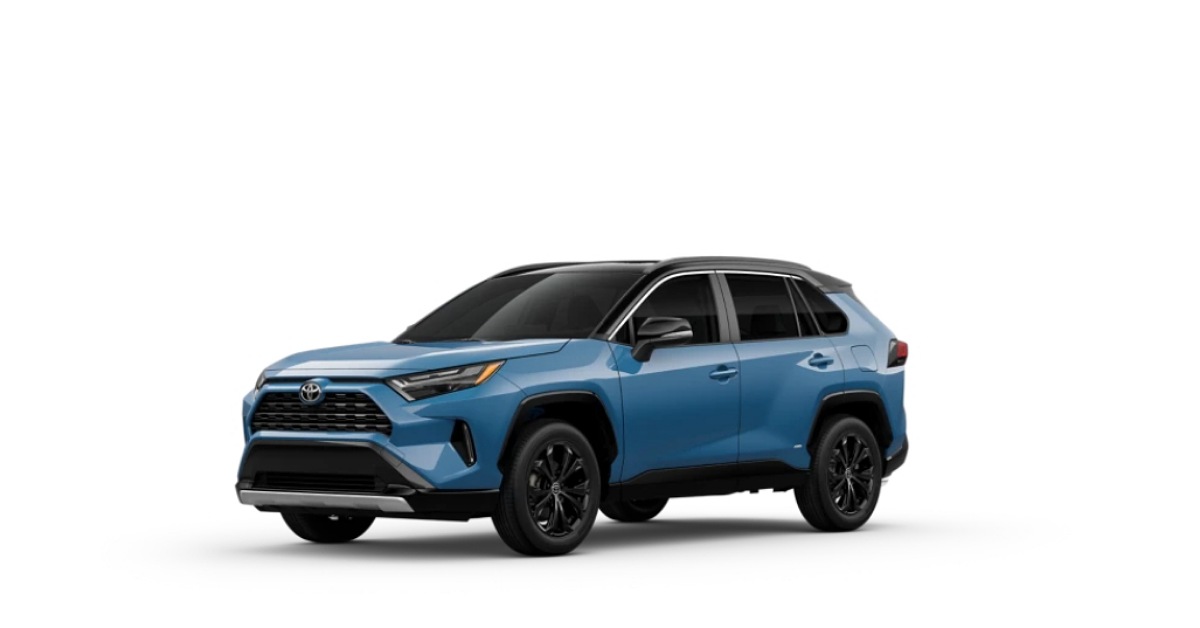
The 2025 RAV4 announces itself with angular, no-nonsense styling that speaks to its capable nature. The front end features a robust bumper with integrated LED fog lights that add both functionality and visual appeal. Sharp-edged LED headlights with embedded LED bars create a distinctive nighttime signature while providing superior illumination compared to older halogen designs.
The hood sits elevated, giving the RAV4 an aggressive stance that hints at off-road readiness, even in lower trim levels. Along the sides, body lines create visual tension that makes the SUV appear wider and more planted than it actually is. At the rear, dual black chrome-tipped exhaust tips frame a capable-looking bumper, while the integrated roof rails provide excellent functionality for roof racks or cargo carriers.
Speaking of color, Toyota has equipped the 2025 RAV4 with nine monotone and four two-tone exterior options. Options include Midnight Black Metallic, Silver Sky Metallic, Wind Chill Pearl, Magnetic Grey Metallic, Blueprint, Ruby Flare Pearl, Cavalry Blue, Ice Cap, and the exclusive Army Green—reserved for the Hybrid Woodland Edition. Many colors offer optional black roof treatments, creating a more sophisticated two-tone appearance that costs an additional $500.
The 19-inch multi-spoke alloy wheels come standard on most trims and wear all-season rubber that handles everything from desert heat to winter precipitation. Build quality throughout the exterior feels solid, with panel gaps that are consistently tight across all sections. The power liftgate—available on higher trims—descends quietly and can be adjusted to prevent overhead obstruction in tight garages.
Interior Comfort: Practical Luxury Without Unnecessary Complexity
Step inside the 2025 RAV4, and you’ll immediately notice Toyota’s design philosophy: everything is exactly where you need it, and nothing feels pretentious. The cabin accommodates five adults comfortably, with front seats providing excellent support for long highway drives. Both front and rear rows include armrests, and the rear seats feature a 60/40 split-fold design that maximizes cargo flexibility.
Front legroom measures 41.0 inches, providing ample space for drivers above six feet tall, while rear passengers enjoy 37.8 inches for their legs. The rear doors open to a reasonable angle, making it relatively easy to install child seats or help elderly passengers climb aboard. With all seats up, you get 37.6 cubic feet of cargo space. Fold the rear seats flat, and that expands to an impressive 69.8 cubic feet—enough for furniture runs to IKEA or cross-country camping gear.
The dashboard features a clean design with large, easy-to-reach controls that prioritize practicality over cutting-edge design trends. Climate controls use physical buttons and knobs rather than touch-sensitive surfaces, reducing the learning curve and minimizing accidental adjustments while driving. Storage compartments dot the cabin strategically—you’ll find door bottle holders, seat-back pockets, a covered center console, and cupholder capacity for the entire family. Select trims include a wireless smartphone charger that keeps your device powered without cluttering the interior with cables.
Upholstery options range from practical cloth on base models to SofTex synthetic leather on higher trims. The Mocha, Black, Beige, and Light Grey SofTex options create a more premium feel without the maintenance concerns of genuine leather. Heated front seats and steering wheel options on higher trims add genuine comfort for winter driving across northern American states.
Performance and Driving Experience: Competence Without Attitude
Behind the wheel, the 2025 RAV4 prioritizes all-around competence over performance theater. The 2.5-liter four-cylinder engine produces 203 horsepower and 184 pound-feet of torque, which translates to a 0-60 mph time of 8.3 seconds—respectable for the segment if not thrilling. The eight-speed automatic transmission handles acceleration smoothly in everyday scenarios, though it can sometimes stumble during aggressive downshifts on mountain passes.
The engine exhibits moderate roughness during cold starts and highway acceleration attempts, especially when pushing the transmission to downshift quickly. This isn’t a performance concern—it’s simply the nature of naturally aspirated four-cylinder engines. The RAV4 Hybrid version, which combines a 2.5L engine with electric motors to produce 219 combined horsepower, delivers superior acceleration at 7.4 seconds to 60 mph and superior fuel economy at 41 city / 38 highway mpg for those willing to invest in the hybrid powertrain.
Steering feels naturally weighted without artificial feedback, and the suspension strikes an impressive balance between comfort and control. The independent sport-tuned suspension absorbs city bumps gracefully while maintaining enough composure on twisting roads to keep the RAV4 feeling composed. The braking system performs admirably, stopping from 70 mph in approximately 176 feet—respectable performance for a vehicle this size.
City driving is painless thanks to the relatively tight turning radius of 36.1 feet, making parallel parking or three-point turns manageable even in congested urban areas. On highways, the RAV4 cruises effortlessly at interstate speeds, with the eight-speed transmission dropping to a relaxed RPM for fuel-efficient long-distance travel. The all-wheel-drive system—available on all trims—uses a simpler, more robust design compared to previous years, distributing power between front and rear wheels to enhance traction without sacrificing fuel economy.
Mileage and Fuel Efficiency: Real-World Numbers You Can Actually Achieve
EPA fuel economy estimates for the 2025 RAV4 reflect a genuinely achievable target for typical drivers. Front-wheel-drive models achieve 27 city / 35 highway / 30 combined mpg, while all-wheel-drive variants see 27 city / 33-34 highway / 28-29 combined mpg depending on trim. In independent testing on a 75-mph highway route, the RAV4 AWD delivered 32 mpg, falling only slightly short of EPA highway estimates—a strong indicator that Toyota’s numbers reflect real-world conditions rather than optimistic laboratory scenarios.
The 14.5-gallon fuel tank provides approximately 400+ miles of highway range on a single tank, making longer road trips possible without frequent fuel stops. For those prioritizing fuel economy above nearly all else, the 2025 RAV4 Hybrid achieves an exceptional 41 city / 38 highway / 39 combined mpg, essentially doubling fuel savings compared to the base gas model over the life of ownership.
The hybrid’s combined performance also makes it ideal for heavy city driving, where stop-and-go traffic typically punishes gas engines. Highway driving shows smaller gains for the hybrid, but that’s actually beneficial—it means the base gas model remains competitive on interstate commutes, giving you flexibility in choosing the powertrain that matches your actual driving patterns rather than assuming hybrid superiority in all situations.
Interior Features and Technology: Connectivity That Actually Works
The 2025 RAV4 introduces an entirely redesigned multimedia system centered on the Toyota Audio Multimedia platform. Every trim level includes wireless Apple CarPlay and Android Auto integration, eliminating the tangle of charging cables that plague older vehicles. The base system uses an 8-inch touchscreen with crisp graphics and responsive controls, while higher trims upgrade to a 10.5-inch display that dominates the dashboard with enhanced functionality.
Voice control has been significantly improved, responding to natural speech commands for navigation, climate control, and music selection. No more memorizing awkward phrases—simply speak to your RAV4 as you would to a friend, and the system understands your intent. The touchscreen interface responds immediately to inputs without lag, and the menu structure follows logical organization principles that minimize driver distraction.
The XLE Premium and Limited trims feature a 12.3-inch full-color digital instrument cluster that replaces traditional gauges with customizable displays. Turn-by-turn navigation directions appear directly in your line of sight, eliminating the need to glance at the center screen during intense driving situations. The system learns your driving preferences over time, offering personalized route suggestions and remembering favorite destinations.
Connectivity goes beyond simple smartphone mirroring. Toyota Drive Connect provides cloud-based navigation with real-time traffic updates, while the Intelligent Assistant feature offers personalized route recommendations based on your calendar, weather, and historical patterns. The system can even remember parking locations and guide you back to your vehicle in sprawling parking lots. Three-month trial subscriptions to Sirius XM satellite radio with 165+ channels come standard, giving you access to commercial-free music, comedy, sports, and news programming.
For audio enthusiasts, the available JBL Premium Audio system with 11 speakers delivers concert-quality sound. The system includes JBL’s proprietary Clari-Fi technology, which automatically enhances compressed digital music files by restoring high-frequency sounds lost during compression. The result is music that sounds noticeably more detailed and alive than typical vehicle audio systems.
Safety Features: Advanced Protection Working Behind the Scenes
Every 2025 RAV4 comes standard with Toyota Safety Sense 2.5, a comprehensive suite of advanced driver-assistance features that quietly work in the background during every mile of driving. The Pre-Collision System with Pedestrian Detection monitors traffic ahead using a combination of radar and cameras, automatically applying brakes if an accident appears imminent. In insurance institute testing, this system avoided collisions at speeds up to 43 mph—potentially life-saving in urban scenarios where unexpected obstacles appear.
Lane Departure Alert with Steering Assist monitors road markings and alerts you if the RAV4 drifts unintentionally between lanes. The steering assist function gently corrects course without requiring driver input, reducing fatigue on long highway drives. Full-Speed Range Dynamic Radar Cruise Control maintains your selected distance from vehicles ahead, automatically accelerating or braking to maintain safe spacing from 0 mph (stop-and-go traffic) to highway speeds.
Lane Tracing Assist actively keeps the RAV4 centered within lane markings, particularly valuable during repetitive highway driving when attention naturally wanes. Automatic High Beams switch between high and low beams based on oncoming traffic and ambient light conditions, maximizing forward visibility without temporarily blinding other drivers. Road Sign Assist recognizes speed limit signs and alerts you if you’re exceeding posted limits—a valuable safety net for drivers unfamiliar with certain routes.
All trims include blind-spot monitoring and rear cross-traffic alert, essential features when maneuvering in parking lots or changing lanes at highway speeds. The standard rearview camera provides a clear view of what’s directly behind the vehicle during reverse, with parking distance markers showing how much clearance remains. Select higher trims add a bird’s-eye-view camera system that provides a 360-degree overhead perspective of your immediate surroundings—invaluable when parking in tight spaces.
The RAV4’s structure provides exceptional protection in actual crash scenarios. NHTSA testing awarded the 2025 RAV4 a five-star overall safety rating, with particularly strong results in side-impact testing (five stars). The IIHS rated the RAV4 as “Good” in frontal and side crashes, the highest possible rating. Eight airbags work in concert with standard stability control systems to minimize injury risk during impacts.
Robust construction materials and high-tensile steel frame components absorb crash energy while maintaining the survival space around occupants. The roof structure exhibits impressive rigidity in rollover scenarios, earning a four-star rating from NHTSA. Optional Whiplash-Injury-Lessening (WIL) front seats on higher trims reduce neck injury risk during rear-impact collisions through advanced seat design.
Exterior Features and Technology
Beyond the fundamental design, the 2025 RAV4 offers numerous exterior features that enhance both functionality and aesthetics. Integrated LED fog lights cut through heavy rain and snow more effectively than traditional halogen designs while using less electrical power. The power liftgate—available on most trims—descends smoothly and quietly, and higher trims include a hands-free kick sensor that opens the gate when you approach with your hands full of groceries.
Two-tone exterior colors create visual sophistication, with black roof panels contrasting beautifully against metallic body colors. Dual black chrome-tipped exhaust finishers frame the rear with purposeful style. Dynamic torque vectoring all-wheel drive—available on certain trims—distributes power asymmetrically between the rear wheels, enhancing cornering control and reducing understeer on twisting mountain roads.
The available panoramic glass roof floods the cabin with natural light, creating an airy feel that makes the interior feel larger than actual dimensions would suggest. The panoramic roof opens partially, providing fresh air and breeze without the wind noise and weather exposure of a full sunroof. Black fabric-trimmed headliner and blue ambient illumination create premium ambiance during evening drives.
Competitors Comparison: How the RAV4 Stacks Against Its Rivals
The 2025 compact SUV segment includes several formidable competitors, each with distinct strengths and weaknesses:
| Feature | 2025 RAV4 | Honda CR-V | Mazda CX-5 |
|---|---|---|---|
| Engine (Base) | 2.5L 4-cyl (203 hp) | Turbocharged 1.5L (190 hp) | 2.5L 4-cyl (187 hp) |
| City/Hwy/Combined MPG | 27/35/30 (FWD) | 28/34/30 (FWD) | 25/29/26 (AWD std) |
| 0-60 mph | 8.3 seconds | Similar | Slightly slower |
| Cargo Space (Seats Up) | 37.6 cu ft | 39.3 cu ft | Similar |
| Base Price | $29,800 | Comparable | Comparable |
| Interior Feel | Utilitarian, practical | Modern, tech-forward | Premium, refined |
| Driving Dynamics | Competent, comfortable | Engaging, responsive | Sporty, engaging |
| Technology | Toyota Multimedia | Honda Sensing Suite | MAZDA Connect |
The RAV4’s Advantages: Superior fuel economy on the gas model, proven long-term reliability, available hybrid achieving 41 mpg city, extensive cargo space, standard Toyota Safety Sense 2.5, and a proven track record spanning over two decades in the American market.
Where Competitors Excel: The Honda CR-V feels more refined on winding roads with its turbocharged engine providing better acceleration. The Mazda CX-5 emphasizes premium materials and driving engagement over pure practicality. The CR-V’s turbo engine offers better passing power despite lower displacement.
Available Features by Trim Level
The 2025 RAV4 arrives in four distinct trims, each expanding capability and comfort:
LE (Starting at $29,800): Standard forward collision mitigation, lane-keeping assist, traffic sign recognition, eight-inch touchscreen, six-speaker audio system, satellite radio, wireless internet hotspot, blind-spot monitoring, rear cross-traffic alert, and rearview camera.
XLE (Mid-level value): All LE features plus keyless entry and ignition, upgraded touchscreen options, power adjustable driver’s seat, and enhanced interior trim materials.
XLE Premium: Higher-comfort orientation featuring available panoramic sunroof, power liftgate, heated front seats and steering wheel, digital instrument cluster, and premium audio options.
Limited (Top tier): The ultimate RAV4 experience with 10.5-inch touchscreen, 12.3-inch digital cluster, JBL premium audio system with 11 speakers, panoramic sunroof, leather-appointed seating, power liftgate with kick sensor, wireless smartphone charging, blind-spot monitor, rear parking sonar, bird’s-eye-view camera, and surround-view camera system.
Mileage and Maintenance Costs
The 2025 RAV4 stands apart for its relatively low maintenance costs compared to segment rivals. Toyota’s five-year cost of ownership averages approximately $4,936 in maintenance expenses, with the first year requiring minimal service. Standard maintenance intervals call for oil changes every 12 months or 15,000 miles, with fluid checks and filter replacements representing the bulk of routine service costs.
Owner reports indicate that basic oil changes at independent shops cost approximately $80 (including labor), while do-it-yourselfers manage maintenance for roughly $35 using Toyota filters and full-synthetic oil. Extended warranty options—typically priced between $1,500-$3,500 for 6-year/125,000-mile coverage—provide peace of mind by covering unexpected repairs. Many owners report that extended warranties pay for themselves through covered repairs averaging $300-$500 at dealership rates.
Brakes typically require replacement around 60,000-70,000 miles depending on driving style, costing $300-$600 at dealers. Struts and suspension components generally exceed 100,000 miles before requiring attention, while transmission fluid changes recommended at 60,000 miles cost approximately $150-$250. Hybrid models may carry slightly higher maintenance costs due to electric motor and battery monitoring, but battery packs remain reliable through 150,000+ miles with proper care.
Insurance costs average $704 during the first year, increasing gradually to approximately $808 by the fifth year, with comprehensive five-year insurance totaling roughly $3,776. These costs fall slightly below average for the compact SUV segment, reflecting the RAV4’s excellent safety ratings and relatively modest repair expenses.
Pros: What Makes the RAV4 Special
The 2025 RAV4 excels across multiple dimensions that genuinely matter to real-world owners. Proven reliability stands at the forefront—RAV4 owners consistently report vehicles exceeding 200,000 miles with proper maintenance, creating exceptional long-term value. Toyota’s reputation for bulletproof durability translates directly into lower insurance and resale value retention.
Spacious interior provides genuine utility without sacrificing daily drivability. The 69.8 cubic feet of cargo space accommodates family road trips, weekend camping adventures, or regular grocery runs. The low loading height (approximately knee level at 5’3″) makes loading heavy items like prams or suitcases manageable without excessive strain.
Impressive fuel economy for non-hybrid models achieves real-world results that closely match EPA estimates. The 27 city / 35 highway / 30 combined mpg (FWD) ranking among the segment’s best gas-only competitors, while the available hybrid crushes rivals at 41 city / 38 highway / 39 combined mpg.
Intuitive technology doesn’t require a PhD to operate. Controls use physical buttons and knobs where they matter most, reducing driver distraction. Voice commands understand natural speech, and the multimedia system responds instantaneously without lag.
Standard Toyota Safety Sense 2.5 includes capabilities competitors charge extra for or reserve for higher trims. Pre-collision system, lane assist, adaptive cruise control, and automatic high beams come equipped on every model, democratizing access to advanced safety regardless of purchase price.
Competitive pricing starts at $29,800 for the base LE trim, undercutting many rivals while including more standard equipment. The value proposition improves further when you factor in resale value and maintenance cost advantages.
Cons: Where the RAV4 Falls Short
The 2025 RAV4 isn’t perfect. Performance limitations stem from the naturally aspirated four-cylinder engine, which produces only 203 horsepower—acceptable but uninspiring compared to turbocharged rivals offering 220+ horsepower. The 8.3-second 0-60 time ranks among the segment’s slowest, and transmission hesitation during downshifts can feel frustrating when aggressive acceleration is needed.
Base model feels sparse with minimal standard equipment beyond safety essentials. The eight-inch touchscreen appears dated compared to rivals offering larger displays standard. Base fabric seating and lack of keyless entry on LE trim remind budget-conscious buyers they’re purchasing entry-level transportation.
Interior materials prioritize durability over perceived luxury. Hard plastics dominate the dashboard and door panels, creating a utilitarian feel that budget-conscious buyers expect but affluent owners might find underwhelming. The cabin lacks the soft-touch materials and premium ambiance that justify mid-$30,000s pricing on higher trims.
Limited driving engagement means the RAV4 never truly excels at being fun. The suspension prioritizes comfort over cornering confidence, and the steering lacks the feedback that makes rivals like the Mazda CX-5 genuinely enjoyable on winding roads. The RAV4 gets the job done competently, but it won’t make you smile during spirited driving.
Discontinuation of TRD Off-Road and Adventure trims disappoints owners seeking more aggressive styling without the price premium of higher trims. The raised suspension option now requires moving to the XLE Premium tier, eliminating budget-conscious buyers’ ability to add ground clearance.
Price and Variant Details: Finding Your Perfect Match
The 2025 RAV4 offers variants designed to match virtually every budget and lifestyle preference:
LE ($29,800): The gateway RAV4 for budget-conscious buyers prioritizing reliability and fuel economy. Includes all essential safety equipment and connectivity basics but omits luxury amenities.
XLE ($31,900 FWD / $33,500 AWD): The sweet spot for most buyers, adding keyless entry, power driver’s seat, and upgraded materials while maintaining reasonable pricing. Best value per dollar spent across the lineup.
XLE Premium ($34,200 FWD / $35,600 AWD): Steps up comfort and technology with available panoramic sunroof, heated seats, power liftgate, and enhanced infotainment. Justifies the premium for daily drivers prioritizing comfort.
Limited ($36,800 FWD / $38,200 AWD): The ultimate RAV4 experience with premium audio, digital cluster, and advanced camera systems. Best for owners wanting everything Toyota offers in this generation.
All-Wheel Drive Option (+$1,500-$1,800): Enhanced traction and winter capability warrant the modest premium for drivers in snow-prone regions or those seeking maximum confidence in adverse weather.
Hybrid Variants (Various trims): Cost approximately $3,500-$4,500 more than gas equivalents but deliver exceptional long-term fuel savings and environmental benefits for drivers exceeding 50,000 miles annually.
FAQ: Answers to Common Questions
Is the 2025 RAV4 good for families? Absolutely. The spacious interior comfortably seats five passengers, extensive cargo room accommodates family road trips and gear, available dual-zone climate control reduces temperature squabbles, and standard safety features protect children. Multiple ISOFIX points and three top tether anchor points integrate child seats seamlessly.
What is the real-world fuel mileage? Independent testing confirms EPA estimates are achievable for average drivers. FWD models consistently achieve 30 mpg combined with careful highway driving, while city drivers see 26-28 mpg. Hybrid models achieve 38-39 mpg combined in real-world scenarios, though aggressive driving or frequent AC usage may reduce this slightly.
What’s the maintenance cost for the RAV4? Expected five-year maintenance averages $5,000-$6,000, with oil changes costing $80-$150 at dealerships (or $35-$50 for DIY. Extended warranty coverage ($1,500-$3,500) provides peace of mind by covering unexpected repairs after the factory warranty expires at 36 months / 36,000 miles.
How does the RAV4 compare to the Honda CR-V? The RAV4 prioritizes reliability and practicality, while the CR-V emphasizes driving engagement and interior technology. RAV4 offers better fuel economy for gas models (30 vs 30 mpg combined), while CR-V feels more refined on winding roads. Both are excellent choices—pick the RAV4 for proven longevity, choose the CR-V for driving feel.
Should I choose the hybrid or gas RAV4? Gas models excel for budget-conscious buyers with moderate mileage (under 40,000 miles annually). Hybrid RAV4s justify their premium through fuel savings and lower emissions for drivers exceeding 50,000 annual miles or those navigating city traffic. Hybrids also appreciate in value, often retaining 60-65% of MSRP after five years compared to 55-60% for gas models.
Is extended warranty worth the investment? Extended warranties (6-year/125,000-mile coverage) typically cost $1,500-$3,500. RAV4s prove remarkably reliable, with most owners never needing major repairs within extended coverage periods. However, if you plan keeping the vehicle beyond 100,000 miles or desire peace of mind, warranties provide value by covering unexpected repairs that might otherwise cost $1,000+.
Can the RAV4 handle winter driving? Yes, especially with available all-wheel drive. The combined traction control, electronic stability program, and all-wheel-drive system provide excellent winter capability. The available winter tire package transforms cold-weather performance significantly, and good ground clearance prevents snow scrubbing under typical winter conditions.
What’s included in Toyota Safety Sense 2.5? This comprehensive package includes Pre-Collision System with Pedestrian Detection, Lane Departure Alert with Steering Assist, Full-Speed Range Dynamic Radar Cruise Control, Lane Tracing Assist, Road Sign Assist, and Automatic High Beams. All features come standard on every 2025 RAV4 trim, democratizing access to advanced safety technology.
Final Verdict: Should You Buy the 2025 Toyota RAV4?
The 2025 Toyota RAV4 emerges as the segment’s most well-rounded offering for practical American buyers prioritizing reliability, value, and sensible long-term economics over cutting-edge driving dynamics or premium materials. This isn’t the flashiest compact SUV, nor does it deliver the most spirited driving experience. Instead, the RAV4 excels at exactly what families and individuals actually need—dependable transportation that costs less to own long-term, features intuitive technology that doesn’t confuse, includes comprehensive safety equipment standard across all trims, and provides sufficient space and comfort for daily living without unnecessary complexity.
The 2025 model refinement validates Toyota’s approach. Enhanced multimedia systems, standard Toyota Safety Sense 2.5 on every trim, improved fuel economy, and thoughtfully expanded storage demonstrate that Toyota listened to owner feedback and invested appropriately. The base $29,800 LE trim delivers genuine value, while the XLE ($31,900-$33,500) represents the optimal balance of features and pricing that appeals to most buyers.
Best for: Practical families seeking reliable daily transportation, commuters valuing fuel economy and low maintenance, first-time SUV buyers desiring proven reliability, and anyone wanting maximum resale value retention and ownership cost predictability.
Consider alternatives if: You prioritize driving engagement above all else (Mazda CX-5 delivers superior handling), demand the latest technology features in the base model (Honda CR-V offers more standard tech), or want a premium interior feel suggesting you spent $45,000+ (neither element defines the RAV4’s value proposition).
The bottom line? The 2025 Toyota RAV4 remains America’s practical SUV choice for good reason. It delivers exactly what owners expect—vehicles that reliably serve families for 150,000+ miles with predictable maintenance costs and strong resale values. In an industry increasingly chasing novelty, the RAV4’s sensible competence feels refreshing.
What do you think about the 2025 RAV4? Does this particular compact SUV align with your automotive needs and lifestyle? Share your thoughts and experiences in the comments below—we’d love hearing from fellow RAV4 owners and prospective buyers considering this trusted segment leader!