Are you searching for a three-row SUV that delivers impressive space, advanced technology, and real family-focused features? The 2025 Grand Highlander might be exactly what you need. This year, Toyota has elevated the game by introducing a new entry-level LE trim, refreshed paint colors, and thoughtfully designed innovations that make family adventures more comfortable than ever. Let’s explore everything you need to know about this standout SUV.
Introduction
The 2025 Toyota Grand Highlander stands as one of America’s most practical and reliable family SUVs. Launched with premium positioning, this three-row powerhouse offers seating for up to eight passengers and delivers flexibility without compromise. What makes this 2025 Grand Highlander particularly compelling is its combination of versatile powertrain options—including turbocharged, hybrid, and hybrid-max variants—ensuring there’s a perfect match for every driver’s needs. Whether you’re planning cross-country road trips or navigating your daily commute, the Grand Highlander provides the space, comfort, and technology that modern families demand.
Key Specifications: Breaking Down the Numbers
| Specification | Details |
|---|---|
| Engine Options | 2.4L Turbocharged 4-Cylinder (265 hp), 2.5L Hybrid (245 hp), 2.4L Hybrid MAX Turbo (362 hp) |
| Power & Torque | 265 hp / 310 lb-ft (turbo); 245 hp combined (hybrid); 362 hp / 400 lb-ft (Hybrid MAX) |
| Mileage (EPA) | 21 city / 28 highway (turbo); 36 city / 32 highway (hybrid); 26 city / 27 highway (Hybrid MAX) |
| Real-World Mileage | 21-26 mpg combined (varies by powertrain and driving conditions) |
| Transmission | 8-Speed Automatic (turbo); CVT (hybrid); Direct Shift 10-Speed (Hybrid MAX) |
| Seating Capacity | 7 or 8 passengers (captain’s chairs or bench seat configuration) |
| Cargo Space | 57.9 cubic feet (2nd & 3rd rows up); 97.5 cubic feet (all seats folded) |
| Towing Capacity | 5,000 lbs (gasoline models); 3,500 lbs (hybrid models) |
| Fuel Tank Capacity | 17.8 gallons (hybrid); 18.5 gallons (standard) |
| Dimensions | Approximately 194.9″ L x 76.4″ W x 68.5″ H |
| Starting Price | $42,355 (LE); goes up to $58,775 (Hybrid MAX Platinum) |
| Safety Rating | IIHS Top Safety Pick components; Toyota Safety Sense 3.0 standard |
| Warranty | 3 years / 36,000 miles basic; 5 years / 60,000 miles powertrain |
Exterior Design: Bold Presence Meets Functional Style
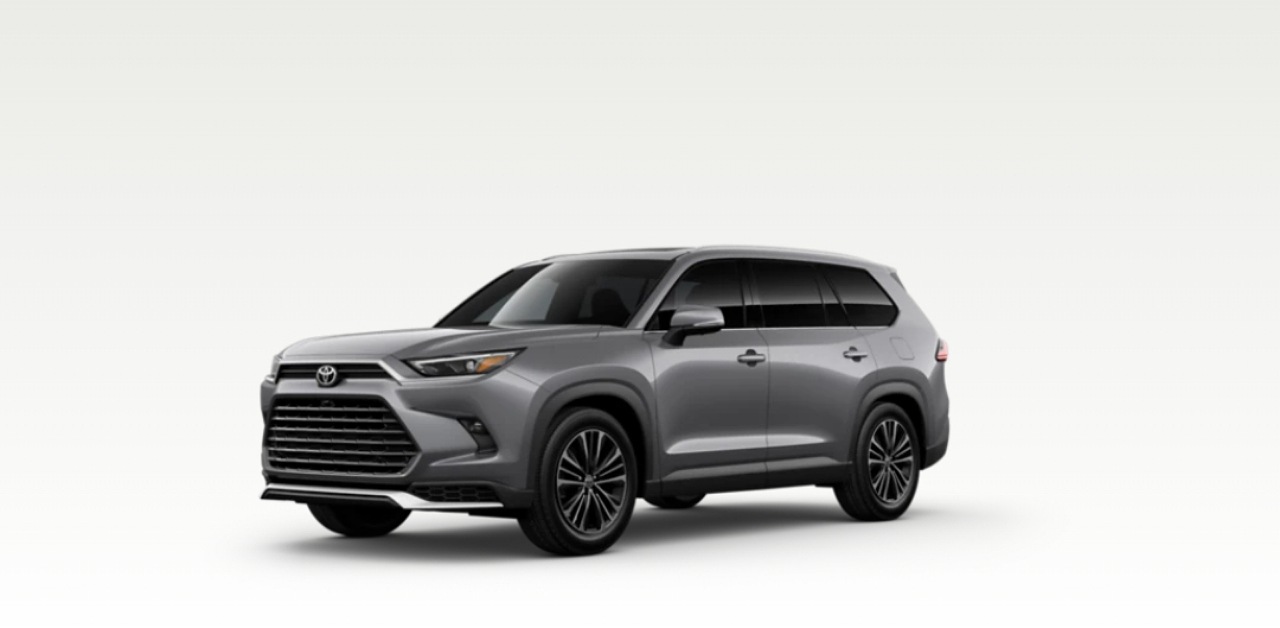
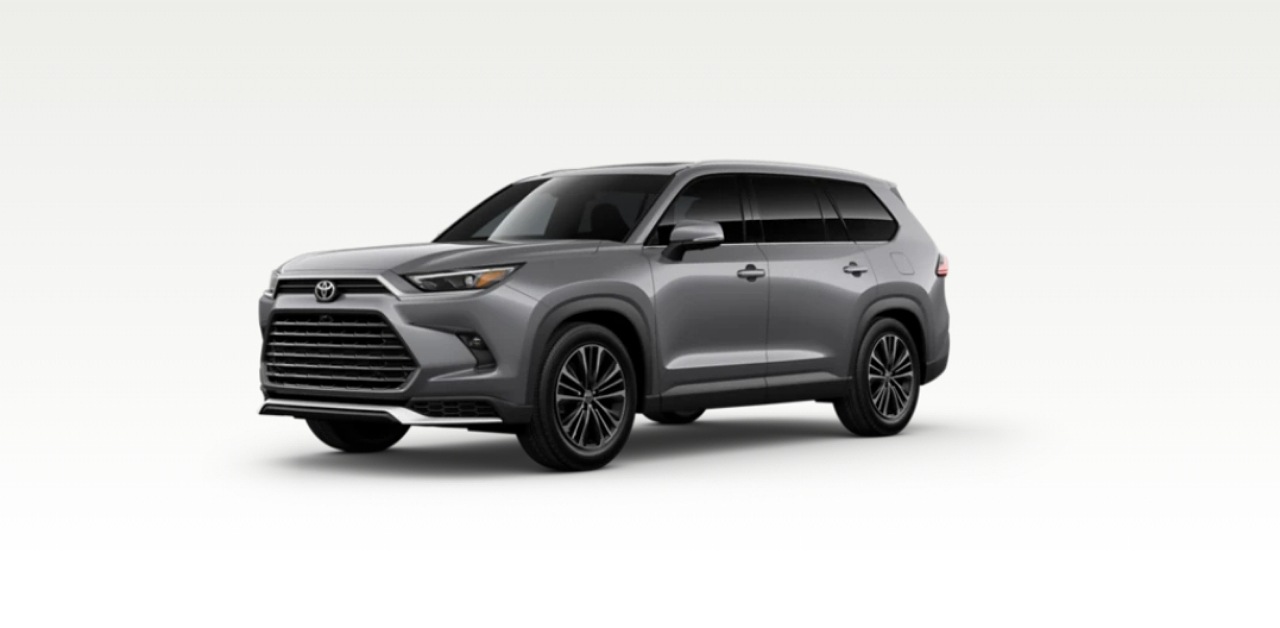
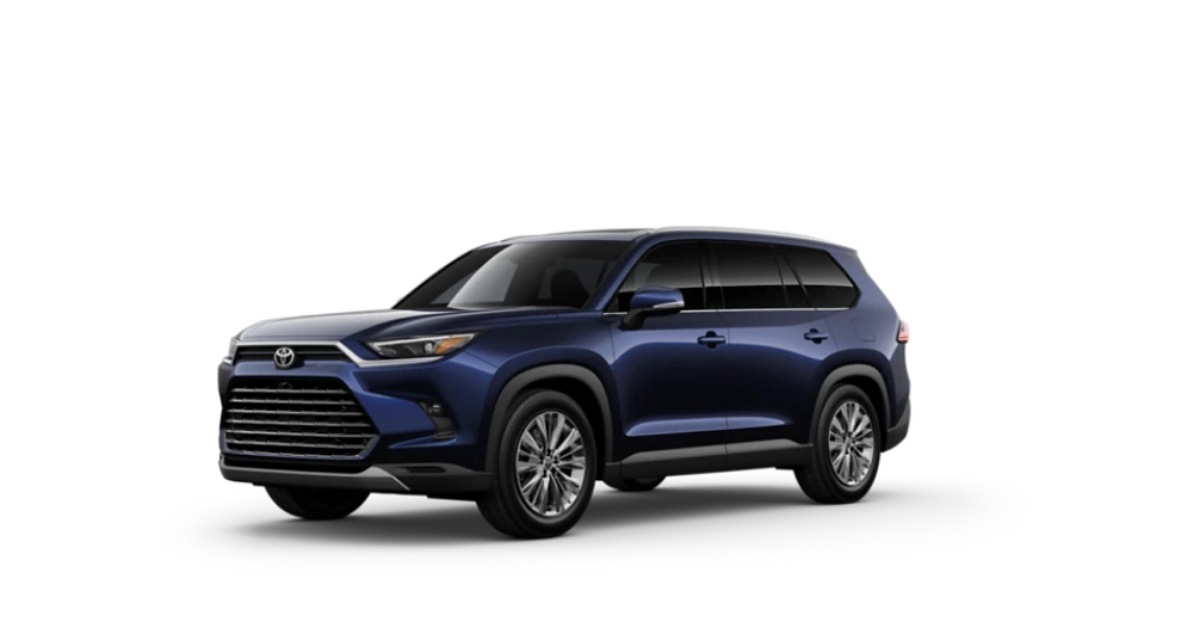
The moment you see a 2025 Grand Highlander pull up, you immediately notice its commanding exterior presence. Toyota has designed this SUV with a sculpted front grille and sleek LED headlights that convey confidence and sophistication. The headlights aren’t just beautiful—they’re functional, offering superior illumination for nighttime driving compared to traditional halogen systems. This is the kind of attention to detail that the Grand Highlander brings throughout its design.
The body lines on this vehicle are purposefully dynamic, flowing from the hood down the sides to create a sense of motion even when standing still. Standard 18-inch alloy wheels come on the base trims, while upgraded models feature stylish 20-inch designs that give the Grand Highlander a more premium, planted stance. The aerodynamic shape isn’t just for show; it genuinely contributes to fuel efficiency improvements, meaning you’re spending less time at gas stations.
Available two-tone paint finishes let you personalize your Grand Highlander to match your lifestyle. You can choose from eight stunning exterior colors: Blueprint (Dark Blue), Celestial Silver Metallic, Cement (Medium-Dark Gray), Heavy Metal (Dark Gray), Midnight Black Metallic, Ruby Flare Pearl (Red), Storm Cloud (Greyish Blue), and Wind Chill Pearl (White). The addition of Cement and Heavy Metal in 2025 gives buyers fresher options, though three metallic colors carry a $475 upcharge. The integrated rear spoiler and LED taillights complete the modern profile, ensuring visibility and style from every angle. Practical design elements like available roof rails provide genuine utility for kayaks, cargo carriers, or roof boxes—features families actually use.
Interior Review: Premium Comfort Meets Family Practicality
Step inside, and the 2025 Grand Highlander’s interior immediately impresses. The dashboard layout is intuitive and well-organized, with everything within easy reach. The quality of materials escalates as you move up trim levels: base LE models feature fabric upholstery, XLE trims bring SofTex synthetic leather, while Limited and Platinum models showcase genuine leather with sophisticated stitching. The Hybrid MAX Platinum even offers Ultrasuede materials, creating an upscale atmosphere that approaches luxury crossover territory.
The front seats combine comfort with substantial support. Heated power-adjustable driver and front passenger seats come on most trims, while higher trims add ventilation—a genuine blessing on hot summer drives. The leather-trimmed steering wheel feels substantial in your hands, and controls positioned around it remain intuitive for long drives. The two-way lumbar support provides flexibility for different body types and preferences, ensuring your back stays comfortable whether you’re making a quick grocery run or tackling a nine-hour road trip.
The real story, however, lies in the second and third rows. The second row offers surprising comfort with generous legroom—adults over 6 feet tall can stretch out without complaint. Captain’s chairs come standard on higher trims, creating executive-class seating for the middle row. The removable center console (new for 2025 on XLE trims and above) allows flexible seating configurations. If you need eight passengers, opt for bench seating instead.
The third row deserves special attention because it’s genuinely usable for adults, not just children. Unlike many three-row SUVs where the third row feels like an afterthought, the Grand Highlander offers legitimate headroom and legroom. You can actually recline the third-row seats, creating a more relaxed position. This is the reason many families specifically choose the Grand Highlander over competitors. Recessed cup holders, USB charging ports on both sides, and integrated tie-downs make the third row a pleasant place to be, not a cramped compromise.
Storage solutions throughout the cabin are thoughtfully designed. The front passenger shelf provides a dedicated spot for items you need easy access to—a feature borrowed from trucks that truly works here. Center console storage is practical, and with seven USB-C ports distributed throughout the cabin, everyone in your family can keep their devices charged. The standard digital key and keyless entry system make daily life easier, while the power liftgate (and available foot-activated variant) proves convenient when your hands are full with groceries or gear.
Climate control includes available three-zone automatic temperature management, meaning passengers in different rows can set their own comfortable temperature. Premium JBL audio systems on higher trims deliver concert-quality sound for long drives, though even the base six-speaker system sounds respectable.
Performance & Driving Experience: Practical Excellence
The 2025 Grand Highlander isn’t designed to be a performance machine—it’s engineered for stability, comfort, and predictability. For most drivers, this is exactly right. The turbocharged 2.4-liter gasoline engine delivers 265 horsepower and 310 lb-ft of torque, providing sufficient power for highway merging and reasonable acceleration. This powertrain is straightforward and familiar, with an eight-speed automatic transmission that shifts smoothly whether you’re navigating city streets or cruising highways.
In the city, the Grand Highlander feels manageable despite its size. The steering response is direct without being oversensitive, and the suspension system effectively isolates cabin occupants from road imperfections. Acceleration feels adequate without being thrilling—0-60 mph takes approximately 7.7 seconds, which is competitive for this class.
Highway performance is where the Grand Highlander truly shines. At 75 mph, the vehicle remains composed and steady. Wind and road noise are well-controlled thanks to acoustic materials throughout the cabin. The ride quality prioritizes comfort over sportiness; you’re not going to feel sharp with your passengers chatting, which is precisely what most families want on long drives.
The 2.5-liter hybrid option offers a completely different experience. With 245 horsepower of combined output, it’s slightly less powerful but delivers impressive fuel efficiency without sacrificing drivability. The hybrid system operates seamlessly, with the transmission (a continuously variable transmission on standard hybrids) providing smooth power delivery. Real-world acceleration feels adequate, and many drivers report being pleasantly surprised by how natural the hybrid-powered Grand Highlander feels.
For those seeking maximum performance, the Hybrid MAX option is genuinely impressive. This 2.4-liter turbocharged hybrid system produces 362 horsepower and 400 lb-ft of torque—more power than the standard gasoline engine. This powertrain feels noticeably quick compared to other Grand Highlander variants. The 10-speed direct shift transmission delivers responsive gear changes, making this variant fun to drive while maintaining the SUV’s family-friendly character.
All models feature drive mode selection, allowing you to tailor the driving experience to road conditions or your preferences. All-wheel drive is available across the lineup, providing enhanced traction and control in challenging weather or terrain. The system remains transparent during normal driving, engaging automatically when needed.
Braking performance is solid across the lineup. The system responds predictably whether you’re making gentle stops or emergency maneuvers. Parking assistance features, available on higher trims, make tight parking situations manageable—a genuine convenience in crowded parking lots.
Features & Technology: Connected Family Living
The 2025 Grand Highlander’s technology suite is genuinely impressive. The standard 12.3-inch touchscreen represents a significant tech hub for your vehicle. The interface is intuitive and responsive, with sharp graphics that remain clear even in bright sunlight. Wireless Apple CarPlay and Android Auto integration means you can mirror your smartphone without cable hassles—particularly valuable when you have kids constantly connecting devices.
The available 12.3-inch digital instrument cluster puts critical information directly in your line of sight. Instead of checking a separate dashboard screen, you see real-time data about fuel consumption, navigation, and vehicle systems right where you naturally look. The multi-information display screen offers customization, allowing you to prioritize the information most important to your driving style.
Connectivity extends throughout the cabin with seven USB-C ports—two in the front, four in the second row, and one in the third row. This forward-thinking design ensures everyone in your family can charge simultaneously. The standard Wi-Fi hotspot (with available data plan) transforms the Grand Highlander into a mobile office or entertainment hub, perfect for families on road trips who want internet connectivity.
The available 10-inch Head-Up Display projects critical information onto the windshield—speed, navigation directions, and alerts—allowing you to maintain focus on the road. It’s a feature that feels futuristic and practical simultaneously. The Panoramic View Monitor uses four cameras to display a 360-degree overhead perspective when parking or maneuvering in tight spaces. The system is remarkably intuitive and genuinely helpful, particularly for drivers less comfortable with parking large vehicles.
Safety Sense 3.0, Toyota’s comprehensive driver assistance suite, comes standard. This includes adaptive cruise control with lane-centering capability, automatic emergency braking that genuinely works, pedestrian detection, and blind-spot monitoring. The system doesn’t feel intrusive; it quietly operates in the background, providing confidence rather than unnecessary alerts. Traffic Jam Assist on higher trims handles stop-and-go traffic more autonomously, reducing driver fatigue on congested commutes.
Storage and convenience features are abundant. The available power panoramic sunroof creates an open feeling and brings natural light throughout the cabin. Even on the more affordable trims, heated mirrors, push-button start, and a digital key add quality-of-life improvements that everyday driving benefits from.
Safety Review: Protection You Can Count On
Toyota has prioritized safety throughout the 2025 Grand Highlander. The IIHS (Insurance Institute for Highway Safety) has rated this vehicle highly in multiple crash tests. The vehicle earned “Good” ratings in front crash prevention testing, and it successfully avoided collisions in motorcycle and semitrailer scenarios—impressive achievements that translate to real-world safety.
The structure itself is engineered with modern crash protection in mind. Advanced materials and reinforced safety structures work together to manage impact energy. The cabin deformation is minimized in frontal crashes, protecting occupants from intrusion. NHTSA crash test results support the overall safety picture, though it’s worth checking their specific ratings for your intended trim and body configuration.
Standard equipment includes dual front and side-impact airbags, with curtain airbags extending through all three rows. This comprehensive airbag system provides protection across the vehicle width—particularly important for the more vulnerable outboard occupants. ABS, electronic brakeforce distribution, and stability control are all standard, providing the fundamental safety systems expected of modern vehicles.
The driver-assistance features deserve specific mention because they genuinely contribute to accident prevention. The automatic emergency braking system reacts faster than most human drivers, successfully stopping or mitigating crashes before human intervention. Blind-spot monitoring eliminates one of the most common accident scenarios—changing lanes into unseen vehicles. These systems represent insurance against the unexpected.
Children remain protected through LATCH anchors for securing car seats. The third-row seating configuration includes proper child safety features, though parents should note that the third row is genuinely better for older children and adults than for infants.
Mileage & Fuel Efficiency: Real-World Numbers Matter
Fuel economy tells different stories depending on which powertrain you select. The turbocharged 2.4L gasoline engine achieves EPA ratings of 21 city / 28 highway / 24 combined. Real-world testing from various sources shows slightly lower figures—approximately 21 mpg combined is realistic depending on driving habits and conditions. City driving pulls mileage down significantly, as the vehicle’s considerable mass requires more energy to accelerate repeatedly. Highway driving is where efficiency improves noticeably.
The 2.5-liter hybrid option delivers more impressive figures. EPA ratings show 36 city / 32 highway / 34 combined. However, real-world testing reveals the nuance—actual mileage tends to land around 26-27 mpg combined depending on how hard you drive the vehicle and weather conditions. Cold weather reduces efficiency because the engine runs more frequently, and aggressive acceleration similarly penalizes economy. Highway mileage at realistic speeds (over 75 mph) often runs 2-3 mpg below EPA highway claims.
The Hybrid MAX produces a fascinating dynamic: despite significantly more power (362 hp versus 245 hp in standard hybrid), fuel economy isn’t dramatically worse. EPA figures show 26 city / 27 highway / 26 combined. The aggressive performance available means drivers often sacrifice some efficiency compared to the standard hybrid, but the gap is smaller than the power difference would suggest. Independent testing shows the Hybrid MAX realistically achieves 24-26 mpg combined.
For practical calculations: gasoline models require more frequent fill-ups than hybrids. The larger fuel tank capacity (18.5 gallons versus 17.8 gallons on hybrids) provides somewhat longer range despite lower efficiency. Hybrid models offer substantially lower fuel costs over time, particularly if you frequently drive in stop-and-go conditions where hybrid systems excel.
Price & Variant Details: Finding Your Perfect Configuration
The 2025 Grand Highlander lineup offers multiple entry points and configurations. The new LE trim starts at $42,355—significantly below previous base prices—making the Grand Highlander more accessible to budget-conscious families. The XLE trim, long considered the practical sweet spot, starts around $43,630. The Limited trim ($48,360) adds premium amenities like leather seating and enhanced audio systems. The Platinum trim ($54,045) introduces luxury features like heated/ventilated seating and panoramic sunroof.
Hybrid options command price premiums: the Hybrid XLE starts around $45,380, Hybrid Limited at $51,710, and Hybrid MAX models beginning at $54,690. The Hybrid MAX Platinum reaches $58,775. While these price gaps seem substantial, they partially offset through fuel savings and reduced maintenance (hybrids require less routine maintenance on certain components).
Price differences between trims primarily reflect feature additions rather than mechanical changes. Moving from LE to XLE adds better seating materials and a few convenience features. Limited trim brings leather throughout and premium audio. Platinum models introduce luxury touches like panoramic roof and Head-Up Display. The value proposition varies based on personal priorities.
When evaluating which trim offers best value, consider your usage patterns. If you frequently take family road trips, investing in captain’s chairs and heated seats makes sense. If your Grand Highlander mostly handles school runs and local errands, the LE or XLE trims deliver everything you truly need with substantial savings.
Pros & Cons: The Honest Assessment
Pros:
- Exceptional cargo space and genuine usable third-row seating beat competitors
- Multiple powertrain options (gasoline, hybrid, hybrid-max) let you prioritize performance or efficiency
- Advanced technology features feel intuitive rather than complicated
- Reliable Toyota engineering with predictable maintenance costs and strong resale value
- Smooth, comfortable ride quality that prioritizes passenger comfort
- Safety ratings and driver assistance features provide genuine peace of mind
- Practical interior design with thoughtful storage solutions throughout
- Available features like foot-activated liftgate add genuine quality-of-life improvements
Cons:
- Driving experience prioritizes comfort over sportiness—not engaging for enthusiasts
- Hybrid models’ real-world fuel economy sometimes disappoints compared to EPA estimates
- Standard features on lower trims are relatively basic
- Third-row headroom decreases noticeably for particularly tall occupants
- Premium interior materials only appear on higher trims
- Infotainment system, while intuitive, doesn’t match cutting-edge complexity of some competitors
Competitors Comparison: How It Stacks Up
The 2025 Grand Highlander competes in a crowded market. Understanding how it compares against established rivals helps clarify whether it’s the right choice for your family.
| Factor | 2025 Grand Highlander | 2025 Honda Pilot | 2025 Hyundai Santa Fe |
|---|---|---|---|
| Starting Price | $42,355 | $55,486 | $45,229 |
| Third-Row Seating | Genuinely usable; good legroom | Usable; less legroom than Grand Highlander | Usable; decent space |
| Engine Options | Turbo, Hybrid, Hybrid MAX | Single 3.5L V6 | Hybrid, Turbo 2.5L |
| EPA Fuel Economy | 21-36 mpg (varies) | 20-22 mpg | 22-32 mpg (varies) |
| Cargo Space (all seats down) | 97.5 cubic feet | Similar size category | Comparable |
| Towing Capacity | 5,000 lbs (gas) / 3,500 lbs (hybrid) | 5,000 lbs standard | 4,500 lbs (max) |
| Reliability | Strong Toyota reputation | Excellent Honda reputation | Improving Hyundai reliability |
| Driving Feel | Stable and predictable; comfort-focused | More traditional SUV handling | Refined and modern |
| Interior Refinement | Well-designed; feels premium on higher trims | Straightforward design | Modern, clean design with larger displays |
| Third-Row Accessibility | Excellent with captain’s chairs option | Good | Good |
The Honda Pilot remains a strong competitor with excellent reliability and generous cargo space, though it starts $13,000 higher and lacks hybrid options for improved fuel efficiency. The Hyundai Santa Fe offers impressive value, particularly the hybrid model, with a modern interior that feels upscale. However, the Grand Highlander edges these competitors with genuinely comfortable third-row seating and more engine choices allowing customers to prioritize either performance or efficiency.
Final Verdict: Is the 2025 Grand Highlander Worth It?
The 2025 Grand Highlander represents an excellent choice for families prioritizing space, practicality, and reliability. This SUV delivers what it promises: room for people and cargo, comfortable seating across all three rows, and the dependability Toyota is known for. The multiple powertrain options mean you’re not forced into compromises—pick the engine that matches your priorities, whether that’s maximum power, best efficiency, or a balance of both.
The lower LE pricing makes the Grand Highlander more accessible than before, expanding its appeal beyond premium-focused buyers. Mid-range trims like the XLE deliver the features most families genuinely use without excessive cost. If premium amenities matter to you, higher trims offer luxury-like experiences.
This vehicle shines for families who value functionality and comfort over driving excitement. Long road trips feel less fatiguing thanks to the smooth ride quality and spacious seating. Weekend adventures benefit from the generous cargo area. Daily school runs and errands feel effortless rather than stressful.
Should you buy it? If your priorities include comfortable family transportation, usable three-row seating, multiple powertrain options, and Toyota reliability, the answer is a confident yes. If you prioritize driving engagement or are exclusively budget-focused, explore the competitors mentioned above. But for the majority of American families seeking a practical, well-designed, genuinely spacious three-row SUV, the 2025 Grand Highlander deserves serious consideration.
Frequently Asked Questions About the 2025 Grand Highlander
Is the 2025 Grand Highlander good for large families?
Absolutely. The Grand Highlander’s genuine third-row seating distinguishes it among competitors. Unlike many three-row SUVs where the rearmost passengers feel cramped, the Grand Highlander provides comfortable space for adults or older children. The available captain’s chairs in the middle row add another layer of accommodation, though bench seating lets you add an eighth passenger if needed.
What real-world mileage should I expect?
Turbocharged gasoline models realistically achieve 20-22 mpg combined. Standard hybrid models typically deliver 24-28 mpg combined. Hybrid MAX models manage 24-26 mpg combined despite offering significantly more power. Real-world results vary based on driving conditions, weather, and individual driving habits.
How much does maintenance cost on the 2025 Grand Highlander?
According to industry data, ten-year maintenance costs average around $6,299, which beats the industry average for three-row SUVs by approximately $1,867. Annual service typically runs $150-250 for routine maintenance. Major repairs like transmission or suspension work obviously cost more, but overall ownership costs remain reasonable.
Which trim offers the best value?
The XLE trim provides the sweet spot for most buyers. It includes features that genuinely improve daily life—heated seats, better audio, leather steering wheel—without the substantial cost increase of Platinum trim. If budget is your primary constraint, the LE trim now offers surprising value. If you want luxury features, Platinum justifies its cost for some buyers.
Can I tow with the Grand Highlander?
Yes, with limitations depending on powertrain. Gasoline models tow up to 5,000 pounds—adequate for modest boat or trailer duty. Hybrid models max out at 3,500 pounds, reflecting the electronic system’s limitations. These capacities are realistic for family use but not sufficient for serious towing demands like large boat trailers.
How does the Grand Highlander compare to a minivan?
The Grand Highlander offers more cargo flexibility, better visibility, higher seating position, and more adventurous styling than minivans. However, minivans typically offer easier second-row entry and more flexible interior configurations. The choice depends on whether you prioritize SUV characteristics (higher seating position, more rugged appearance) or minivan practicality features.