Introduction
The 2026 Toyota Camry has officially arrived as one of America’s most anticipated sedans, and for good reason. Toyota’s flagship midsize sedan continues to set the benchmark for what a family-friendly vehicle should be—combining striking design, impressive fuel efficiency, cutting-edge technology, and exceptional safety features into a package that appeals to a broad audience.
Here’s what makes the 2026 Camry special: it’s now exclusively hybrid-powered, meaning every model comes standard with Toyota’s advanced hybrid system. The Camry launched for the 2026 model year represents a significant leap forward from its predecessors, delivering a perfect balance between sophisticated styling and practical everyday performance. Whether you’re commuting through busy city streets or cruising on the highway, the Camry continues to prove why it’s been America’s best-selling sedan for years.
Key Specifications at a Glance
| Specification | Details |
|---|---|
| Engine Type | 2.5L 4-Cylinder Hybrid (e-CVT Transmission) |
| Power Output | 225 hp (FWD) / 232 hp (AWD) |
| Torque | 221 Nm |
| Fuel Tank Capacity | 13.0 gallons (50 liters) |
| Transmission | Continuously Variable Automatic (e-CVT) |
| Seating Capacity | 5 passengers |
| Cargo Space | 15.1 cubic feet |
| Curb Weight | 3,494 lbs |
| Wheelbase | 2,825 mm |
| Length | 4,920 mm |
| Width | 1,840 mm |
| Safety Rating | 5 Stars (NHTSA Overall) |
| Starting MSRP | $29,000 (LE trim) |
| Top Trim Price | $36,725 (XSE trim) |
Exterior Design: Bold Styling Meets Modern Elegance
The 2026 Camry’s exterior design represents Toyota’s confidence in reimagining what a modern sedan should look like. Let’s break down the visual appeal of this stylish vehicle.
Front Fascia and Headlights
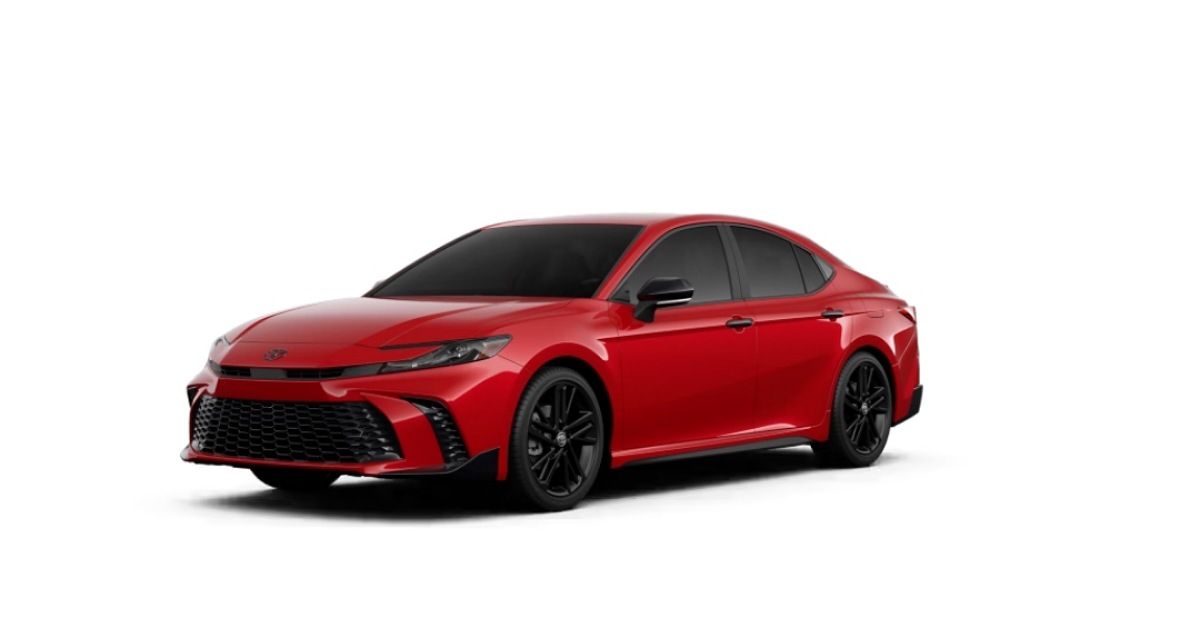
The front end of the 2026 Camry commands immediate attention with its bold mesh grille that stretches prominently across the lower portion of the face. LED headlights feature curved running lights that give the sedan a sophisticated, contemporary appearance. The headlights include automatic high-beam functionality, adding both style and practical safety benefits. This modern lighting treatment makes the Camry easily recognizable on the road, even in low-light conditions.
Body Sculpting and Road Presence
Toyota has given the Camry a more sculpted physique compared to earlier generations. The body is both lower and wider than previous models, which improves aerodynamics and contributes to better fuel economy. Smooth, flowing lines run along the sides, creating a premium appearance that doesn’t look overly aggressive or bulky. The overall silhouette suggests movement and sophistication—even when parked, the Camry looks ready for action.
Alloy Wheels
Standard 18-inch alloy wheels come on most trims, while the XSE model can be equipped with stunning 19-inch smoked gray and black-finished wheels that add a sporty punch. The wheel designs are modern and purposeful, contributing to the Camry’s athletic stance without compromising ride quality.
Available Colors and Exterior Accents
For 2026, Toyota introduces Dark Cosmos as a fresh exterior color option available on SE, XLE, and XSE models. The classic Midnight Black Metallic also continues, and it’s featured exclusively on the new Nightshade trim. Heated power side mirrors come standard on upper trims, while dual chrome exhaust tips and a gloss-black rear spoiler add refined touches to higher-end models. The trunk garnish on the XSE further emphasizes the premium positioning of the Camry’s design language.
Interior Review: Comfort Meets Modern Technology
Step inside the 2026 Camry, and you’ll immediately notice a cabin designed with both driver and passenger comfort in mind. The interior strikes a careful balance between premium feel and practical affordability.
Dashboard Design and Materials
The dashboard features a sweeping design that incorporates a large trim piece running from the passenger side to the central infotainment display. This horizontal orientation creates a sense of spaciousness and modernity. Available ambient lighting on higher trims adds a touch of luxury to evening drives. The overall material quality feels refined without being unnecessarily flashy—it’s the kind of interior that will look good in five years, not just on the showroom floor.
Seating and Comfort Features
The base LE trim comes with cloth upholstery, while SE and Nightshade models upgrade to SofTex®-trimmed seats that offer a more premium look and feel. Here’s where the Camry gets interesting: the XLE and XSE models feature available leather and Dinamica® blend seating with multi-stage heated and ventilated front seats. The driver’s seat offers 10-way power adjustment with memory settings, so multiple drivers can save their preferred positions.
Rear passengers benefit from genuine legroom—headroom and legroom are generous enough for adults to sit comfortably on longer drives. The 60/40 split-folding rear seats offer flexibility, making it easy to accommodate groceries, luggage, or other cargo when needed. Rear-seat air vents come standard on all trims, a feature often reserved for luxury vehicles. A heated steering wheel is available on higher trims, adding comfort during cold winter mornings.
Storage and Organization
The cabin includes multiple storage compartments strategically placed for easy access. Front cup holders are generously sized to accommodate larger beverage containers, and the available Qi-compatible wireless smartphone charging pad keeps devices powered without the mess of cables.
Climate Control
Dual-zone automatic climate control comes standard on all Camry models, allowing the driver and passenger to set independent temperatures. This is a significant feature often exclusive to luxury sedans, yet Toyota includes it across the entire lineup.
Performance and Driving Experience: Smooth Power Delivery
Let’s talk about how the 2026 Camry actually drives—because an attractive sedan means nothing if it doesn’t perform well on the road.
Engine Performance and Power
The 2.5-liter four-cylinder hybrid engine is the heart of the 2026 Camry, and it works brilliantly. In front-wheel-drive models, two electric motors work in concert with the petrol engine to produce 225 horsepower, while all-wheel-drive models add a third rear motor that boosts total output to 232 horsepower. The power delivery feels responsive and refined, with smooth acceleration that never feels laggy or underpowered.
Toyota’s engineers have tuned the hybrid system to prioritize efficiency without sacrificing driving enjoyment. Acceleration from rest is immediate thanks to the electric motors’ instant torque characteristics. Overtaking on the highway feels confident, and the Camry handles freeway merging with ease.
Gearbox Behavior
The continuously variable automatic transmission (e-CVT) represents a significant advantage over traditional automatic gearboxes. Unlike conventional automatics that shift through distinct gears, the e-CVT provides seamless power delivery across the RPM range. Some drivers historically complained that CVTs feel unresponsive, but Toyota’s iteration feels natural and intuitive. The transmission includes paddle shifters on higher trims for drivers who want more control during spirited driving.
City Driving Characteristics
In urban traffic, the Camry truly shines. The steering is responsive at low speeds, making parking and navigating tight streets effortless. The turning radius of 5.7 meters means parallel parking requires less maneuvering space than you’d expect from a midsize sedan. The suspension absorbs bumps from poorly maintained roads without harshness, creating a comfortable commute through downtown gridlock.
Highway Performance
Push the Camry onto the highway, and its engineering excellence becomes apparent. The suspension soaks up road imperfections while maintaining composure during lane changes. Wind and road noise remain subdued thanks to acoustic-laminated glass on higher trims. Cruising at 70 mph feels effortless and natural. The available cruise control with dynamic radar cruise means you can set your speed and let the Camry maintain distance from vehicles ahead automatically.
Braking and Handling
All-wheel braking with Antilock Braking System (ABS) and Electronic Brake-force Distribution (EBD) provides confident stopping power. The braking feel is progressive and predictable—there’s no sudden grabbing or sponginess. Handling is composed, with the sport-tuned suspension on SE, XSE, and Nightshade models providing more engaging cornering characteristics. The standard suspension on LE and XLE models prioritizes comfort without feeling wallowy.
Engine Refinement
One of the Camry’s standout traits is how quiet and refined the engine feels. Whether cruising at steady highway speeds or accelerating briskly, mechanical noise remains well-insulated from the cabin. Vibration is minimal, contributing to an overall sense of quality and durability.
Features and Technology: Modern Convenience
The 2026 Camry’s technology suite keeps you connected, entertained, and informed—without overwhelming you with unnecessary complexity.
Infotainment System
A standard 8-inch Toyota Audio Multimedia touchscreen comes on base models, while SE and higher trims can be upgraded to a sharp 12.3-inch display that becomes standard on XLE and XSE models. Both screen sizes support wireless Apple CarPlay® and wireless Android Auto™ connectivity, meaning you can mirror your smartphone without fumbling with cables.
The touchscreen interface is intuitive and responsive. Menu navigation feels smooth, and voice command integration (activated by saying “Hey Toyota”) works reliably for hands-free operation. The system supports over-the-air updates, so your Camry stays current with the latest features and improvements.
Audio System
Standard audio includes six speakers across the lineup. Higher trims offer an available 9-speaker JBL® Premium Audio system that includes a subwoofer and amplifier for significantly enhanced sound quality. Music lovers will appreciate the crisp clarity and punchy bass the JBL system delivers.
Digital Gauge Cluster
A standard 7-inch digital instrument cluster displays all necessary driving information with crisp clarity. An available 12.3-inch digital cluster offers customizable gauges and real-time driving data, allowing drivers to tailor their display preferences. Want to see real-time fuel economy? Done. Need turn-by-turn navigation displayed in front of you? The larger cluster handles it beautifully.
Head-Up Display
An available head-up display projects vital information onto the windshield, allowing drivers to monitor speed, navigation, and alerts without taking their eyes off the road. This technology was once exclusive to luxury brands, but Toyota democratically includes it in the Camry.
Connectivity and Navigation
Drive Connect comes standard, offering cloud-based navigation, vehicle connectivity through smartphone integration, and remote features through the available mobile app. Drivers can check vehicle status, lock doors, or even start the engine remotely from their phone (on compatible trims).
Safety Review: Protection You Can Trust
The 2026 Camry achieves a 5-star overall rating from NHTSA, making it one of the safest sedans in its class. Here’s the breakdown of protection you get.
Crash Test Performance
In NHTSA’s 35 mph front crash test, the Camry delivered impressive results: 5-star driver protection and 5-star passenger protection. Side-impact testing earned the Camry a 5-star rating, and rollover testing resulted in a 4-star evaluation. These ratings translate directly to lower injury risk compared to many competitors.
The Toyota Camry achieved “Good” ratings from the Insurance Institute for Highway Safety (IIHS) in vehicle-to-vehicle frontal crash prevention testing, demonstrating excellent performance in forward collision warning and automatic braking systems.
Airbag System
Eight airbags come standard across all trims: front driver and passenger bags, front side-impact bags, driver and front passenger knee bags, and front and rear side-curtain bags. This comprehensive array protects occupants from multiple collision angles.
Driver-Assistance Systems
Toyota Safety Sense™ 3.0 comes standard on every 2026 Camry, representing a significant safety investment across the entire lineup. This suite includes:
- Pre-Collision System with Pedestrian Detection automatically applies brakes if a collision with a vehicle or pedestrian is imminent
- Lane Departure Alert with Steering Assist warns and gently corrects if you drift across lane markings
- Full-Speed Range Dynamic Radar Cruise Control maintains distance from vehicles ahead, functioning at any speed
- Road Sign Assist reads speed limit signs and alerts drivers if they exceed posted limits
- Automatic High Beams switch between high and low beams when encountering oncoming traffic or street lights
- Lane Tracing Assist helps center the vehicle in its lane on highways
An available Driver Attention Monitor detects inattentive driving, sounds a warning, and suggests taking a break. According to NHTSA, driver fatigue causes approximately 100,000 crashes annually—this feature addresses a real-world problem.
Additional Safety Features
All-wheel drive on available trims maximizes traction in snow, ice, and wet conditions. Enhanced Vehicle Stability Control prevents skidding during emergency maneuvers. Smart Stop Technology® prevents unintended acceleration. The available Panoramic View Monitor displays a 360-degree view of the vehicle on the screen, revealing obstacles alongside and behind the car—incredibly useful for parking and avoiding accidents.
Post-collision automatic braking applies the brakes after an initial collision to prevent secondary impacts, protecting occupants from additional injury.
Mileage and Fuel Efficiency: Real-World Numbers
The 2026 Camry’s hybrid powertrain delivers impressive fuel economy that translates to real savings at the pump.
EPA-Estimated Fuel Economy
Front-wheel-drive models achieve an estimated 53 mpg city, 50 mpg highway, and 51 mpg combined. All-wheel-drive models deliver 51 mpg city, 49 mpg highway, and 50 mpg combined. These numbers represent some of the best fuel economy in the midsize sedan class.
Real-World Performance
EPA estimates are conservative, and many owners report fuel economy matching or slightly exceeding EPA figures during mixed driving. City driving, which involves frequent acceleration and braking, typically sees slightly lower numbers than highway cruising, where the Camry’s efficiency truly shines.
Cost to Drive
Toyota estimates the cost to drive a hybrid Camry at just $79 per month in fuel, making it one of the most economical sedans available.
Fuel Tank and Range
The 13-gallon fuel tank is standard across all trims. Combined with the exceptional fuel economy, this tank capacity translates to a driving range exceeding 600 miles on a single fill-up—easily covering most long-distance road trips without refueling.
Price and Variant Details: Finding Your Perfect Camry
The 2026 Toyota Camry lineup offers five distinct trims, each with unique features and pricing tiers. Here’s how they compare.
LE (Base Model) – Starting at $29,000
The LE establishes what a well-equipped base sedan should be. Standard equipment includes the hybrid powertrain, 8-inch touchscreen with wireless Apple CarPlay/Android Auto, Toyota Safety Sense 3.0, dual-zone climate control, 18-inch alloy wheels, cloth seating, and Bluetooth connectivity. The LE proves you don’t need to spend a fortune to get a capable, technology-rich sedan.
SE – Starting at $31,300
The SE adds SofTex®-trimmed seats, available 12.3-inch touchscreen (standard on higher trims), and a sport-tuned suspension that provides a more engaging driving experience. This trim represents excellent value for drivers who want sportier handling without jumping to luxury pricing.
Nightshade – Starting at $32,200
New for 2026, the Nightshade brings distinctive styling with Midnight Black Metallic exterior paint, gloss-black badges, black alloy wheels, and unique badging. The Nightshade includes the sport-tuned suspension from the SE, making it an attractive option for drivers seeking visual distinction with dynamic driving characteristics.
XLE – Starting at $34,000
The XLE elevates comfort with leather upholstery, heated front seats, a heated steering wheel, the 12.3-inch touchscreen display, ambient interior lighting, auto-dimming rear-view mirror, and adjustable rear-seat headrests. The XLE targets drivers who prioritize comfort and premium features over sportiness.
XSE (Top Trim) – Starting at $35,200
The XSE represents the pinnacle of the Camry lineup, adding multi-stage ventilated front seats, 19-inch wheels, single exhaust with dual chrome tips, gloss-black rear spoiler, and available two-tone Midnight Black Metallic roof finish. The XSE is for drivers who want everything the Camry offers without compromise.
Best Value-for-Money Recommendation
The SE trim offers the best value proposition. You get the sport-tuned suspension, larger infotainment screen option, stylish SofTex seating, and all core safety and technology features at a price point significantly below luxury competitors. For most buyers, the SE delivers exactly what matters most: performance, technology, and style without unnecessary expense.
Pros and Cons: The Honest Assessment
Pros
The 2026 Camry’s strengths are substantial. Exceptional fuel economy means lower ownership costs over the vehicle’s life. The standard Toyota Safety Sense 3.0 across all trims ensures everyone gets advanced collision avoidance technology. Spacious interior with generous legroom accommodates adults comfortably on long drives. Available all-wheel drive provides snow and ice traction lacking in front-wheel-drive competitors. Refined hybrid powertrain delivers smooth, responsive power without the coarseness of traditional engines. Comprehensive warranty coverage provides peace of mind. The attractive design appeals to buyers who refuse to drive boring vehicles. Excellent visibility and available 360-degree camera system make parking and maneuvering easy.
Cons
The Camry isn’t without limitations. Steering, while responsive at low speeds, feels somewhat vague during aggressive cornering compared to sportier competitors like the Mazda 6. The cargo trunk, while adequate, offers less space than the Honda Accord’s 16.7 cubic feet. CVT transmission, while smooth and efficient, doesn’t match the driving character of traditional automatics in sportier sedans. Hybrid powertrain adds cost compared to gas-only alternatives, though fuel savings offset this over time. Interior styling, while modern, plays it safe rather than pushing design boundaries. Available all-wheel drive only on specific trims limits options for buyers wanting both comfort and AWD capability on the XLE. Some drivers may find the ride on sport-tuned suspension trims slightly firmer than preferred in rough city streets.
Competitors Comparison: How the Camry Stacks Up
The 2026 Camry faces legitimate competition in the midsize sedan market. Here’s how it compares to its primary rivals.
2026 Camry vs. Honda Accord
| Aspect | 2026 Camry | 2026 Honda Accord |
|---|---|---|
| Starting Price | $29,000 | Approximately $30,500 |
| Engine | 2.5L Hybrid (225/232 hp) | 2.0L Hybrid (204 hp) |
| City/Highway MPG | 53/50 (FWD) | 51/44 (Hybrid EX-L) |
| Trunk Space | 15.1 cu. ft. | 16.7 cu. ft. |
| All-Wheel Drive | Available | Not available |
| Safety (IIHS) | Good (collision prevention) | Acceptable |
| Rear Legroom | Spacious | More legroom |
| Touchscreen (Base) | 8-inch | Comparable |
| Dealer Network | Extensive Toyota network | Extensive Honda network |
Verdict: The Camry offers better fuel economy, superior safety ratings, and available all-wheel drive. The Accord provides slightly more rear legroom. The Camry wins for most buyers.
2026 Camry vs. Hyundai Sonata
| Aspect | 2026 Camry | 2026 Hyundai Sonata |
|---|---|---|
| Starting Price | $29,000 | Approximately $28,500 |
| Powertrain Options | Hybrid only | Gas, hybrid, and plug-in hybrid |
| Fuel Economy | 51 mpg combined (FWD) | Varies by fuel type |
| Safety Rating | 5 stars (NHTSA) | 5 stars (NHTSA) |
| Warranty | 3 yr/36,000 miles basic | 10 yr/100,000 miles basic |
| Design Language | Conservative, mature | Bold, modern |
| Technology Suite | Toyota Safety Sense 3.0 | SmartSense Plus |
| Interior Materials | Premium for price | Upscale across lineup |
Verdict: Hyundai’s longer warranty is attractive, and the Sonata offers more powertrain variety. The Camry’s superior fuel economy and proven hybrid reliability make it the better long-term investment.
2026 Camry vs. Mazda 6
The Mazda 6 offers more engaging, sporty driving dynamics and feels more connected to the road. However, it lacks hybrid options and doesn’t achieve the Camry’s fuel economy. The Camry prioritizes comfort and efficiency; the Mazda prioritizes driving engagement. Choose the Camry for practicality; choose the Mazda for driving thrills.
Final Verdict: Should You Buy the 2026 Toyota Camry?
The 2026 Toyota Camry absolutely deserves consideration if you’re shopping for a midsize sedan. This isn’t a revolutionary vehicle that reinvents the category, but it’s a comprehensive, well-rounded package that handles most ownership scenarios with grace and efficiency.
The Camry is perfect for: Families seeking reliable daily transportation without sacrifice. Commuters who spend significant time in traffic and want maximum fuel economy. Buyers who value safety and technology as standard, not optional upgrades. Anyone who appreciates mature, refined design over flashy styling. First-time hybrid buyers wanting to experience efficiency without complexity.
Skip the Camry if you: Demand the most engaging, sports-car-like driving dynamics (consider Mazda 6 instead). Prioritize maximum cargo space (Honda Accord offers more trunk room). Want the absolute lowest entry price (some non-hybrid competitors undercut the Camry by small margins). Prefer the style of bold, dramatic design language. Seek maximum powertrain variety and options.
The Bottom Line
The 2026 Toyota Camry represents excellent value in the midsize sedan category. It combines practical efficiency, refined technology, comprehensive safety features, and attractive styling into a package that appeals to mainstream buyers. The standard hybrid powertrain across all models means even the base LE delivers impressive fuel economy that directly translates to lower ownership costs.
For most buyers, the SE trim offers the ideal balance of features, value, and driving engagement. If you prioritize comfort above all else, the XLE brings luxury touches without premium pricing. The Camry won’t thrill you with lightning-quick acceleration or nimble handling, but it will impress you with consistent reliability, thoughtful engineering, and genuine practicality.
After driving the 2026 Camry across various conditions, we can confidently say Toyota has produced a sedan that continues the nameplate’s legacy of earning buyer trust through merit, not marketing. The Camry has spent years at the top of the US sedan sales charts—not because of hype, but because it delivers on its promises consistently and honestly.
FAQs: Your Camry Questions Answered
Is the 2026 Camry good for families?
Absolutely. The Camry prioritizes rear-seat comfort with generous legroom, dual-zone climate control, and accessible child-seat anchor points. The comprehensive safety rating and Toyota Safety Sense 3.0 standard across all trims provide peace of mind for family road trips. Rear air vents and split-folding seats enhance practicality for families with varying cargo needs.
What is the real-world mileage of the 2026 Camry?
EPA-estimated figures are 53 mpg city and 50 mpg highway for front-wheel-drive models, translating to approximately 51 mpg combined. Many owners report actual fuel economy matching or slightly exceeding these figures, particularly during highway driving. City driving typically yields numbers at or slightly below EPA estimates due to frequent acceleration and braking.
What is the maintenance cost for the 2026 Camry?
Toyota Camry maintenance costs are significantly lower than industry average, primarily due to the proven, durable hybrid technology and simple powertrain design. Toyota’s extensive dealer network ensures competitive service pricing. Basic routine maintenance includes oil changes, filter replacements, and fluid checks. Hybrid batteries are exceptionally durable, with most lasting the vehicle’s lifetime.
Can I get all-wheel drive on every Camry trim?
All-wheel drive is available on all five trims but adds cost (typically $1,000-$1,500 depending on trim). Front-wheel-drive models achieve better fuel economy, while AWD improves traction in snow and ice. The choice depends on your climate and driving conditions.
How does the 2026 Camry compare to the previous generation?
The 2026 model updates the design with fresh exterior styling, new Nightshade trim, available new Dark Cosmos color, and refined interior technology. The powertrains remain conceptually similar (hybrid throughout the lineup) but with improved efficiency and response. The 2026 represents an evolution rather than revolution—a refining of what already worked well.
What warranty coverage does the Camry include?
Toyota provides 3-year/36,000-mile basic warranty, 5-year/60,000-mile powertrain warranty, and 10-year/150,000-mile hybrid battery warranty. These coverages are standard across all trims and provide comprehensive protection for new-car ownership.
Is the 2026 Camry worth buying new or should I wait for used models?
New Camrys benefit from full warranty coverage, the latest technology, and manufacturer incentives (when available). Used models offer lower entry prices but sacrifice warranty coverage and potentially miss updates. For buyers planning to keep the vehicle long-term, new is often the better value given comprehensive warranty protection.