Read the complete 2026 Toyota 4Runner i-FORCE MAX review — explore its hybrid engine performance, design excellence, safety features, and real-world value. Find out if it’s the right SUV for you.
INTRODUCTION
The 2026 Toyota 4Runner has arrived, and it’s not just another mid-size SUV—it’s a complete game-changer in the off-road adventure space. After a complete redesign, Toyota has completely reimagined what the 4Runner can do, combining rugged capability with modern technology and genuine comfort. The standout powerplant here is the new i-FORCE MAX, a turbocharged 2.4-liter hybrid four-cylinder engine that delivers both performance and efficiency. This new generation 2026 4Runner doesn’t just promise to take you off the beaten path; it makes sure you arrive refreshed, connected, and genuinely impressed. So what makes this 2026 Toyota 4Runner with i-FORCE MAX such a big deal? Let’s dive into why automotive enthusiasts across America are calling this the comeback we’ve all been waiting for.
KEY SPECIFICATIONS TABLE
| Specification | Details |
|---|---|
| Engine Type | i-FORCE MAX 2.4L Turbocharged Hybrid Four-Cylinder |
| Horsepower | 326 hp @ 6,000 RPM |
| Torque | 465 lb-ft @ 1,700 RPM |
| Transmission | 8-Speed Automatic with Overdrive |
| Drivetrain | Full-Time 4WD Standard on Hybrid Models |
| 0-60 MPH | Approximately 7.5 seconds (4WD model) |
| Fuel Economy (EPA) | 23 City / 24 Highway / 23 Combined MPG |
| Towing Capacity | 6,000 pounds |
| Cargo Space | 48.4 cu. ft. (2-row) / 90.2 cu. ft. (with seats folded) |
| Seating Capacity | 5 passengers (7-passenger option available) |
| Ground Clearance | 9.2 inches |
| Overall Length | 194.9 inches |
| Overall Width | 78.0 inches |
| Overall Height | 72.6 inches |
| Fuel Type | Regular Unleaded Gasoline (Hybrid) |
| Warranty | ToyotaCare: 2 years/25,000 miles maintenance included |
| Price Range (i-FORCE MAX) | Starting at $65,155 (Platinum trim) |
EXTERIOR DESIGN REVIEW
When you first lay eyes on the 2026 Toyota 4Runner, one thing immediately becomes crystal clear: this is a vehicle built for adventure, not for hiding in parking lots. The exterior design language strikes an impressive balance between rugged capability and contemporary styling—something previous generations struggled to achieve.
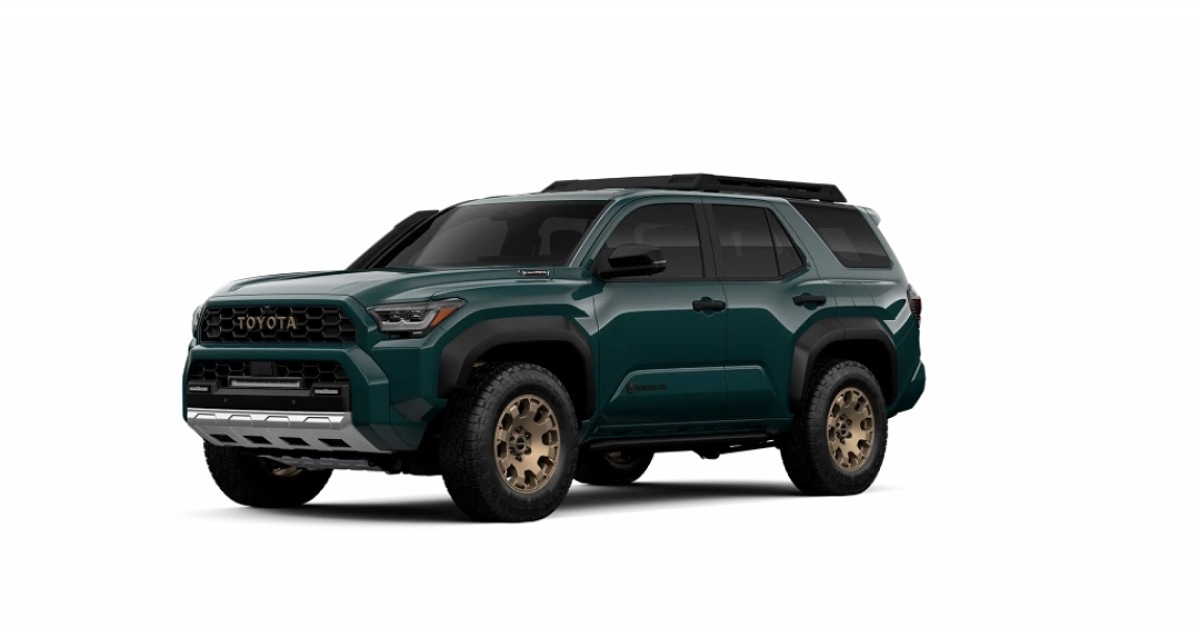
The front end of the 2026 4Runner commands attention right away. The bold grille showcases the prominent Toyota badge front and center, flanked by an aggressive lower air dam designed to improve aerodynamics without sacrificing the SUV’s commanding stance. The redesigned headlights feature all-LED technology with a sophisticated dark housing that gives the 4Runner a genuinely modern appearance while maintaining its iconic tough-as-nails identity.
The lower section of the front bumper incorporates gloss-black trim accents that frame fog lights perfectly positioned for maximum visibility on trails and in low-light conditions. Multiple forward-facing cameras and sensors are integrated seamlessly into the design, proving that modern safety technology doesn’t require visible clutter. Integrated tow hooks on both sides aren’t just functional—they’re a visual reminder that this 2026 4Runner means business when it comes to trail work.
One standout design feature is the creative fender flare design. Rather than solid panels, Toyota engineered cutouts that allow air to flow through the wheel wells. This design choice improves ventilation around the tires and contributes to the 4Runner’s overall aesthetic appeal. From certain angles, you can actually see straight through the fender flares—a detail that demonstrates thoughtful engineering.
Moving along the sides, the 2026 4Runner showcases refined body lines that emphasize strength without appearing bulky. The generous ground clearance of 9.2 inches is immediately obvious, giving you confidence before you ever start the engine. The sliding rear glass window—a feature Toyota wisely retained from previous generations—adds genuine practical value for loading and ventilation. Running boards are fixed standard equipment, providing convenient step-up access to the high cabin.
The high-clearance exhaust exit on the driver’s side signifies genuine off-road credentials. This isn’t merely cosmetic; it’s a legitimate engineering solution that prevents water damage while fording through streams and challenging terrain. The available composite front skid plate protects critical components without adding excessive weight.
Toyota offers several exciting exterior color options for the 2026 4Runner, including the stunning new Wave Maker blue. This innovative color option features a unique wave-like pattern that shimmers and appears to move differently depending on lighting conditions. Other available colors include Wind Chill Pearl, Underground, and classic options that appeal to traditional buyers. Each color option seems to enhance the 4Runner’s distinctive presence on the road.
The 2026 Toyota 4Runner’s rear design is equally impressive. LED lighting across the tail section provides excellent nighttime visibility, while the power tailgate with integrated wiper adds genuine convenience for owners who frequently access the cargo area. The overall design maintains visual proportion and balance, something that previous generations occasionally missed with their boxy proportions.
Road presence is one area where the 2026 4Runner absolutely excels. This vehicle commands respect on highways and parking lots alike. Standing at 72.6 inches tall and 194.9 inches long, the 4Runner presents an imposing silhouette that communicates capability and adventure without appearing unnecessarily aggressive. This is a vehicle that looks ready for anything—whether that means family road trips or serious backcountry exploration.
INTERIOR REVIEW
Step into the 2026 Toyota 4Runner, and you’ll immediately notice that Toyota completely elevated the interior experience compared to previous generations. The cabin has been completely redesigned with a focus on technology integration, material quality, and everyday comfort that adventure seekers genuinely appreciate.
The dashboard represents a clean, modern design philosophy. A large, high-resolution touchscreen display takes center stage, offering intuitive access to the 4Runner’s infotainment system, navigation, and connectivity options. Base models feature an 8.0-inch display, but higher trims offer a more impressive 14-inch interface that feels more like a modern luxury vehicle. The touchscreen integrates seamlessly into the dashboard without appearing like an afterthought.
The digital instrument cluster deserves particular attention. In higher trims, a 12.3-inch high-resolution display replaces traditional gauges, providing customizable information displays. This digital cluster can show hybrid system status and power flow diagrams, fuel economy data, and navigation information right in your line of sight. The display proves both informative and visually engaging without becoming overwhelming or distracting during driving.
Wireless Apple CarPlay and Android Auto come standard across the entire 2026 4Runner lineup. This is genuinely important because you can connect your smartphone without fumbling with cables. Both platforms integrate intuitively with the 4Runner’s touch interface, providing navigation, music, and communication functions you actually want to use regularly. The wireless connectivity eliminates the frustration of remembering charging cables.
Premium audio systems are available across trim levels. Base models include eight speakers and solid sound quality, while higher trims feature a 14-speaker JBL premium audio system that transforms the cabin into something approaching luxury SUV levels of acoustic refinement. Whether you’re listening to podcasts during long highway drives or enjoying your favorite music during trail adventures, audio quality meets expectations at every trim level.
Seat quality varies significantly across the 2026 4Runner lineup, which is exactly how it should be. Lower trims feature comfortable cloth upholstery, while TRD Sport Premium and TRD Off-Road Premium models upgrade to SofTex-trimmed seats with heating and ventilation in front rows. Limited and Platinum models feature genuine leather upholstery with unique contrast stitching that genuinely elevates the interior aesthetic. The Platinum trim truly represents luxury SUV territory, with ventilated front seats and heated front and second-row seating that make year-round comfort achievable.
Seat adjustability means even lengthy drives remain comfortable. Power-adjustable driver and front passenger seats include four-way lumbar support, and many trims offer memory functions that automatically adjust to your preferred position. For taller drivers and passengers, the cabin provides genuine headroom and legroom that doesn’t require constant repositioning during long trips.
Climate control receives thoughtful implementation throughout the 2026 4Runner. Dual-zone automatic climate control with individual driver and passenger temperature settings is standard, allowing everyone in the front to find their personal comfort zone. Rear-seat air vents ensure that second-row passengers don’t get left out when it comes to temperature management.
Storage solutions throughout the 2026 4Runner reflect practical thinking. The center storage area may not be enormous, but helpful pockets on all four doors, a shelf above the glovebox, and an L-shaped bin in front of the shifter provide numerous places to organize small items. This distributed storage approach means you’re never hunting frantically for keys or a phone.
The cargo area behind the second row provides 48.4 cubic feet of space, which is genuinely generous for a mid-size SUV. Fold the second row down entirely, and you access an impressive 90.2 cubic feet of total cargo capacity. For adventure seekers planning camping trips or mountain bike expeditions, this cargo space accommodates serious equipment loads without requiring roof racks or external storage solutions. The 2026 4Runner’s three-row option seats seven passengers total, though the third row genuinely works best for children or short trips rather than sustained adult use.
The Panoramic View Monitor, available on Limited trim and above, provides a 360-degree overhead view of the 2026 4Runner. This advanced camera system displays what’s below and around your vehicle, making tight parking situations and trail navigation considerably easier. On higher trims, a head-up display projects key driving information—speed, navigation prompts, and safety warnings—directly onto the windshield in your line of sight.
Materials throughout the 2026 4Runner cabin feel appropriately upscale. Dark chrome accents and gloss-black elements on higher trims create a sophisticated appearance that rivals many luxury SUVs. The overall cabin design communicates quality without appearing overly trendy or destined to look dated in five years.
One particularly thoughtful detail: the heated steering wheel on higher trims makes winter morning driving genuinely pleasant. Many drivers underestimate how much this small feature improves cold-weather driving comfort. Combined with heated seats, winter drives become something to actually enjoy rather than endure.
PERFORMANCE & DRIVING EXPERIENCE
The 2026 Toyota 4Runner i-FORCE MAX delivers a driving experience that genuinely surprises people who expect traditional SUV compromises. This hybrid four-cylinder engine produces an impressive 326 horsepower and 465 pound-feet of torque—numbers that would have seemed impossible in a hybrid SUV just a few years ago.
The powertrain’s turbocharged nature means you get responsive acceleration right from a stop. The electric motor component provides immediate torque, allowing quick merging on highways and confident passing maneuvers. The eight-speed automatic transmission works intelligently with the hybrid system, ensuring smooth power delivery across the entire rev range. Actual 0-60 times clock in around 7.5 seconds for the 4WD model, which is genuinely respectable for a mid-size SUV with genuine off-road capability.
City driving reveals where the 2026 4Runner’s hybrid system truly shines. Around town, the i-FORCE MAX engine frequently operates in pure electric mode, providing silent, smooth acceleration with no engine vibration transmitted to the cabin. Stop-and-go traffic becomes almost enjoyable because the hybrid system seamlessly transitions between electric and gas operation. The throttle response feels natural and predictable, never hesitant or overly sensitive.
Highway performance demonstrates impressive refinement. Once you settle into a steady cruise speed, the engine operates smoothly and quietly at sustained RPMs. The eight-speed transmission ensures that highway speeds occur at low RPMs, contributing to overall efficiency and comfort. The 2026 4Runner highway performance feels composed and stable, even in crosswinds or around long truck traffic.
The gearbox behavior deserves specific attention. The eight-speed automatic proves intelligent and responsive, whether you’re accelerating to pass or coasting downhill. Manual mode allows drivers to select specific gears when desired, providing engagement on winding mountain roads. During off-road driving, the transmission downshifts intelligently to provide engine braking on steep descents.
Engine refinement is genuinely impressive. The turbocharged four-cylinder runs remarkably quiet at normal cruising speeds. Turbo boost occasionally triggers a subtle whistle under hard acceleration, but nothing intrusive or annoying. The cabin insulation keeps engine noise well isolated, even during spirited driving. This is noticeably better than many competitor SUVs in the mid-size segment.
The pickup and acceleration characteristics feel natural and confidence-inspiring. The torque curve is flat from low RPMs upward, meaning the 2026 4Runner responds predictably whether you’re merging from a standstill or passing slower traffic at highway speeds. The electric motor component ensures that low-end response feels particularly strong, something turbocharged gasoline engines sometimes struggle to achieve.
Braking performance is solid and reassuring. The power-assisted front and rear ventilated disc brakes provide strong stopping power with smooth modulation. The electronic parking brake engages without the mechanical feeling of older systems. From daily driving to descending steep mountain grades, the braking system maintains confidence and control.
Handling and suspension deserve special attention. The 2026 4Runner employs an independent double-wishbone front suspension with coil springs and a multi-link rear suspension with coil springs. This setup provides genuine comfort on rough surfaces while maintaining composed handling during highway driving. The Adaptive Variable Suspension (AVS) system, available on higher trims, automatically adjusts damping to suit driving conditions. On smooth pavement, the suspension feels smooth and composed. On rough trails, the system tightens up, providing better body control and reducing jarring impacts.
The electric power steering provides good feedback without feeling numb. It’s responsive enough during spirited driving yet light enough for parking lot maneuvering. The 39.4-foot turning circle is reasonable for a vehicle this size, making navigation in tight urban environments surprisingly manageable.
Off-road performance represents where the 2026 4Runner truly differentiates itself. The full-time four-wheel-drive system with Torsen limited-slip center differential provides seamless power distribution. Higher off-road trims add an electronically locking rear differential, giving genuine dual-axle locking capability for serious terrain.
Crawl Control is genuinely clever technology for serious off-roaders. This system automatically manages throttle and braking as you navigate obstacles at low speeds. You focus entirely on steering and line choice while Crawl Control handles momentum management. This proves particularly valuable when descending steep grades or crawling over large rocks where precision throttle control is critical.
Multi-Terrain Select, available on TRD Off-Road and higher trims, offers five different terrain-specific modes that optimize traction characteristics for sand, mud, gravel, rocky, and rock-crawl scenarios. The system adjusts engine response, transmission behavior, and traction control settings for each terrain type. Real-world feedback from owners confirms that these modes genuinely improve off-road confidence and capability.
Downhill Assist Control manages braking automatically when descending steep grades, maintaining a steady low speed without driver intervention. This feature transforms steep mountain descents from white-knuckle ordeals into managed, controlled experiences. The system works seamlessly, never over-braking or creating jerky motion.
FEATURES & TECHNOLOGY
The 2026 Toyota 4Runner’s technology suite brings this adventure-focused SUV firmly into the modern era. Standard Toyota Safety Sense 3.0 technology across the entire lineup means you get sophisticated driver assistance whether you’re choosing the base model or a high-trim option.
The infotainment system integration with smartphone platforms proves intuitive and reliable. Wireless Apple CarPlay and Android Auto eliminate cable management frustrations. Navigation appears clear and responsive whether you’re using the built-in system or syncing with Google Maps or Apple Maps through your phone. Turn-by-turn directions display on both the main screen and the optional head-up display simultaneously.
The available 12.3-inch digital gauge cluster truly elevates the driving experience. Customizable information screens let you prioritize what matters most—fuel economy data, efficiency-focused metrics on hybrid models, or navigation prompts. The display brightness automatically adjusts to lighting conditions, remaining visible in bright sunlight while not creating nighttime glare.
Connectivity features meet genuine modern expectations. Wireless phone charging ensures your device never runs dry during long drives. Bluetooth integration works flawlessly with audio calls and music streaming. The system supports multiple paired devices, switching between them intelligently depending on which phone you’re carrying.
Convenience features scale across the trim levels, but even base models receive meaningful technology. Keyless entry and ignition are universal. The power tailgate with integrated wiper makes accessing the cargo area genuinely convenient, particularly during inclement weather. Automatic high-beam functionality reduces the mental fatigue of manually toggling high beams during evening driving.
Rain-sensing variable intermittent windshield wipers activate automatically when moisture is detected, providing that small convenience that compounds over thousands of miles. The rear spoiler with integrated LED center high-mount stop light provides excellent nighttime visibility for following traffic.
The available panoramic moonroof on higher trims opens up the cabin, creating that premium SUV feel that many adventure seekers appreciate. The sun shades operate automatically at the push of a button, managing cabin temperature and light without fuss.
Heated power outside mirrors with turn signal indicators prove valuable in snow country or during evening highway driving. The power-folding feature prevents accidental mirror strikes when navigating narrow trails or parking in tight spaces.
Interior lighting throughout the 2026 4Runner includes second-row and cargo-area LED illumination, ensuring you can find items during dark evening camping trips. Multiple cup holders and bottle holders—the 2026 4Runner provides 12 total—mean your family’s beverages remain organized and accessible during long drives.
SAFETY REVIEW
Safety represents a core philosophy throughout the 2026 Toyota 4Runner design. Toyota Safety Sense 3.0 technology comes standard on every 2026 4Runner, ensuring that safety features aren’t reserved for higher trim levels where many buyers can’t afford them.
The Lane Departure Alert with Steering Assist system monitors your position within lane markings. If the 2026 4Runner detects unintended lane departure at speeds above 30 mph without turn signal activation, the system provides both audio and visual alerts. More impressively, the system can apply light steering correction to bring you back safely into your lane. The technology recognizes large three-dimensional objects like guardrails and barriers, adding another layer of sophistication.
Lane Tracing Assist builds on traditional lane-keeping technology by actively centering the vehicle within its lane when Dynamic Radar Cruise Control is engaged. During long highway drives where subtle steering inputs become fatiguing, this technology genuinely helps reduce driver workload. The system uses both lane markers and the vehicle ahead to guide steering inputs.
Pre-Collision System with Pedestrian Detection represents one of the most important safety technologies available. The forward-facing camera and radar sensors constantly scan the road ahead, identifying potential collision threats including vehicles, pedestrians, and cyclists. If a potential collision is detected, the system provides both visual and audio alerts. If you don’t respond in time, automatic emergency braking is applied, potentially preventing collisions or significantly reducing impact severity.
Dynamic Radar Cruise Control maintains a pre-set following distance from the vehicle ahead, automatically adjusting your 2026 4Runner’s speed in stop-and-go traffic. This proves particularly valuable in urban traffic where constant speed adjustments create fatigue and increase accident risk.
Road Sign Assist reads traffic signs through the forward-facing camera and displays relevant information on your gauge cluster or head-up display. Speed limit changes, stop signs, and no-passing zones appear continuously, ensuring you don’t miss important regulatory information.
Blind spot monitoring lights appear in your side mirrors when vehicles occupy blind spots, providing that critical information often missed during traditional shoulder checks. Rear cross-traffic alert warns of vehicles approaching as you back out of parking spaces—a genuine safety enhancement.
Additional safety features specific to off-road driving include Multi-Terrain Monitor cameras that display what’s beneath and around the 2026 4Runner, making trail navigation and parking in rough terrain considerably easier. The system helps you understand terrain characteristics and spot potential obstacles.
Safety equipment includes nine airbags positioned throughout the cabin. Driver and front passenger seatbelt pretensioners with force limiters optimize restraint effectiveness during crashes. Electronically Controlled Braking (ECB) with integrated regenerative braking manages stops intelligently, improving both safety and efficiency.
The reinforced body-on-frame construction using TNGA-F high-strength boxed-steel ladder frame provides genuine structural protection. This design contributes to the 2026 4Runner’s impressive off-road capability while maintaining excellent crash safety.
Actual crash test results from NHTSA and IIHS for the 2026 model haven’t been released yet, but the 2025 4Runner earned four out of five stars overall from NHTSA, with perfect five-star scores in side crash protection. The IIHS awarded the 4Runner top ratings of “Good” in categories like roof strength and head restraints. The 2026 model carries over mechanically unchanged from 2025, so similar ratings are expected.
MILEAGE & FUEL EFFICIENCY
Fuel economy represents one of the most important considerations for 2026 Toyota 4Runner shoppers, and the i-FORCE MAX hybrid delivers genuinely impressive numbers for a mid-size SUV with serious off-road capability.
EPA ratings for the i-FORCE MAX hybrid across all available trims are consistent: 23 MPG city, 24 MPG highway, and 23 MPG combined. These figures represent dramatic improvements over the base turbocharged gasoline engine, which achieves 19-20 MPG city, 24-25 MPG highway, and 21-22 MPG combined depending on drivetrain configuration.
Real-world fuel economy data from actual 2026 4Runner i-FORCE MAX owners provides even more detailed insight. One owner reporting approximately 1,150 miles across four fill-ups while driving 75% city and 25% highway—with heavy air conditioning use—reported real-world fuel economy of 19.78 MPG. While lower than EPA city ratings, this figure remains respectable considering the driving conditions and climate control usage. Highway-focused driving typically yields better results than this mixed profile.
The hybrid system proves particularly clever at extracting efficiency during city driving. The electric motor component provides immediate torque response during acceleration, allowing the turbocharged engine to operate at lower throttle positions. Regenerative braking captures energy normally dissipated during deceleration, converting it to electrical energy that charges the hybrid battery. During stop-and-go traffic, this translates to noticeably better fuel economy than the gasoline-only engine.
Highway driving represents the primary weakness of the hybrid system. At sustained highway speeds above 60-70 mph, the turbocharged gasoline engine handles most propulsion work, while the electric motor provides supplemental assist. The aerodynamic characteristics of the 4Runner’s rugged design—wide stance, boxy proportions, and high ground clearance—work against efficiency at highway speeds. Compared to sleeker sedans, any SUV with the 4Runner’s styling will consume more fuel at highway speeds simply due to aerodynamic factors.
Comparing similar trims with gasoline and hybrid powertrains reveals the efficiency trade-offs. The TRD Off-Road gasoline model achieves 19 MPG city and 25 MPG highway, while the hybrid version delivers 23 MPG city but only 24 MPG highway. The hybrid gains approximately 4 MPG in the city but sacrifices about 1 MPG on the highway. For drivers spending significant time in urban environments, the hybrid offers genuine efficiency advantages. Highway-focused drivers might find the gasoline engine slightly more efficient.
Fuel tank capacity is important for adventure planning. The 2026 4Runner carries a 19-gallon fuel tank, providing a potential driving range around 380 miles city or 494 miles highway on a full tank. For long-distance adventuring in remote areas with sparse fuel stations, this range is genuinely important planning information.
All 2026 4Runner models require regular unleaded gasoline, eliminating the need to search for premium fuel or diesel options. This accessibility means refueling anywhere is straightforward, a genuine advantage for remote adventure travel.
Driving techniques significantly impact real-world fuel economy. Smooth acceleration, maintaining steady highway speeds, using cruise control on flat highways, minimizing idling time, and reducing aggressive cornering all contribute to better efficiency. The 2026 4Runner’s available Drive Mode Select system includes an Eco mode that optimizes efficiency through engine management and transmission tuning adjustments.
PRICE & VARIANT DETAILS
The 2026 Toyota 4Runner lineup spans from accessible to premium pricing, with the i-FORCE MAX hybrid available on select higher trims. Understanding the pricing structure and available options helps you make an informed purchasing decision.
The complete 2026 4Runner lineup starts with the SR5 at $43,065 (all prices include $1,495 destination charge). This base model remains gasoline-only with rear-wheel-drive standard. The TRD Sport trim begins at $49,545 and adds off-road styling elements and equipment.
For $54,905, the TRD Sport Premium includes SofTex-trimmed seating with heated and ventilated front seats, upgrade soundproofing, and additional convenience features. The TRD Off-Road trim at $51,485 brings serious off-road equipment including standard 4WD, TRD Off-Road Bilstein shock absorbers, Crawl Control, Multi-Terrain Select, Downhill Assist Control, and an electronically locking rear differential.
The TRD Off-Road Premium variant, priced at $57,265, adds luxury appointments to the serious off-road capability. The Limited trim starts at $57,695 with a more lifestyle-focused orientation and premium interior materials.
The i-FORCE MAX hybrid becomes available starting at $59,965 on the Limited trim as a $2,800 option upgrade. This represents the most affordable way to access the superior hybrid technology and performance characteristics. At this price point, you get the efficiency benefits of the hybrid system while maintaining traditional luxury SUV comfort orientation.
The Platinum trim, the first to make the i-FORCE MAX hybrid standard equipment, starts at $65,155 with full-time 4WD. Platinum models include genuine leather upholstery, ventilated front and heated front and second-row seats, an available panoramic moonroof, and an expanded technology package.
The Trailhunter trim at $69,195 represents Toyota’s answer to overlanding enthusiasts. The Trailhunter is designed specifically for extended off-grid adventures and features specialized equipment including Old Man Emu 2.5-inch forged shock absorbers, a higher suspension lift, additional undercarriage protection, and interior design emphasizing adventure over luxury.
The TRD Pro, priced at $69,395, returns to the 4Runner lineup with serious off-road credibility. The TRD Pro package includes multi-terrain off-road systems, signature TRD components, and aggressive styling that communicates genuine capability.
On most gasoline engine models, rear-wheel drive is standard, with full-time 4WD available for a $2,000 premium. The i-FORCE MAX hybrid exclusively features full-time 4WD with no RWD option, reflecting the system’s architecture and the market positioning.
Several accessory packages allow further customization. Digital Key capability ($275) enables your smartphone to serve as a vehicle key. Wave Maker Paint ($695) adds the striking blue color option. Mudguards ($175), matte-black heritage grill letter overlays ($189), and all-weather cargo mats ($140) allow personalization. Predator drop steps ($699) improve accessibility, while onboard air compressors ($1,475) support serious off-road adventuring.
Best value for money varies by use case. For daily driving and occasional light off-roading, the gasoline-powered Limited trim at $57,695 provides an excellent balance of technology, comfort, and capability. For efficiency-focused buyers planning significant highway driving with some off-road capability, the Limited with i-FORCE MAX hybrid at $59,965 delivers superior efficiency and technology.
For serious off-road enthusiasts, the TRD Off-Road Premium at $57,265 balances serious capability equipment with premium comfort. For adventure-seekers planning extended overlanding expeditions, the Trailhunter at $69,195 includes specialized equipment supporting weeks-long remote travels.
PROS & CONS
PROS
The 2026 Toyota 4Runner hybrid delivers genuine all-terrain capability that separates it from traditional SUVs. This isn’t just marketing speak—the independent suspension, locking rear differential on appropriate trims, Crawl Control, and Multi-Terrain Select represent legitimate off-road engineering. The vehicle genuinely performs on challenging terrain while maintaining highway comfort.
Highway refinement and composure represent another genuine strength. The cabin insulation isolates road noise effectively. The suspension smooths rough pavement without feeling soft. The eight-speed transmission keeps highway speeds quiet and efficient. This refinement contrasts pleasantly with competitor SUVs that feel more utilitarian at highway speeds.
Technology integration proves intuitive and reliable. Wireless Apple CarPlay and Android Auto work flawlessly. The available head-up display and 12.3-inch digital gauge cluster represent premium functionality. Safety systems like pre-collision with pedestrian detection and adaptive cruise control work intelligently without feeling intrusive.
The i-FORCE MAX hybrid powertrain delivers impressive performance combined with noticeably better fuel efficiency than the gasoline engine, particularly in city driving. The 326 horsepower and 465 pound-feet of torque provide genuine acceleration response. For hybrid-skeptics worried about sluggish performance, the 2026 4Runner hybrid eliminates that concern.
Design quality throughout the 2026 4Runner communicates genuine durability and purpose. Materials feel substantial. Switchgear operates smoothly. The overall interior design avoids trendy elements destined to look dated in five years, instead emphasizing timeless functionality.
Genuine 48-speed-hour roadside assistance through ToyotaCare (2 years, unlimited miles) means mechanical issues don’t strand you. Additionally, standard Toyota Safety Sense 3.0 features across the entire lineup ensure affordability without sacrificing safety technology.
CONS
Limited rear seat space represents a notable limitation, particularly for adult passengers spending extended periods in the second row. The third-row option works primarily for children or short occasional trips rather than sustained comfortable seating for adults. For family road trips with adult passengers, the limited second-row legroom can create discomfort on drives exceeding three to four hours.
The i-FORCE MAX hybrid actually reduces cargo capacity slightly compared to the gasoline engine due to the hybrid battery component. While this reduction remains modest and doesn’t substantially impact practical carrying capacity, it represents a real trade-off worth acknowledging.
Highway fuel economy improvements over the gasoline engine are marginal. At highway speeds, the hybrid achieves only about 1 MPG better than comparable gasoline-powered trims. For highway-focused drivers, the efficiency gains may not justify the $2,800 hybrid premium, particularly given the slightly lower payload capacity.
Fuel economy at actual highway speeds frequently falls short of EPA ratings, particularly for less experienced drivers or those not specifically optimizing driving techniques for efficiency. Reports of 19-20 MPG combined on mixed driving, while respectable, still represent a difference from published EPA figures.
The third-row seating option, while appealing for expanding passenger capacity on paper, genuinely feels cramped for sustained use. Headroom, legroom, and shoulder room all feel inadequate for adults. This limitation reduces practical passenger capacity compared to competitor vehicles offering genuinely comfortable third-row seating.
Off-road equipment remains expensive when spreading across multiple trim levels. Accessing Crawl Control, locking rear differential, and Multi-Terrain Select requires upgrading to at least TRD Off-Road trim, significantly increasing the purchase price. Base models and Sport trims miss out on these genuinely valuable off-road features.
COMPETITORS COMPARISON
2026 Toyota 4Runner i-FORCE MAX vs. Jeep Wrangler 4-Door vs. Ford Explorer
| Factor | 2026 4Runner (Hybrid) | Jeep Wrangler 4-Door | Ford Explorer |
|---|---|---|---|
| Starting Price | $65,155 (Platinum hybrid) | Starting ~$53,000 | Starting $40,025 |
| Horsepower | 326 hp | 285 hp (3.6L V6) | 300 hp (2.3L Turbo) |
| Torque | 465 lb-ft | 260 lb-ft | 310 lb-ft |
| Fuel Economy (Combined) | 23 MPG | 20-22 MPG | 21-24 MPG |
| Towing Capacity | 6,000 lbs | 3,500 lbs | 5,600 lbs |
| Cargo Space | 90.2 cu. ft. (seats folded) | 76.5 cu. ft. | 87.8 cu. ft. |
| Seating | 5 (7 with option) | 5 (7 with option) | 6 base (7 with option) |
| 4WD Standard | Yes (hybrid) | Yes | No (option on some) |
| Warranty | 2 years/25k miles (ToyotaCare) | 3 years/36,000 miles | 3 years/36,000 miles |
| Off-Road Capability | Excellent (with right trim) | Excellent | Moderate |
| Interior Refinement | Premium, modern | Utilitarian | Premium, spacious |
| Technology | Excellent (TSS 3.0 standard) | Good | Excellent |
| Best For | Adventure seekers valuing technology | Trail enthusiasts seeking raw capability | Family-focused buyers |
The Jeep Wrangler traditionally dominates true off-road capability rankings, with its solid front and rear axles, available locking differentials on both ends, and legendary trail-proven design. However, the 4Runner hybrid’s independent suspension and clever Crawl Control system prove surprisingly capable, particularly when properly equipped. The Wrangler feels more raw and mechanical in its approach.
The Ford Explorer targets a different buyer demographic. It emphasizes spaciousness, family-friendly features, and relative affordability. While the Explorer offers respectable off-road capability on upper trims, it prioritizes lifestyle and comfort over serious trail performance. The Explorer remains an excellent family SUV choice but operates in a different market segment.
The 2026 4Runner hybrid successfully bridges the gap between the Wrangler’s serious capability and the Explorer’s luxury orientation. You get better off-road performance than the Explorer, more technology and interior refinement than the Wrangler, and superior efficiency to the Explorer’s traditional engines.
FINAL VERDICT
The 2026 Toyota 4Runner i-FORCE MAX represents an impressive achievement in hybrid SUV engineering. Toyota successfully combined serious off-road capability, modern technology, premium interior refinement, and genuine performance into a single package. Is this the vehicle worth buying? For most adventure seekers prioritizing technology, efficiency, and comfort alongside capability, absolutely yes.
The 4Runner shines for buyers planning regular weekend trail adventures combined with everyday driving on highways and city streets. If your typical annual mileage includes 70% highway driving with only occasional light off-roading, the gasoline-powered Limited trim at $57,695 delivers better value. Conversely, if you anticipate significant city driving and occasional off-road adventures, the i-FORCE MAX hybrid premium proves worth paying.
This vehicle works best for buyers comfortable with mid-size SUV compromises. The third row feels cramped. Highway fuel economy improvements over gasoline engines remain modest. Off-road features concentrate on premium trims, increasing costs. These aren’t deal-breakers, but honest acknowledging ensures good purchasing decisions.
Which type of users should buy it? Adventure seekers valuing technology integration and comfort alongside capability. Family road-trippers who appreciate modern safety systems and media connectivity. Outdoor enthusiasts planning extended camping expeditions with serious equipment loads. First-time off-road buyers wanting trail capability combined with everyday livability. Buyers living in regions with significant city driving who value hybrid efficiency.
Should you buy it or skip it? For buyers fitting the above profiles and comfortable with the $65,000+ investment, buy it without hesitation. The 2026 4Runner hybrid delivers genuine capability alongside authentic modern luxury SUV characteristics. For budget-conscious buyers prioritizing affordability or highway efficiency above all other considerations, explore the gasoline-powered models or competitor vehicles. The 2026 4Runner i-FORCE MAX represents genuine excellence, but excellence always demands a price premium.
FREQUENTLY ASKED QUESTIONS
Is this car good for families?
Yes, the 2026 4Runner works well for families, though with important caveats. Five-passenger seating remains comfortable for family road trips. Available seven-passenger configurations exist, but third-row seating feels cramped for sustained trips with adult passengers. The excellent safety features, modern infotainment integration with smartphone navigation, and climate control make family travel enjoyable. Long-term seating comfort on 8+ hour road trips improves dramatically if families prioritize second-row seating for children and adults who don’t require maximum legroom.
What is the real-world mileage?
Real-world fuel economy varies significantly based on driving patterns. City-focused drivers report 19-23 MPG combined depending on aggressive versus conservative driving techniques. Highway-focused drivers typically see 22-24 MPG combined. One owner with mixed driving patterns reported 19.78 MPG actual consumption across 1,150 miles. EPA ratings of 23/24/23 MPG city/highway/combined represent reasonable goals if you optimize driving techniques, but actual results frequently trend slightly lower. Driving in Eco mode, minimizing aggressive acceleration, using cruise control on highways, and reducing air conditioning demand all contribute to better efficiency.
What is the maintenance cost?
Annual maintenance averages approximately $420-$500 based on CarEdge and RepairPal estimates. Five-year maintenance totals approximately $2,097-$2,100 for scheduled service. The ToyotaCare program includes free maintenance for 2 years or 25,000 miles, whichever comes first, eliminating early ownership costs. After ToyotaCare expires, routine maintenance costs remain reasonable. Toyota’s reputation for reliability means unexpected major repairs remain statistically less common than many competitor vehicles. Owners should budget $420-$500 annually beyond the initial two years for continued maintenance.