Read our complete 2025 Corolla Cross review — explore its fuel efficiency, safety features, performance, and real user experience. Discover if this Toyota is the right compact SUV for you.
Introduction
The 2025 Corolla Cross continues Toyota’s legacy of reliability and affordability in the competitive subcompact SUV market. This compact crossover combines the proven engineering of the beloved Corolla sedan with the spacious cabin and higher ride height that modern buyers crave. Launched as an SUV answer to one of the world’s most successful car models, the Corolla Cross delivers on practicality without breaking the bank. With a starting price under $25,600 and impressive fuel economy ratings reaching up to 32 miles per gallon combined, the Corolla Cross appeals to budget-conscious families, first-time buyers, and anyone prioritizing value over flashy features. The 2025 model year introduces refined styling, enhanced all-wheel-drive capabilities, and an updated multimedia system with expanded technology integration that makes this little SUV feel bigger than its footprint suggests.
Key Specifications
Engine: 2.0-liter DOHC four-cylinder (Atkinson-cycle)
Power: 169 horsepower at 6,600 RPM
Torque: 150 pound-feet at 4,400 RPM
Transmission: Continuously Variable Automatic (CVT)
Drivetrain: Front-wheel drive standard; all-wheel drive optional
Fuel Economy (FWD): 31 city / 33 highway / 32 combined MPG
Fuel Economy (AWD): 29 city / 31 highway / 30 combined MPG
Fuel Tank Capacity: 12.4 gallons
Dimensions: 175.6 inches long × 71.9 inches wide × 64.8 inches tall
Wheelbase: 103.9 inches
Curb Weight: Approximately 3,384 pounds
Cargo Volume: 24 cubic feet behind rear seats; 48 cubic feet with rear seats folded
Seating Capacity: 5 passengers
Towing Capacity: 1,500 pounds maximum
Ground Clearance: 8.1 inches
Exterior Design Review
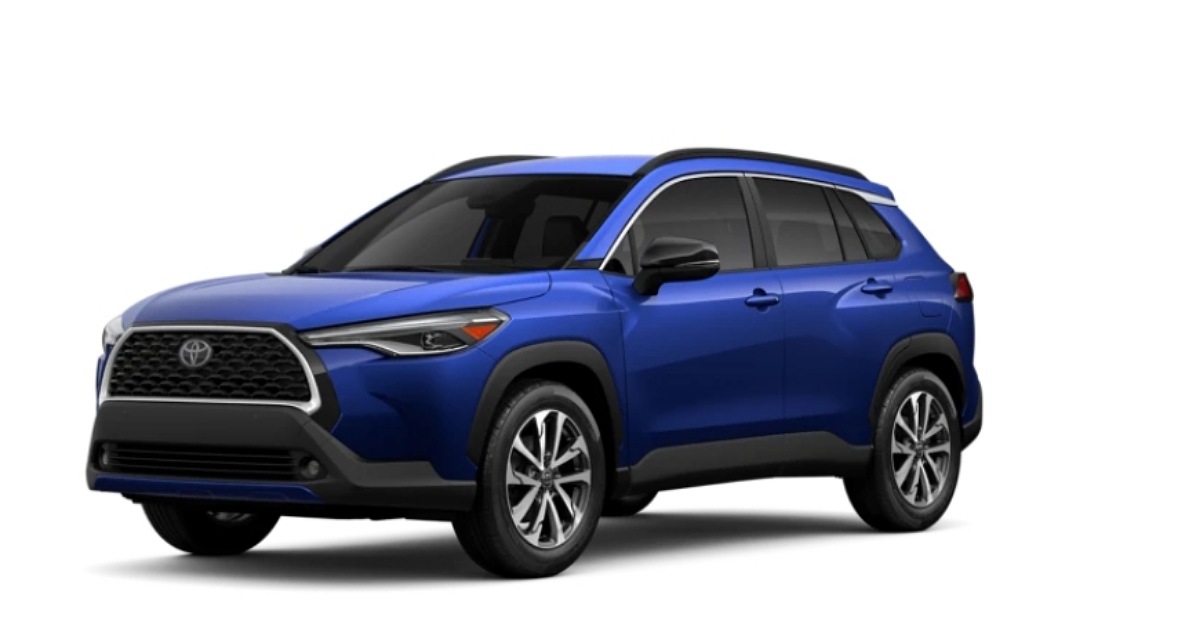
The 2025 Corolla Cross wears a bold yet refined exterior that strikes a confident balance between practicality and style. Toyota’s designers have given this generation a more aggressive front-end treatment, featuring a sculpted grille that commands attention on the road. The LED headlights and taillights enhance visibility while adding a modern touch, creating a sleek silhouette that looks considerably more expensive than its actual price tag suggests.
Standard 17-inch alloy wheels come on the base L trim, while available 18-inch and 19-inch alloy wheels on higher trims add sportiness without compromising the vehicle’s sensible nature. The roofline flows smoothly from front to rear, terminating in a subtle spoiler that adds visual interest without overdoing it. Functional roof rails come standard on select trims, providing genuine utility for those who need extra cargo-carrying capacity during weekend adventures. The elevated stance delivers commanding visibility in traffic while maintaining a lowered center of gravity for better handling dynamics on winding roads.
The 2025 Corolla Cross offers multiple exterior color choices, including a new Polymetal Gray finish for 2025, allowing buyers to personalize their look. Available two-tone paint schemes create striking contrasts that appeal to drivers wanting something beyond basic transportation. Well-defined body lines and sculpted surfaces create visual depth, making the relatively small dimensions feel more substantial. Chrome accents and integrated door handles enhance the premium appeal despite the modest price point. The overall design language speaks to Toyota’s philosophy of mixing everyday practicality with just enough style to make ownership genuinely enjoyable.
Interior Review
Step inside the 2025 Corolla Cross, and you’ll discover a surprisingly spacious cabin that belies the vehicle’s external dimensions. The dashboard presents a clean, uncluttered design with intuitive button placement and logical organization that rewards rather than frustrates drivers. Soft-touch materials on the dashboard and door panels create an interior atmosphere that feels more upscale than the Corolla Cross’s competitive pricing suggests.
Standard cloth upholstery comes on the L and LE trims, while the XLE offers optional SofTex-trimmed seating with contrasting stitching that adds premium appeal. The driver’s seat delivers good support during both city commuting and highway cruising, with available lumbar support on higher trims providing customized comfort for longer journeys. Rear seat legroom measures 32 inches—respectable for this segment—though taller passengers might find extended journeys a bit snug.
The centerpiece of the cabin is an 8-inch touchscreen on L and LE trims, with an available 10.5-inch screen on the XLE providing improved visibility and easier menu navigation. Apple CarPlay and Android Auto integration comes standard, seamlessly connecting your smartphone to access navigation, music, and messaging apps. USB ports provide charging for multiple devices, while available wireless charging keeps your smartphone topped up without cable clutter.
Climate control handles both scorching summers and chilly winters admirably, with available dual-zone automatic air conditioning on higher trims. The cabin quietness impresses, with sound deadening keeping highway drone and engine noise at reasonable levels. A 7-inch digital instrument cluster is available, replacing traditional analog gauges with customizable digital displays showing vehicle information at a glance. Storage compartments throughout the cabin—including a center console bin, door pockets, and overhead storage—provide practical space for everyday essentials.
Performance and Driving Experience
The 2025 Corolla Cross prioritizes smooth, reliable transportation over exhilarating performance, and it executes this mission admirably. The 2.0-liter four-cylinder engine produces 169 horsepower and 150 pound-feet of torque—adequate power for highway merging and climbing mountain roads without strain. Acceleration is leisurely rather than quick; zero to 60 miles per hour takes approximately 9.2 seconds in all-wheel-drive models, placing it in the middle of the subcompact SUV pack.
The CVT transmission handles power delivery smoothly in most driving situations, though enthusiasts may find its response a bit soft compared to traditional automatics. The engine emits a buzzy quality when pushed hard, a characteristic inherent to this engine design rather than a manufacturing defect. Real-world highway fuel economy testing returned 30 miles per gallon—just one mile per gallon shy of EPA estimates—demonstrating Toyota’s conservative testing methodology.
City driving is where the Corolla Cross truly shines. The tight turning radius, excellent sightlines, and compact dimensions make navigating congested urban streets and tight parking spaces straightforward. The optional all-wheel-drive system engages automatically when needed, providing additional traction in slippery conditions without requiring driver intervention. The suspension strikes an admirable balance between comfortable ride quality and responsive handling, soaking up road imperfections without excessive body roll during aggressive cornering.
Braking performance is confidence-inspiring, with 70-0 miles per hour stopping distances of approximately 172 feet. The four-wheel disc braking system modulates power effectively, whether performing emergency stops or gentle deceleration on the highway. Electronic brake-force distribution and brake assist prevent wheel lock during panic braking, keeping the vehicle stable even in challenging conditions.
The road presence feels solid without being harsh, making long road trips less fatiguing than competitors that sacrifice ride quality for sportier handling. Wind and road noise remain well-controlled at highway speeds, though the CVT’s continuous pitch variation becomes noticeable during aggressive acceleration. Overall, the Corolla Cross delivers the kind of reliable, predictable driving experience that Toyota has perfected over decades.
Features and Technology
The 2025 Corolla Cross packs impressive technology into its modest frame, ensuring drivers stay connected without overwhelming complexity. Toyota Safety Sense 3.0 comes standard across all trims, including Pre-Collision System with Pedestrian Detection, Lane Departure Alert with Steering Assist, Automatic High Beams, Full-Speed Range Dynamic Radar Cruise Control, Lane Tracing Assist, and Road Sign Assist.
The infotainment system supports wireless Apple CarPlay and Android Auto, eliminating cable clutter and enabling seamless smartphone integration. Voice recognition allows hands-free control of navigation, music, and climate functions, minimizing distractions during driving. The touchscreen menu structure is logical and responsive, though occasional lag occurs during menu navigation. Bluetooth connectivity pairs with multiple devices, automatically connecting your phone upon entry.
Available features include an 8-speaker audio system on base trims, with optional JBL premium audio delivering noticeably improved sound quality for music enthusiasts. A backup camera comes standard, with an available Bird’s Eye View camera providing 360-degree visibility around the vehicle during parking maneuvers. Wireless smartphone charging on higher trims keeps your device powered throughout the day without cable management hassle.
Remote start functionality allows preheating or pre-cooling the cabin before entering, a genuinely convenient feature during extreme weather. The available blind spot monitor with rear cross-traffic alert proves invaluable during lane changes and parking lot navigation. However, the rearview camera picture quality feels dated compared to newer systems, lacking the clarity and definition expected in 2025 models.
Safety Review
Safety standards in the 2025 Corolla Cross reflect Toyota’s commitment to occupant protection through comprehensive crash test performance and preventive technology. The vehicle earned consistently positive ratings in NHTSA crash testing, with four-star frontal crash ratings and five-star side impact ratings. IIHS testing also returned favorable results across multiple evaluation categories, including frontal crash prevention with pedestrian detection.
The structural design maintains adequate occupant compartment integrity during impacts, with body-on-frame construction providing solid protection. Nine airbags standard across all trims include dual front airbags, side chest-protecting airbags, side curtain airbags extending the full roof length, and a driver knee airbag. This comprehensive airbag suite ranks among the best in the segment.
Toyota Safety Sense 3.0 technology works in concert with the structural safety features, actively preventing collisions before they occur. The Pre-Collision System detected obstacles in testing and provided appropriate warnings and braking intervention. Lane Departure Alert with Steering Assist proved effective at preventing unintended lane drifts, particularly valuable during extended highway driving when fatigue might impair concentration.
The Automatic High Beams automatically switch between high and low beams based on oncoming traffic, improving forward visibility during night driving while avoiding driver distraction from manual adjustment. Full-Speed Range Dynamic Radar Cruise Control maintains consistent following distance at both highway and city speeds, though some drivers report overly conservative spacing in rush-hour traffic.
Electronic stability control and traction control work together with the anti-lock braking system to maintain vehicle control during emergency maneuvers on slippery surfaces. Child seat anchors on rear doors simplify installation of child safety seats, while rear door child safety locks prevent children from accidentally opening doors during motion.
Fuel Efficiency and Mileage
Fuel economy represents one of the strongest selling points for the 2025 Corolla Cross, particularly for drivers operating on tight budgets. The gasoline model achieves EPA-estimated ratings of 31 miles per gallon in city driving, 33 on the highway, and 32 combined with front-wheel drive. Adding all-wheel drive reduces these figures to 29 city, 31 highway, and 30 combined—a reasonable trade-off for improved traction in winter conditions.
Real-world highway fuel economy testing revealed 30 miles per gallon at 75 miles per hour, demonstrating that EPA estimates translate to actual driving conditions. Consumer reports indicate typical combined fuel economy ranging from 30 to 32 miles per gallon under normal driving conditions, though aggressive driving or frequent short trips can reduce efficiency by several miles per gallon.
The hybrid version delivers substantially superior fuel economy, achieving up to 45 miles per gallon in city driving, 38 on highways, and 42 combined. While the hybrid carries a $4,300 premium over the comparable gasoline model, the superior fuel economy recaptures this investment within approximately five years for average drivers. The hybrid’s added power—196 combined horsepower versus 169 for the gasoline engine—also delivers noticeably livelier acceleration and performance.
For routine maintenance, the 12.4-gallon fuel tank provides approximately 400 miles of highway range on a single fill-up, reducing fill-up frequency. Premium fuel is not required; regular unleaded gasoline suffices for all models. The straightforward engine design minimizes complex components that might compromise reliability or require expensive repairs.
Price and Variant Details
The 2025 Toyota Corolla Cross pricing structure offers three gasoline trims plus hybrid variants, ensuring buyers find an option matching their budget and feature preferences.
Gasoline Models:
- L (Base): Starting at $25,585 MSRP; includes 8-inch touchscreen, Apple CarPlay, Android Auto, Toyota Safety Sense 3.0, backup camera, and 17-inch alloy wheels
- LE: Starting at $26,465 MSRP; adds blind spot monitor, rear cross-traffic alert, automatic headlights, and SofTex seat trim
- XLE: Starting at $28,260 MSRP; features 10.5-inch touchscreen, power-adjustable driver seat with lumbar support, heated front seats, 18-inch alloy wheels, and premium audio upgrade options
All-Wheel Drive Pricing:
- L AWD: $25,435 starting price
- LE AWD: $27,765 starting price
- XLE AWD: $29,660 starting price
Hybrid Models: Starting at $29,945 for the base S trim, with Nightshade and XSE variants reaching approximately $33,130. The hybrid powertrain adds approximately $4,300 to equivalent gasoline pricing.
Market data indicates buyers are securing incentives of 4-5% below MSRP in competitive dealership environments. Edmunds data shows average transaction prices ranging from $24,488 on base L trims to $28,737 on loaded XLE variants across the United States. The vehicle sells briskly, typically departing dealership lots within 13-17 days of arrival.
Toyota’s warranty covers the vehicle for three years or 36,000 miles bumper-to-bumper, with powertrain coverage extending five years and 60,000 miles. Complimentary maintenance for two years and 25,000 miles with roadside assistance provides a nice value-added benefit compared to competitors offering no included maintenance.
Pros and Cons
Strengths:
The Corolla Cross excels at delivering reliable, affordable transportation. Toyota’s legendary dependability means fewer repair headaches during ownership, with maintenance costs running approximately $5,831 over ten years—significantly below the industry average for subcompact SUVs. The generous cargo space of 24 cubic feet behind rear seats expands to 48 cubic feet with the rear seats folded, accommodating everything from grocery runs to weekend camping trips.
Impressive fuel economy with the gasoline engine delivers genuine savings at the pump, while the hybrid option provides class-leading efficiency. Standard Toyota Safety Sense 3.0 technology ensures every model includes comprehensive crash prevention features. The modest $25,585 starting price makes new car ownership accessible to budget-conscious buyers. Excellent visibility through large windows and the optional Bird’s Eye View camera simplifies parking in tight urban environments.
The 1,500-pound towing capacity handles small trailers, jet skis, and utility trailers, expanding the vehicle’s versatility. Apple CarPlay and Android Auto integration keeps drivers connected to their digital lives safely. The quiet, composed interior provides a peaceful driving experience despite modest power output.
Weaknesses:
The 169-horsepower engine delivers slow acceleration that frustrates drivers desiring spirited performance. Zero-to-60 times approaching 9.2 seconds lag behind competitive options like the Honda HR-V (9.0 seconds) and significantly behind the hybrid Corolla Cross (7.3 seconds). The CVT transmission’s buzzy character under hard acceleration and continuous pitch variation during acceleration bothers some drivers accustomed to traditional automatics.
The rearview camera picture quality feels outdated compared to newer systems, lacking clarity expected in 2025 models. The adaptive cruise control follows other vehicles with overly conservative spacing, resulting in constant lane-changing by more aggressive drivers during rush-hour traffic. Limited rear legroom at 32 inches challenges taller occupants on extended journeys. The straightforward interior design, while functional, lacks the premium feel some buyers expect from a $28,000+ vehicle.
No all-wheel-drive hybrid variant exists for buyers wanting maximum fuel efficiency combined with traction benefits. The interior storage feels minimal compared to Honda HR-V competitors offering more convenient cubbies and organizational features. Tire sizes and wheel options are more limited than some rivals, restricting personalization choices.
Competitor Comparison
The 2025 Corolla Cross competes in a crowded subcompact SUV segment against established rivals like the Honda HR-V, Hyundai Kona, and Mazda CX-30. Each vehicle targets slightly different buyer priorities while offering compelling advantages.
Toyota Corolla Cross vs. Honda HR-V:
The Honda HR-V starts at approximately $32,060 CAD (roughly $24,500 USD equivalent), positioning it as a direct price competitor. The Honda delivers 158 horsepower compared to the Corolla Cross’s 169, making the Toyota slightly more powerful. Fuel economy proves comparable, with the HR-V achieving 32 miles per gallon combined versus the Corolla Cross’s 32 combined. The HR-V offers 24.4 cubic feet of cargo space—slightly more than the Corolla Cross’s 24 cubic feet—but also provides generous rear legroom at 37.7 inches compared to the Corolla Cross’s 32 inches.
Toyota’s advantage lies in brand perception and long-term reliability, which translate to superior resale value and lower maintenance costs. The Corolla Cross’s superior powertrain options, including the hybrid, give buyers flexibility the Honda doesn’t match at similar price points. The Honda HR-V appeals more to buyers prioritizing interior space and passenger comfort over brand heritage and fuel efficiency.
Toyota Corolla Cross vs. Hyundai Kona:
The Hyundai Kona delivers 147 horsepower, notably less than the Corolla Cross’s 169. Fuel economy ratings favor the Corolla Cross, which achieves 32 combined miles per gallon versus the Kona’s 26-28 combined MPG. The Kona provides larger cargo capacity at 25.5 cubic feet compared to the Corolla Cross’s 24 cubic feet. Safety ratings prove comparable, with both vehicles achieving four-star frontals and five-star side ratings.
The Hyundai appeals to buyers prioritizing an expansive warranty and contemporary design language. Hyundai’s more aggressive styling attracts drivers wanting a sportier appearance. However, Toyota’s reliability reputation and proven long-term value proposition make the Corolla Cross the better choice for budget-conscious buyers planning to keep their vehicle beyond five years. The Toyota’s superior fuel economy means real savings across the vehicle’s lifespan.
Toyota Corolla Cross vs. Mazda CX-30:
The Mazda CX-30 emphasizes driving dynamics and premium interior refinement, positioning itself as the sportier alternative. Mazda’s 2.0-liter engine produces 181 horsepower, providing noticeably more performance than the Corolla Cross. Fuel economy trails at approximately 28 combined miles per gallon. The CX-30’s interior delivers more upscale materials and design sophistication.
Mazda buyers prioritize engaging driving dynamics and contemporary design over maximum value and fuel economy. The CX-30’s smaller cargo volume and higher starting price make it less practical for buyers needing space efficiency. The Corolla Cross wins for buyers seeking maximum practicality, reliability, and affordable transportation. Mazda prevails for enthusiasts willing to pay premium pricing for improved driving engagement.
Corolla Cross Advantages:
- Lowest starting price of the segment
- Superior fuel economy compared to Kona and CX-30
- Toyota brand reliability and resale value
- Hybrid option availability
- Most straightforward, predictable driving experience
- Lowest long-term maintenance costs
Corolla Cross Disadvantages:
- Less powerful than CX-30’s turbocharged engine
- Smaller cargo space than Kona
- Less spacious rear seating than HR-V
- Less contemporary interior design language than Kona and CX-30
Final Verdict
The 2025 Toyota Corolla Cross stands as a masterclass in practical value, delivering reliable transportation without premium pricing or complex technology that might compromise dependability. This isn’t a vehicle designed to impress enthusiasts or inspire passionate discussions around automotive forums. Rather, the Corolla Cross succeeds by focusing on the qualities that matter most to everyday drivers: affordability, fuel efficiency, reliability, and genuine utility.
Who Should Buy: First-time car buyers, budget-conscious families, commuters prioritizing fuel economy, and anyone valuing Toyota’s reputation for reliability over flashy features represent ideal Corolla Cross customers. The hybrid model deserves serious consideration for drivers operating the vehicle over extended ownership periods, as superior fuel economy recaptures the hybrid’s price premium within five years.
Who Should Look Elsewhere: Buyers craving performance and engaging dynamics should explore the Mazda CX-30 or hybrid Corolla Cross instead. Those demanding maximum rear legroom might prefer the Honda HR-V’s more spacious cabin. Drivers wanting contemporary, trendy styling could find the Corolla Cross’s conservative design language dated compared to newer competitors.
Bottom Line: The 2025 Toyota Corolla Cross represents genuinely good value in a sea of overpowered, overpriced vehicles. It does everything it promises without pretension—gets you where you need to go efficiently, reliably, and affordably. While it won’t excite car enthusiasts or turn heads in parking lots, it delivers more honest value than most competitors in this segment. For practical-minded drivers prioritizing dependability and ownership costs over performance and prestige, the Corolla Cross merits serious consideration.
Frequently Asked Questions
Is the 2025 Corolla Cross good for families?
Absolutely. The Corolla Cross provides ample cargo space for family adventures, comfortable seating for five passengers, and comprehensive safety features including nine airbags and Toyota Safety Sense 3.0. The quiet, composed interior minimizes cabin noise during road trips. However, taller occupants may find rear legroom slightly limiting on extended journeys. The optional all-wheel-drive system provides additional traction during winter driving with children aboard.
What is the real-world fuel mileage?
Highway testing revealed approximately 30 miles per gallon, slightly below EPA estimates of 32 combined miles per gallon. City driving typically returns 30-31 miles per gallon with normal driving habits. Aggressive acceleration and frequent short trips reduce efficiency by several miles per gallon. The hybrid model achieves 42 miles per gallon combined, with real-world data supporting these exceptional ratings.
What is the maintenance cost for the Corolla Cross?
The average maintenance cost is approximately $5,831 over ten years, significantly below the $8,166 industry average for subcompact SUVs. Oil changes, tire rotations, and brake service follow Toyota’s recommended intervals. Parts availability and labor costs remain reasonable due to the Corolla Cross’s strong market presence and shared components with the Corolla sedan.
Does the 2025 Corolla Cross come with all-wheel drive?
All-wheel drive is optional on all three gasoline trims, adding approximately $1,300-1,400 to the price. The hybrid models come standard with all-wheel drive. Front-wheel drive is standard across gasoline variants, providing adequate traction for most drivers in temperate climates.
How safe is the 2025 Corolla Cross?
The Corolla Cross excels in safety testing, earning four-star frontal crash and five-star side impact ratings from NHTSA. IIHS testing also returned favorable results. Toyota Safety Sense 3.0 technology prevents collisions through pedestrian detection, lane departure warning, and adaptive cruise control. Nine airbags and electronic stability control provide comprehensive protection during impacts.
What is the towing capacity?
The 2025 Corolla Cross can tow up to 1,500 pounds with proper equipment, sufficient for small utility trailers, jet skis, and light recreational gear. This capacity ranks respectably for the subcompact SUV segment, though larger trailers require vehicles in heavier categories.
Is the hybrid worth the extra cost?
For drivers planning to keep their vehicle beyond five years or logging more than 20,000 annual miles, the hybrid’s superior fuel economy recaptures its approximately $4,300 premium. The hybrid also delivers noticeably more responsive acceleration and power. Buyers with short ownership timelines or limited annual mileage may find the gasoline model’s lower purchase price more economical overall.
Can you get the Corolla Cross in all-wheel drive with the hybrid?
Yes, all 2025 Corolla Cross hybrid models come standard with all-wheel drive. Gasoline models require selecting the all-wheel-drive option separately.
What warranty does the 2025 Corolla Cross include?
Toyota provides three years or 36,000 miles of bumper-to-bumper coverage, with powertrain warranty extending five years or 60,000 miles. Complimentary maintenance covers two years and 25,000 miles, including roadside assistance. This represents solid warranty coverage at the $25,000+ price point.