The 2025 Corolla Cross Hybrid arrives as a game-changing option in the competitive subcompact SUV segment. This isn’t just another hybrid vehicle—it’s Toyota’s smart answer to drivers who refuse to compromise between fuel efficiency and real-world performance. Whether you’re navigating city streets or hitting the highway, this hybrid delivers surprising versatility wrapped in an affordable package. Let’s explore what makes this compact crossover worth your attention and whether it deserves a spot in your driveway.
Introduction
The 2025 Toyota Corolla Cross Hybrid represents Toyota’s commitment to merging practicality with eco-conscious driving. Launched as an enhanced version of the already-popular Corolla Cross, the hybrid variant was introduced to capture buyers seeking genuine fuel savings without sacrificing power or space. The standout feature? A combined 196 horsepower paired with an impressive 42 mpg combined fuel economy rating—numbers that frankly seem too good to be true in today’s SUV market.
This Corolla Cross Hybrid launched to fill a critical gap. Standard all-wheel drive, quick acceleration, and exceptional fuel efficiency make this vehicle relevant for Americans tired of paying premium prices at the pump. Whether you’re a young professional, a growing family, or someone simplifying their life without downsizing capability, this compact hybrid SUV demands serious consideration. The real question isn’t whether the Corolla Cross Hybrid exists—it’s whether it’s the right choice for your lifestyle.
Key Specifications: The Numbers Behind the Vehicle
Understanding what powers the Corolla Cross Hybrid helps explain its impressive real-world performance. Here’s what you’re getting under the hood and throughout this versatile compact SUV:
Engine & Powertrain
- Engine Type: 2.0L Atkinson-Cycle Inline-Four Hybrid
- Electric Motors: Three integrated AC motors
- Combined Output: 196 horsepower, premium performance in the subcompact class
- Transmission: Continuously Variable Automatic (CVT)
- Drivetrain: Standard All-Wheel Drive (AWD)
- Lithium-Ion Battery: Compact pack positioned under rear seats
Performance & Handling
- 0-60 mph Acceleration: 7.3 seconds (significantly faster than the non-hybrid variant at 9.2 seconds)
- Top Speed: 113 mph
- 70-0 mph Braking Distance: 182 feet
- Towing Capacity: 1,500 pounds
Fuel & Efficiency
- EPA City Mileage: 45 mpg
- EPA Highway Mileage: 38 mpg
- EPA Combined Mileage: 42 mpg
- Fuel Tank Capacity: 10.6 gallons
- Fuel Type: Regular unleaded gasoline
- Real-World Highway Performance: 36 mpg (75-mph steady-state testing)
Dimensions & Capacity
- Overall Length: Compact crossover proportions
- Front Legroom: 42.9 inches
- Cargo Space (seats up): 21.5 cubic feet
- Cargo Space (seats folded): 22+ cubic feet
- Curb Weight: 3,373-3,385 pounds
- Seating: Five passengers
- Fuel Range: Approximately 380+ miles per tank
Safety Equipment
- Toyota Safety Sense 3.0 (standard across all trims)
- Autonomous Emergency Braking with pedestrian detection
- Lane Keep Assist and Lane Departure Warning
- Adaptive Cruise Control
- Pre-Collision System with radar and camera
Exterior Design Review: First Impressions Matter
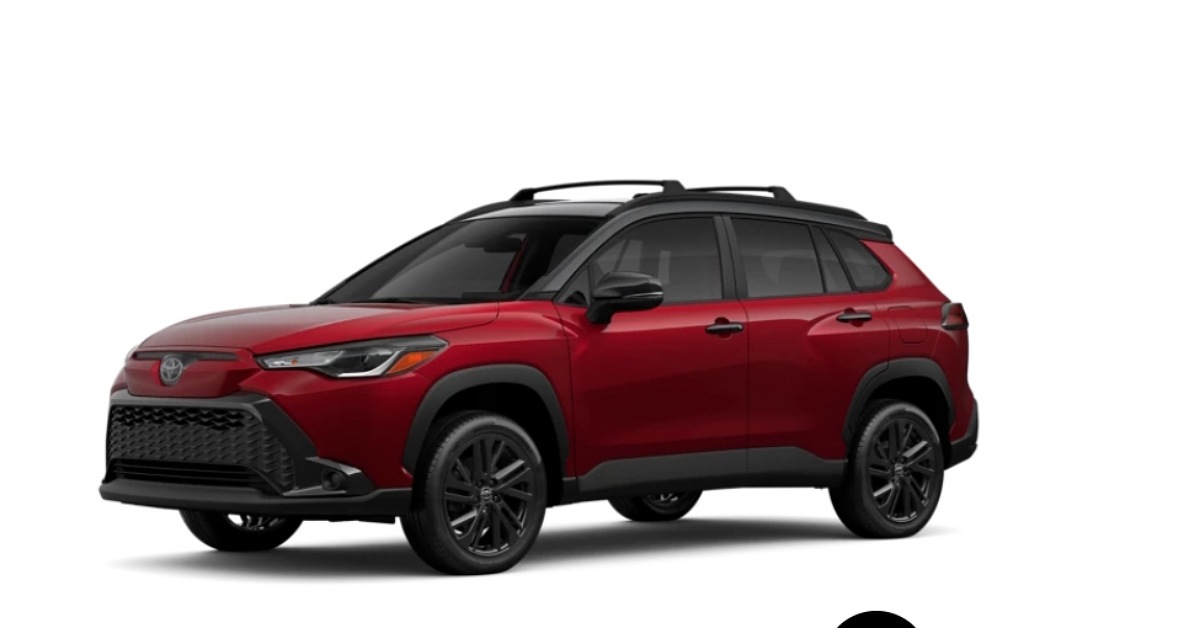
The 2025 Corolla Cross Hybrid presents a thoroughly modern, purpose-built exterior that stands out without screaming for attention. Toyota has balanced aggressive styling with the practical sensibilities that define the brand’s design language.
Front Fascia & Lighting
The front end features Toyota’s current design direction—clean lines, a refined grille, and purposeful headlight shapes. LED headlights and daytime running lights come standard, with optional adaptive headlights available on higher trims. The styling communicates capability without sacrificing approachability, which appeals to first-time crossover buyers and experienced SUV owners alike.
Body Cladding & Proportions
Black body cladding around the wheel wells and rocker panels provides genuine protection while creating visual interest. The Corolla Cross Hybrid maintains a balanced stance—not too tall, not too low—that communicates sure-footedness without appearing ungainly. The overall silhouette feels purposeful, with a slightly raked roofline that improves both aesthetics and aerodynamics.
Alloy Wheels & Exterior Trim
The Corolla Cross Hybrid comes with 17-inch alloy wheels as standard, with 18 and 19-inch options available on premium trims. The Nightshade trim features distinctive black 18-inch wheels that enhance the vehicle’s modern appearance. Two-tone paint ($500 option) adds visual depth, while available roof colors like silver or black offer personality without overwhelming the balanced design.
Paint Options & Personalization
Toyota offers multiple color choices including Silver Metallic, classic black, white pearl, and various gray tones. Higher trims unlock premium paint options that enhance the crossover’s premium positioning. Every color option seems intentional—Toyota isn’t cluttering the palette with every shade imaginable.
Overall Road Presence
Measuring roughly 172 inches long by 69 inches wide, the Corolla Cross Hybrid feels substantial enough on the road without appearing oversize. Ground clearance sits at approximately 8.1 inches—sufficient for light trails and snow without sacrificing ride quality on pavement.
Interior Review: Where Form Meets Function
Step inside the 2025 Corolla Cross Hybrid, and you immediately understand Toyota’s philosophy: practicality trumps unnecessary flash. This isn’t a luxury yacht—it’s a well-organized, comfortable workspace designed for everyday driving.
Dashboard & Infotainment System
The dashboard layout prioritizes clarity and accessibility. A 10.5-inch central touchscreen dominates the dash, supporting Apple CarPlay and Android Auto wirelessly. Select trims feature an available fully-digital 12.3-inch instrument cluster that replaces traditional gauges with customizable displays. The interface responds quickly without overwhelming you with confusing menus—a strength of Toyota’s recent software updates.
Seats & Comfort
Base trims feature standard cloth upholstery in neutral tones. Higher trims (particularly XSE) upgrade to SofTex—Toyota’s durable synthetic leather with contrasting stitching that looks more premium than the price suggests. Heated front seats come on mid-range and upper trims, perfect for cold-weather driving in northern states.
The driver’s seat offers comfortable support for long drives, though the Corolla Cross Hybrid doesn’t coddle you with excessive bolstering. Rear passenger space accommodates average adults comfortably, with 36+ inches of legroom. The 60/40 split-folding rear seat means you’re not locked into passenger-only use—fold one section and you’ve gained a useful flat surface for cargo.
Climate Control & Air Quality
Dual-zone automatic climate control maintains passenger comfort without feeling overly complicated. Standard air filtration keeps cabin air clean, while optional rear ventilation ducts ensure backseat passengers aren’t forgotten. The AC performance impresses—the compact engine and hybrid system don’t rob cooling capacity.
Storage & Connectivity
Front and rear cupholders, door pockets, and front seatback storage provide reasonable organization for daily essentials. An optional wireless charging pad keeps compatible phones powered without cluttering the dash. Standard rear USB ports mean passengers can charge devices, while the optional quick-charge cable package ($70) supports faster charging speeds.
Interior Materials & Build Quality
Toyota uses soft-touch surfaces on the dashboard and steering wheel. The materials don’t feel premium—they feel honest. Fit and finish throughout the cabin reflects Toyota’s manufacturing precision. Panel gaps remain tight, and nothing squeaks or rattles during normal driving. This practical approach to interior quality means you get value without unnecessary cost inflation.
Performance & Driving Experience: Putting Efficiency Into Practice
The 2025 Corolla Cross Hybrid rewrites expectations for what compact SUV buyers should expect from daily driving performance.
City Driving & Maneuverability
In urban environments, the Corolla Cross Hybrid shines. The responsive 196-horsepower hybrid powertrain never leaves you hanging at traffic lights—acceleration feels eager when you need it, not sluggish like competitors. The continuously variable transmission doesn’t exhibit the rubber-band feeling some CVTs produce. Instead, power delivery feels linear and progressive.
Parking involves minimal stress thanks to compact overall dimensions and an available 360-degree camera system. Tight parallel parking, congested parking lots, and narrow urban streets don’t intimidate this crossover. The steering, while light and easy at low speeds, doesn’t completely disconnect from road feel.
Highway Performance & Cruising
Push the Corolla Cross Hybrid onto the highway, and it settles into a refined, quiet demeanor that exceeds expectations for this price point. The hybrid powertrain operates nearly silently during cruising, with minimal cabin noise even at 70+ mph. Wind and tire roar remain acceptable, proving Toyota engineers focused on isolation.
The three-motor hybrid system seamlessly transitions between gas-only driving, hybrid operation, and pure electric propulsion during coasting. Most drivers won’t consciously notice these transitions—they simply enjoy the smooth, refined driving experience. Unlike some hybrids that feel disconnected from the engine, the Corolla Cross Hybrid feels cohesive.
Acceleration & Pickup
Real-world acceleration times confirm the technical data—0-60 in 7.3 seconds places this hybrid comfortably ahead of its non-hybrid sibling (9.2 seconds) and competitive non-hybrid rivals. Merging onto busy highways feels safe and confident, never leaving you planning escape routes around slow-moving traffic.
Power remains available even when you’re not in a hurry. Gentle acceleration away from stops feels smooth, while hard acceleration demonstrates the system’s surprising capability. The hybrid’s electric torque immediately supplements gas-engine power, eliminating the turbo-lag feeling some drivers despise in conventional engines.
Braking & Stopping
Regenerative braking returns energy to the battery during deceleration, improving fuel efficiency while the braking system itself remains responsive and predictable. The 182-foot stopping distance from 70 mph ranks competitively. Brake feel is progressive and confidence-inspiring—not too soft, not overly sensitive. Daily driving doesn’t reveal any braking weirdness or unexpected behavior.
Handling & Suspension
The sport-tuned suspension (available on higher trims) improves cornering behavior without sacrificing ride quality. The Corolla Cross Hybrid corners confidently without excessive body roll, though it’s not a track-ready machine. This balanced approach appeals to drivers seeking responsive handling without sport-car drama.
Road imperfections get absorbed reasonably well. Pothole impacts don’t transmit harsh jolts to occupants, though you remain aware of pavement quality. The overall suspension tuning prioritizes comfort over sport, which aligns with the target audience.
Engine Refinement & Noise
The 2.0L Atkinson-cycle engine remains quiet during operation. At full acceleration, some four-cylinder sounds emerge, but nothing approaches the harsh noise older engines produced. The integrated electric motors operate silently, creating a sophisticated powertrain note that improves the driving experience.
Features & Technology: Connectivity Meets Practicality
The 2025 Corolla Cross Hybrid packs modern technology without requiring a PhD to operate its systems.
Infotainment & Touchscreen Interface
The 10.5-inch central touchscreen (standard) supports wireless Apple CarPlay and Android Auto—a practical inclusion that eliminates fumbling with cables. The interface responds immediately to inputs without lag. Menu structures remain logical, making common functions accessible without diving through endless submenus.
Digital Instrument Cluster Options
Mid-range and upper trims feature available fully-digital 12.3-inch instrument displays. These customizable clusters let you prioritize information like real-time fuel economy, navigation directions, or driver assistance status. The display clarity impresses, with excellent resolution and color accuracy visible even in bright sunlight.
Connectivity Features
Toyota Safety Sense 3.0 comes standard, including adaptive cruise control that maintains safe following distances automatically. The pre-collision system with pedestrian detection provides confidence in busy urban environments. Lane keep assist gently corrects lane drift without feeling invasive.
Convenience Features
Standard features across all trims include a rearview camera, front and rear parking sensors, and wireless charging (Hybrid S trim and above). Optional quick-charge cable packages ensure your devices power up quickly during brief stops. Available sunroof on XSE trim adds open-air freedom without compromising security or headroom.
Audio System Options
Base models feature an acceptable standard audio system. The optional JBL Premium Audio system ($800) significantly improves sound quality with better speakers and tuning, transforming your commute into an enjoyable sonic experience. For audiophiles on a budget, this upgrade justifies its cost.
Climate & Convenience
Heated front seats (on mid-range trims and above) provide welcome warmth during cold mornings. Dual-zone automatic climate control maintains individual temperature preferences for driver and front passenger. Rear ventilation ducts ensure backseat passengers don’t freeze during winter driving.
Safety Review: Protection You Can Count On
Toyota engineers this generation Corolla Cross Hybrid with comprehensive safety features that balance technology with real-world protection.
Toyota Safety Sense 3.0 Suite
Every Corolla Cross Hybrid comes standard with Toyota’s advanced driver-assistance package. This includes autonomous emergency braking with pedestrian detection, lane departure warning, lane keep assist, and adaptive cruise control. These features work together to prevent accidents rather than simply alerting drivers to dangers.
Structural & Occupant Protection
The Corolla Cross Hybrid features impact-absorbing body construction with strategically positioned reinforcements. Dual front airbags protect driver and front passenger, while side curtain airbags extend the full length of the cabin. The 2025 model received improvements to front side curtain airbags to enhance side-impact protection.
Euro NCAP & International Safety Ratings
Euro NCAP testing achieved strong ratings: Adult Occupant protection at 85%, Child Occupant at 80%, Pedestrian protection at 82%, and Safety Assist at 68%. These scores indicate robust structural protection and effective crash prevention technology.
IIHS & NHTSA Assessment
The Corolla Cross Hybrid demonstrates good crash protection in both frontal and side-impact scenarios. The autonomous emergency braking system performs well in testing. Head and neck protection for both driver and passengers ranks as good or adequate across testing scenarios.
Peace of Mind Features
The pre-collision system operates from 5 km/h (city speeds) up to highway speeds, covering the driving environment where most accidents occur. The lane support system includes Emergency Lane Keeping to prevent lane-departure accidents. These aren’t just regulatory compliance features—they actively prevent accidents.
Mileage & Fuel Efficiency: Real-World Economics
The 2025 Corolla Cross Hybrid delivers on the fuel economy promises that attracted you to hybrids in the first place.
EPA Ratings vs. Real-World Performance
Toyota rates the Corolla Cross Hybrid at 45 mpg city, 38 mpg highway, and 42 mpg combined. Real-world highway testing at 75 mph consistently delivers 36 mpg—just slightly below EPA highway rating. This means the official numbers aren’t completely disconnected from actual driving.
City vs. Highway Mileage Comparison
City driving proves most efficient, with many drivers reporting 43-47 mpg during typical urban commutes. Highway mileage drops slightly due to higher speeds and reduced regenerative braking opportunities, though 36-38 mpg remains impressive compared to conventional gas SUVs (which average 26-32 mpg).
Hybrid System Efficiency
The sophisticated hybrid system excels in stop-and-go traffic by recovering braking energy and shutting down the gas engine during coasting. A regenerative braking system captures energy that conventional brakes simply waste as heat. The lithium-ion battery pack stores recovered energy without requiring plug-in charging.
Fuel Cost Projections
At current fuel prices ($3.00-$3.50 per gallon in most regions), expect monthly fuel costs around $200-250 for average drivers (12,000 miles annually). Compare this to non-hybrid Corolla Cross models consuming roughly 29-32 mpg and spending $300-350 monthly—the hybrid saves approximately $1,200-1,800 annually on fuel alone.
Battery Performance Over Time
The lithium-ion battery pack maintains capacity over the vehicle’s lifespan. Toyota includes an 8-year/100,000-mile hybrid battery warranty on the Corolla Cross Hybrid, demonstrating confidence in long-term reliability. Battery degradation typically remains minimal during normal ownership periods.
Price & Variant Details: Choosing Your Configuration
The 2025 Corolla Cross Hybrid arrives in multiple trims accommodating various budgets and preference levels.
Trim Level Breakdown
Hybrid S ($28,395 MSRP)
The entry-level hybrid trim includes the complete hybrid powertrain, 7-inch digital instrument cluster, sport-tuned suspension, and Toyota Safety Sense 3.0 standard equipment. This trim delivers genuine value—you’re not sacrificing hybrid capability for price.
Hybrid Nightshade ($30,640 MSRP)
This distinctive trim adds black exterior accents, 18-inch black alloy wheels, LED lighting with smoked trim, and a more aggressive stance. If you appreciate visual flair alongside practical efficiency, this trim strikes an appealing balance.
Hybrid XSE ($31,580 MSRP)
The top-tier hybrid trim elevates the experience with SofTex-trimmed premium seats featuring contrasting stitching, heated front seats, 19-inch machined alloy wheels, and the sport-tuned suspension. Higher trims unlock more technology and comfort features.
Value Analysis & Recommendations
The Hybrid S trim delivers the best value proposition—you’re getting the full efficiency advantage without paying extra for appearance upgrades or convenience features you might not use. The XSE trim justifies its premium if you prioritize heated seats, premium audio, and higher-end wheels.
Available Packages & Add-Ons
A Convenience Package ($1,250) adds items like power-adjustable heated door mirrors and rain-sensing wipers. The JBL Premium Audio system ($800) significantly improves sound quality. Cold Weather packages bundle heated seats and steering wheels for northern drivers.
Price Positioning vs. Competitors
Starting at $28,395 for the Hybrid S, the Corolla Cross Hybrid undercuts many competitors while offering superior fuel efficiency. Honda HR-V hybrid models command similar pricing, while Subaru Crosstrek hybrids haven’t materialized in the 2025 lineup.
Pros & Cons: Honest Assessment
Every vehicle presents strengths and weaknesses. Here’s the realistic breakdown for the 2025 Corolla Cross Hybrid.
Advantages You’ll Appreciate
The most obvious pro involves fuel efficiency. The 42 mpg combined rating, backed by realistic real-world numbers, saves serious money at the pump. The standard all-wheel drive ($0 extra) eliminates the need to pay for this desirable feature. Many competitors force you into premium pricing for AWD capability.
The 196-horsepower powertrain surprises with genuine performance. Zero to 60 in 7.3 seconds beats most non-hybrid competitors in this class, creating confidence during highway merging and everyday acceleration needs.
Space utilization impresses. Twenty-two cubic feet of cargo capacity behind the rear seats, combined with flexible seating options, accommodates growing families and weekend adventurers equally well. The split-folding rear seat expands versatility.
Toyota’s reliability reputation translates to real ownership peace of mind. The manufacturer backs the hybrid battery with 8-year/100,000-mile warranty coverage. Maintenance costs trend below industry averages for this segment.
The Toyota Safety Sense 3.0 suite comes standard, not as a premium add-on. This comprehensive package prevents accidents rather than simply detecting hazards. Autonomous emergency braking, lane assistance, and adaptive cruise control enhance safety for every driver.
Honest Disadvantages
The interior design prioritizes function over premium aesthetics. Those comparing the Corolla Cross Hybrid to luxury brands will notice the minimalist approach. The cabin feels practical rather than luxurious—appropriate for the price but worth noting.
Steering and handling lack sporting dynamism. The Corolla Cross Hybrid won’t thrill drivers seeking sharp, responsive steering feedback. This reflects the vehicle’s practical DNA—comfort and efficiency supersede driving engagement.
Cargo space doesn’t dominate the subcompact class. While 22 cubic feet works well for typical usage, vehicles like the Subaru Crosstrek offer considerably more expandable space. If hauling large items frequently, examine competitor offerings.
The CVT transmission, while efficient, produces a characteristic “hunting” feeling during hard acceleration—the engine spins up to high RPMs without proportional speed increases. Most drivers adapt quickly, but some find this characteristic annoying.
Base audio systems underwhelm. If you appreciate quality sound, budget for the $800 JBL Premium Audio upgrade. The standard system handles podcasts and audiobooks fine but disappoints music enthusiasts.
Competitors Comparison: How It Stacks Up
The 2025 Corolla Cross Hybrid doesn’t compete in a vacuum. Understanding how it compares to rivals clarifies its positioning.
Toyota Corolla Cross Hybrid vs. Honda HR-V
| Feature | Corolla Cross Hybrid | Honda HR-V |
|---|---|---|
| Combined MPG | 42 (hybrid) | 30 (gas only) |
| 0-60 mph | 7.3 seconds | Approx. 9.8 seconds |
| Standard Drivetrain | AWD standard | FWD standard |
| Horsepower | 196 hp | 158 hp |
| Cargo Space | 22 cu ft | 21.5 cu ft |
| Starting MSRP | $28,395 | ~$27,500-$28,000 |
| Safety Tech | Toyota Safety Sense 3.0 | Honda Sensing |
| Best For | Fuel-conscious drivers | Urban commuters |
The Corolla Cross Hybrid’s primary advantage involves genuine hybrid technology. The HR-V offers no hybrid option, making the Toyota’s 42-mpg rating a significant efficiency advantage. The Toyota’s standard AWD provides confident traction without premium pricing.
Toyota Corolla Cross Hybrid vs. Subaru Crosstrek
| Feature | Corolla Cross Hybrid | Subaru Crosstrek |
|---|---|---|
| Combined MPG | 42 (hybrid) | 27-34 (gas only) |
| 0-60 mph | 7.3 seconds | 7.9 seconds |
| Standard Drivetrain | AWD standard | AWD standard |
| Horsepower | 196 hp | 182 hp |
| Ground Clearance | 8.1 inches | Up to 9.3 inches |
| Cargo Space | 22 cu ft | 54.7 cu ft (rear seats folded) |
| Starting MSRP | $28,395 | ~$28,500 |
| Best For | Fuel efficiency | Outdoor versatility |
The Crosstrek competes primarily through versatility. Its significantly larger cargo space accommodates weekend warriors and outdoor enthusiasts. The Toyota wins on fuel economy and acceleration. Subaru’s reputation for handling and AWD systems appeals to different priorities.
Toyota Corolla Cross Hybrid vs. Mazda CX-30 (Non-Hybrid)
| Feature | Corolla Cross Hybrid | Mazda CX-30 |
|---|---|---|
| Combined MPG | 42 | 29-30 |
| 0-60 mph | 7.3 seconds | Approx. 8.6 seconds |
| Driving Dynamics | Practical/Efficient | Sport-focused |
| Cargo Space | 22 cu ft | 20.2 cu ft |
| Interior Quality | Practical/Functional | Premium/Upscale |
| Starting MSRP | $28,395 | ~$26,000-$27,000 |
| Best For | Efficiency seekers | Premium feel seekers |
The Mazda CX-30 emphasizes driving enjoyment and interior quality. The Toyota Corolla Cross Hybrid dominates on fuel efficiency and real-world performance (acceleration, AWD standard). Price positioning remains comparable, though the Mazda starts lower without hybrid efficiency.
Final Verdict: Is the Corolla Cross Hybrid Worth Buying?
The 2025 Toyota Corolla Cross Hybrid answers the question every modern car buyer asks: “Will this vehicle deliver genuine value?” The answer is yes, though context matters.
Purchase This Vehicle If:
You drive 12,000+ miles annually and prioritize fuel savings over sporty dynamics. Standard all-wheel drive combined with 42-mpg efficiency solves the equation for practical buyers. You want proven Toyota reliability without luxury-brand pricing. The comprehensive warranty coverage and historically low maintenance costs provide financial predictability.
You appreciate straightforward technology without excessive complexity. The infotainment system, safety features, and driver assistance functions work smoothly without requiring complicated setup or constant troubleshooting.
You need versatile cargo space for growing families or active lifestyles. The split-folding rear seats and 22 cubic feet of cargo room accommodate strollers, groceries, weekend luggage, or sports equipment equally well.
Skip This Vehicle If:
You primarily commute short distances with frequent stop-and-start traffic patterns. While the hybrid excels in such scenarios, buyers driving 5-10 miles daily won’t recoup hybrid premium pricing through fuel savings quickly enough.
You prioritize luxury interior materials or cutting-edge design language. The Corolla Cross Hybrid’s interior remains functional and competent—not luxurious. Compare to brands emphasizing premium ambiance if material quality represents your priority.
You demand maximum cargo space. The Subaru Crosstrek and similar vehicles offer substantially more expandable cargo room when rear seats fold. If hauling large items frequently, evaluate those alternatives.
You want driving engagement and responsive steering. The Corolla Cross Hybrid emphasizes efficiency and comfort over driving dynamics. Sports-oriented crossover enthusiasts might feel underwhelmed.
Who Should Buy This Car?
First-time crossover buyers represent the ideal customer. The practical pricing, comprehensive features, and proven reliability reduce purchasing anxiety for newcomers. Young professionals establishing careers find fuel efficiency compelling, especially with rising gasoline costs.
Growing families appreciate the space-to-price ratio. The five-seat configuration, split-folding rear seat, and cargo flexibility handle toys, strollers, and daily family activities without premium-brand pricing.
Commuters seeking financial predictability benefit most from this vehicle. Reliable fuel economy estimates mean you can budget precisely for fuel costs—no guessing or sticker shock at the pump.
FAQs: Questions You’re Probably Asking
Q: Is the 2025 Corolla Cross Hybrid good for families?
A: Absolutely. The five-seat configuration, safety features, and cargo flexibility make it suitable for most family needs. However, larger families or those frequently hauling substantial cargo might benefit from larger SUVs. The Corolla Cross Hybrid handles family trips, school runs, and weekend adventures comfortably. Safety ratings and standard Toyota Safety Sense 3.0 provide family-focused protection.
Q: What is the actual real-world fuel mileage?
A: EPA estimates show 42 mpg combined (45 city, 38 highway). Real-world highway testing at 75 mph achieved 36 mpg consistently. City driving often delivers 43-47 mpg depending on traffic patterns and driving style. Aggressive acceleration reduces efficiency, while gentle driving can exceed EPA estimates slightly.
Q: How much does maintenance cost annually?
A: Average annual maintenance runs approximately $840, totaling $4,200 over five years. This tracks below-industry averages for subcompact SUVs. The Toyota brand’s reliability heritage translates to genuinely lower maintenance costs. Oil changes, filter replacements, and fluid checks dominate early maintenance. Major repairs remain uncommon during the first five years, with an estimated 17% probability of requiring significant work.
Q: Is insurance expensive for this model?
A: Average annual insurance costs approximately $2,594, totaling roughly $12,970 over five years. This price point ranks competitively within the subcompact SUV segment. Shopping around for competitive quotes often yields discounts—many insurers offer reduced rates for safety features and Toyota’s proven safety record.
Q: Can the Corolla Cross Hybrid tow anything?
A: Yes, but carefully. The 1,500-pound towing capacity handles small utility trailers, jet skis, or motorcycles. This capacity doesn’t support large boat trailers or heavy recreational equipment. Exceed the rated capacity and you risk transmission damage and voiding warranty coverage. Always consult your owner’s manual for towing guidelines.
Q: How long will the hybrid battery last?
A: Toyota warrants the hybrid battery for 8 years or 100,000 miles. Typically, degradation remains minimal during normal ownership periods. Real-world data suggests many Corolla Cross Hybrid batteries outlast this warranty period substantially. Environmental temperature extremes and aggressive driving patterns affect longevity most significantly.
Q: Does the Corolla Cross Hybrid require premium gasoline?
A: No, regular unleaded fuel (87 octane) works perfectly. This keeps operating costs lower than vehicles requiring premium fuel. Don’t be tempted to use premium—it provides no benefit and unnecessarily increases fuel costs.
Q: What’s the best trim level value?
A: The Hybrid S trim delivers outstanding value. You get the complete hybrid technology, sport-tuned suspension, and Toyota Safety Sense 3.0 standard without paying for appearance upgrades. Unless you specifically want heated seats or premium audio, the S trim represents the smartest financial choice.
Q: Does it come with Apple CarPlay and Android Auto?
A: Yes, wireless compatibility comes standard across all Corolla Cross Hybrid trims. Simply pair your smartphone once, and the system automatically connects during subsequent trips. No cables required, reducing dashboard clutter and improving user experience.
Q: Is the Corolla Cross Hybrid available with a manual transmission?
A: No, only the continuously variable automatic transmission is offered. The CVT optimizes fuel efficiency and smoothness—essential for achieving 42-mpg combined ratings. Performance-minded drivers might prefer a traditional automatic, but the CVT suits the efficiency-focused mission perfectly.