Truck crashes into South Korea market killing 2, injuring 18. Learn about the incident, safety regulations, and how such accidents can be prevented. Read our comprehensive analysis.
Breaking News: Tragic Truck Accident at Outdoor Market Leaves 2 Dead, 18 Injured
A devastating incident unfolded in Bucheon, South Korea, on Thursday morning when a truck plowed into pedestrians at a bustling outdoor market, resulting in two deaths and eighteen injuries. The tragic accident occurred just before 11 a.m. at the market located near Seoul, serving as a grim reminder of the importance of vehicle safety and crowd management protocols in public spaces.
The truck, driven by a man in his 60s, reversed approximately 28 meters before accelerating forward 150 meters through the market area. Witnesses reported that the vehicle struck multiple pedestrians and eventually crashed into a storefront, causing substantial damage and chaos. Nine of the eighteen injured sustained serious injuries, though officials have not yet confirmed whether any of these injuries are life-threatening. The two victims were pronounced dead at the hospital following the incident.
Understanding the Incident: What Happened During the South Korea Market Crash
The sequence of events leading up to this tragic truck accident reveals critical details about how the incident unfolded. Security camera footage and eyewitness accounts indicate that the truck initially moved in reverse, covering approximately 92 feet before suddenly accelerating in the forward direction. The vehicle then traveled roughly 492 feet through the crowded market space, striking pedestrians continuously along its path.
Police questioned the unidentified truck driver immediately following the incident. Importantly, preliminary investigations revealed that the driver was not under the influence of alcohol or drugs. Instead, the driver claimed that his vehicle experienced a sudden malfunction, a claim that authorities have taken seriously as they continue reviewing security camera footage and conducting a thorough investigation into the mechanical systems of the truck.
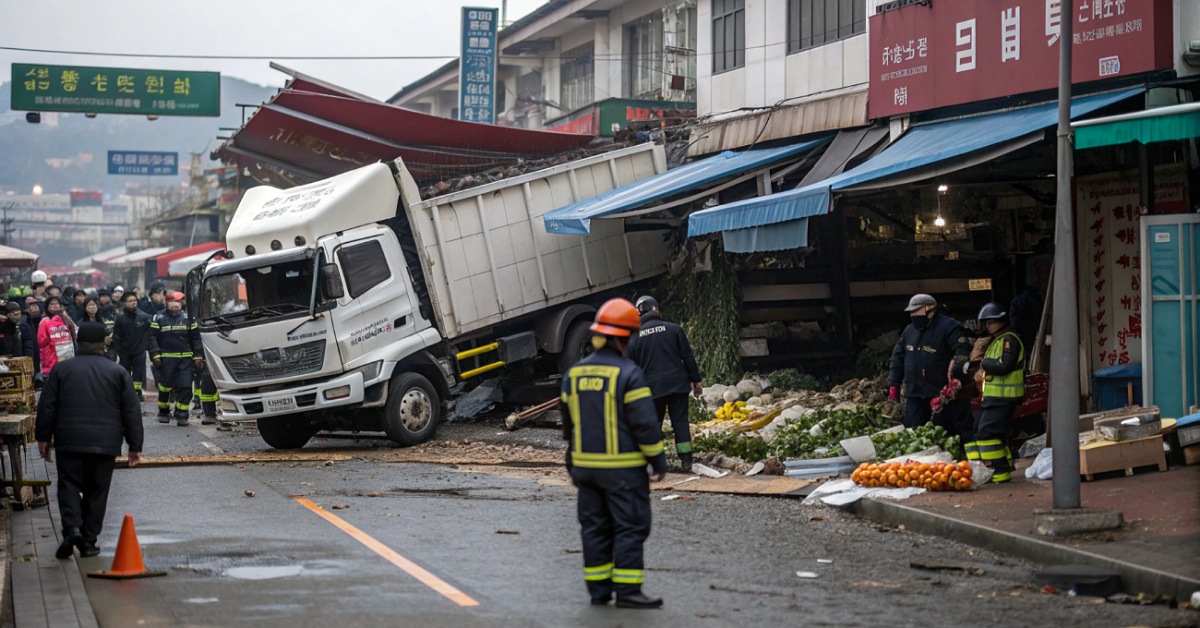
The scene following the accident presented a nightmare scenario for emergency responders. Photographs from the market showed the truck wedged into a storefront surrounded by debris, including toppled boxes, scattered clothing, and broken signboards. The truck’s front left side was severely mangled, and windows were completely shattered. Property damage extended throughout the market, though officials have not yet provided a complete estimate of the financial losses to the marketplace and nearby businesses.
The Investigation: How Authorities Determine Responsibility in Vehicle Accidents
When tragic accidents like this truck crash occur, multiple agencies must work together to determine exactly what happened and why. Understanding the investigation process provides insight into how authorities identify contributing factors and establish accountability. The investigation framework typically involves several critical phases.
Initial Response and Scene Preservation
The first phase of any accident investigation occurs immediately after the incident. Emergency responders must coordinate their efforts to treat injuries, secure the scene, and preserve evidence. In the Bucheon market case, authorities quickly blocked off the area and prevented tampering with the vehicle, which is essential for a credible mechanical inspection. This rapid response ensures that critical evidence remains intact for forensic analysis.
Gathering Witness Statements and Evidence
Investigators conduct interviews with witnesses who observed the accident. These statements are crucial for establishing a timeline of events and identifying any factors that witnesses noticed before the incident occurred. In the South Korea market accident, witnesses provided detailed accounts of the truck reversing and then accelerating, information that corroborated security camera footage.
Vehicle Mechanical Inspection
One of the most important aspects of accident investigations involves a thorough examination of the vehicle involved. Specialists inspect brake systems, steering mechanisms, accelerator controls, and other critical safety components. In this case, authorities removed the truck from the scene specifically to conduct a comprehensive mechanical inspection, examining whether the driver’s claim of vehicle malfunction held merit.
Expert Analysis and Data Review
Advanced accident investigation teams analyze data from multiple sources. Electronic data from the vehicle’s systems, environmental conditions, road conditions, and the sequence of events all contribute to the final determination. This comprehensive approach helps establish whether mechanical failure, driver error, or a combination of factors caused the accident.
Vehicle Safety Regulations: How Standards Protect the Public
Modern vehicle safety standards exist because of decades of accident research and tragedy. Understanding these regulations helps explain why certain safety features are mandatory and how they work to protect both drivers and pedestrians. Governments worldwide have implemented comprehensive frameworks designed to minimize the occurrence and consequences of vehicle accidents.
Federal Motor Vehicle Safety Standards
In the United States, the Federal Motor Vehicle Safety Standards establish minimum safety requirements for all vehicles manufactured for sale. These standards cover three main categories: crash avoidance, crashworthiness, and post-crash survivability. Crash avoidance standards include electronic stability control systems and accelerator control systems, which are directly relevant to incidents like the truck accident in South Korea.
Automatic Emergency Braking Systems
A particularly relevant development in vehicle safety involves automatic emergency braking systems. The National Highway Traffic Safety Administration finalized a rule in April 2024 requiring all passenger cars and light trucks to be equipped with automatic emergency braking systems by September 2029. These systems are specifically designed to reduce rear-end and pedestrian collisions. NHTSA projects that this mandate will save at least 360 lives annually and prevent 24,000 injuries each year.
Automatic emergency braking systems use sensors to detect obstacles in the vehicle’s path and apply brakes without driver intervention if a collision appears imminent. Such technology could potentially have prevented or significantly reduced the severity of accidents like the Bucheon market incident.
Electronic Stability Control and Acceleration Prevention
Electronic stability control systems help prevent vehicles from skidding or losing control during sudden maneuvers. These systems automatically apply brakes to individual wheels to maintain vehicle stability. Additionally, modern acceleration control systems include safeguards against unintended acceleration, a problem that contributed to several high-profile vehicle recalls in previous decades.
Crowd Safety in Public Spaces: Lessons from Market Accidents
Public markets, festivals, and outdoor gathering spaces present unique safety challenges. When vehicles have access to pedestrian areas, the potential for tragedy increases significantly. Understanding crowd management principles and venue safety design becomes critical for preventing accidents similar to the Bucheon market incident.
Crowd Density and Movement Control
Research into pedestrian traffic patterns shows that when crowd density reaches five people per square meter, individuals face significant danger of being trampled or crushed. Event organizers and venue managers must carefully plan pedestrian flow patterns and establish capacity limits to prevent dangerous crowding. In market environments with vehicle access, the challenge becomes even more complex, as planners must separate vehicle traffic from pedestrian areas.
Barrier Design and Pedestrian Protection
Effective barrier systems create physical separation between vehicle traffic and pedestrian zones. Barriers should be positioned to prevent vehicles from entering pedestrian areas while remaining flexible enough to allow legitimate vehicle access for deliveries and emergency services. The design of barriers must account for the fact that vehicles could potentially lose control, even in low-speed situations.
Emergency Preparedness and Response
Markets and public gathering spaces require emergency response plans that account for various scenarios, including vehicle-related accidents. Trained staff must be present to provide immediate assistance when accidents occur. First aid stations, clearly marked emergency exits, and communication systems enable rapid response to emergencies.
Security Personnel and Monitoring
Adequate staffing of trained security personnel allows for real-time monitoring of dangerous conditions. Security teams can identify hazardous situations developing—such as backing vehicles in pedestrian areas—and intervene before accidents occur. The number of security personnel must be sufficient to manage both normal operations and emergency situations.
Mechanical Failure and Vehicle Maintenance: A Critical Factor in Accident Prevention
The driver’s claim that his vehicle experienced mechanical failure raises important questions about vehicle maintenance standards and inspection procedures. While not all accidents result from mechanical problems, maintenance failures can directly cause or contribute to tragic incidents.
Regular Inspection Requirements
Vehicles, particularly commercial trucks used for deliveries and market access, require regular fitness inspections. These inspections verify that brakes function properly, steering systems respond correctly, tires are in safe condition, and other critical components remain roadworthy. Many countries mandate periodic inspections, with test intervals varying based on vehicle age and type.
Preventive Maintenance Schedules
Responsible vehicle operators maintain strict preventive maintenance schedules. Regular servicing includes brake system checks, fluid replacements, and inspection of wear items like tires and pads. When maintenance is deferred or overlooked, the risk of mechanical failure increases dramatically.
Reporting and Recall Procedures
When manufacturers identify defects that pose safety risks, they issue recalls requiring vehicle owners to bring their vehicles for repairs at no cost. Governments maintain databases of recalled vehicles and can order manufacturers to address significant safety issues. These recall procedures provide a mechanism for correcting systematic safety problems before widespread accidents occur.
The Broader Impact: How Communities Respond to Tragic Accidents
When major accidents occur in public spaces, communities mobilize to provide support and implement safety improvements. The South Korea incident prompted immediate action from local officials. Bucheon Mayor Cho Yong-eek announced that the city would support restoration of damaged facilities and conduct comprehensive safety inspections of public spaces.
Additionally, local officials established psychological support services for merchants and witnesses who experienced the traumatic event. Recognizing that accidents leave emotional scars alongside physical injuries, communities increasingly provide mental health resources for affected individuals.
Long-Term Safety Improvements
In the weeks and months following major accidents, communities typically review and update safety protocols. Market operators may implement new vehicle access restrictions, install additional barriers, or reconfigure traffic patterns. These improvements, born from tragedy, often prevent similar incidents from occurring in the future.
Policy Changes and Regulatory Updates
Significant accidents sometimes prompt regulatory changes at municipal, regional, or national levels. Policymakers review the incident, identify systemic weaknesses, and develop new regulations or guidelines to address identified gaps. While such policy changes cannot prevent every accident, they can substantially reduce accident frequency and severity.
Expert Perspectives: What Safety Professionals Say About Market Accidents
Vehicle-related accidents in public spaces are considered preventable with proper planning and preparation. Safety professionals emphasize that crashes do not typically occur by chance but rather result from a combination of factors that, when properly managed, can be controlled.
Security and crowd management experts stress the importance of anticipating and analyzing potential danger spots before accidents occur. By carefully studying venue layouts, traffic flow patterns, and crowd behavior, professionals can predict where dangerous conditions might develop and implement appropriate control measures before incidents occur.
Automotive safety engineers point out that advances in vehicle technology provide increasingly effective tools for preventing accidents. Automatic emergency braking systems, electronic stability control, and other features represent significant progress in making vehicles safer for everyone sharing the road and pedestrian spaces.
Emergency response specialists emphasize that rapid, coordinated response to accidents saves lives. Training emergency personnel to respond quickly and effectively, combined with accessible first aid equipment and clear communication systems, substantially improves outcomes when accidents do occur.
Prevention Strategies: How to Avoid Vehicle-Related Accidents in Public Spaces
While no prevention strategy can eliminate all accidents, evidence-based approaches significantly reduce accident frequency and severity. Market operators, event planners, and public space managers can implement multiple strategies to enhance safety.
Controlled Vehicle Access
Restricting vehicle access to specific times, routes, or designated personnel dramatically reduces accident risk. When vehicles must enter pedestrian areas for deliveries, scheduling these activities during low-traffic periods and requiring spotters or safety personnel minimizes the potential for collisions.
Clear Signage and Traffic Control Devices
Visible signage indicating vehicle traffic areas, pedestrian-only zones, and emergency routes helps everyone navigate spaces safely. Traffic cones, barriers, and directional markings provide additional guidance and create physical separation between incompatible traffic types.
Training and Safety Protocols
All personnel operating vehicles in public spaces must receive training on safe driving practices in those specific environments. Drivers should be familiar with the layout, understand where pedestrians might be present, and know emergency procedures to follow if control is lost.
Technology Integration
Modern vehicles can be equipped with cameras, proximity sensors, and other technologies that alert drivers to nearby pedestrians or obstacles. Integrating these technologies into vehicles routinely accessed to public spaces provides an additional layer of protection.
Regular Safety Audits
Market operators and facility managers should conduct periodic safety audits, reviewing accident records, near-miss incidents, and safety protocols. These audits help identify weaknesses before accidents occur and provide opportunities for continuous improvement.
Moving Forward: The Importance of Continued Safety Vigilance
The tragic accident in Bucheon serves as a sobering reminder that public safety requires constant attention and improvement. While vehicle-related accidents at markets and public spaces are relatively rare events when considered statistically, each incident represents a significant tragedy for affected individuals and families.
Communities, government agencies, vehicle manufacturers, and facility operators must work collaboratively to enhance safety. Investment in better vehicle technology, improved facility design, enhanced training, and robust emergency response procedures all contribute to a safer environment for everyone.
The two lives lost in the Bucheon market accident will not be forgotten, and the injuries suffered by the eighteen other victims highlight the human cost of unsafe conditions. By learning from this incident, implementing evidence-based safety practices, and remaining vigilant about potential hazards, communities can work toward preventing similar tragedies in the future.
Regular review of safety protocols, investment in updated technology, and commitment to continuous improvement represent the best approach to reducing vehicle-related accidents in public spaces. While perfection is impossible, meaningful progress is achievable through dedicated effort and systematic attention to safety.
Conclusion
The truck accident in Bucheon, South Korea that claimed two lives and injured eighteen others represents a significant tragedy with important lessons for public safety professionals worldwide. The incident highlights the critical importance of vehicle safety regulations, crowd management protocols, and rapid emergency response procedures. Communities and facility operators must remain vigilant about identifying and addressing potential safety hazards before accidents occur. By implementing evidence-based prevention strategies, investing in protective technologies, and maintaining rigorous safety standards, societies can work toward minimizing the occurrence of such devastating incidents. Share your thoughts on vehicle safety and public space design in the comments below, and don’t forget to share this important safety story on social media to raise awareness among your networks.