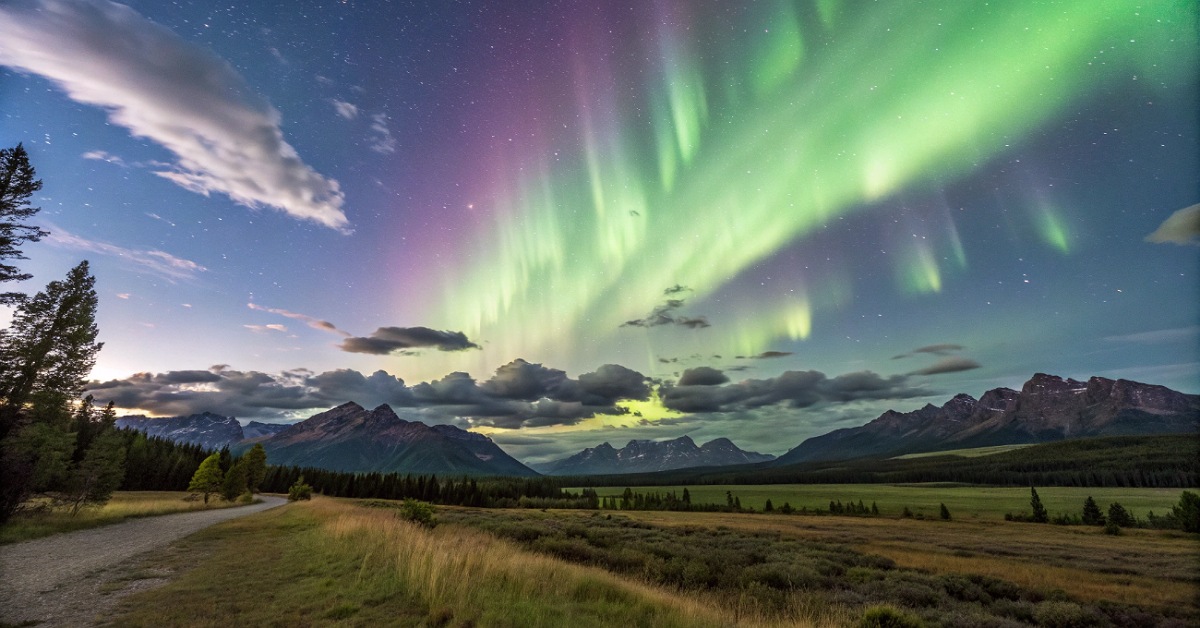
A powerful geomagnetic storm has created one of the most spectacular celestial shows of 2025, bringing the northern lights to states that rarely, if ever, witness this magical phenomenon. On November 11-12, the aurora borealis painted skies across the United States in vibrant shades of green, pink, purple, and even rare crimson red, captivating viewers from coast to coast.
The stunning display was visible as far south as Florida, Texas, Alabama, and even parts of Southern California, marking one of the most unusual aurora events in recent memory. Residents in states like Ohio, Illinois, Colorado, and Indiana captured breathtaking photographs of the dancing lights, while social media exploded with images from locations where the northern lights are almost never seen.
What Sparked This Rare Celestial Event
The extraordinary light show resulted from a series of powerful solar explosions that sent massive bursts of energy hurtling toward Earth. Scientists identified three separate coronal mass ejections (CMEs) launched from an exceptionally active sunspot region designated AR4274.
The most powerful eruption occurred on November 11, when the sun unleashed an X5.1-class solar flare, the strongest recorded in 2025 and the most intense since October 2024. This monster flare triggered radio blackouts across Europe and Africa and sent a colossal wave of charged particles racing toward our planet at speeds approaching 1,500 kilometers per second.
The National Oceanic and Atmospheric Administration (NOAA) issued a G4 “severe” geomagnetic storm watch, the second-highest level on their five-point scale. Some forecasters even warned of potential G5 “extreme” conditions, which could push the aurora even farther south.
Understanding the Science Behind the Northern Lights
The northern lights occur when electrically charged particles from the sun collide with gases in Earth’s atmosphere, creating a natural light display that has captivated humans for millennia. When these solar particles slam into oxygen and nitrogen molecules in our atmosphere, they excite the atoms, causing them to emit light in stunning colors.
Green, the most common aurora color, comes from oxygen atoms approximately 60 to 150 miles above Earth’s surface. The rare red auroras seen during this event occur at even higher altitudes, where oxygen produces scarlet hues during particularly energetic storms. Purple, blue, and pink shades result from nitrogen molecules reacting to the solar particles.
Earth’s magnetic field plays a crucial role in creating auroras by funneling charged particles toward the north and south magnetic poles. During severe geomagnetic storms, the magnetic field becomes disturbed, allowing the aurora to extend much farther from the poles than usual, sometimes reaching latitudes as low as the southern United States.
Where Americans Saw the Northern Lights This Week
According to NOAA forecasts and viewer reports, the aurora was visible across at least 17 to 21 states on the night of November 11-12. The list included traditional northern viewing locations like Alaska, Minnesota, Wisconsin, and Michigan, but also extended to surprising southern locations.
States where the northern lights were confirmed visible included Washington, Montana, North Dakota, South Dakota, Wyoming, Idaho, Oregon, Nebraska, Iowa, Illinois, Indiana, Ohio, New York, Vermont, New Hampshire, and Maine. Even more remarkably, sightings were reported from Colorado, Texas, Oklahoma, Kansas, Missouri, Maryland, New Jersey, Massachusetts, and parts of the Southeast.
Florida residents captured particularly stunning images near Titusville, Winter Park, Tampa, and across the Panhandle. In Texas, viewers spotted the lights in areas around Dallas, Fort Worth, Austin, and Houston. Chicago, Nashville, Phoenix, Los Angeles, San Francisco, and Sacramento also had potential viewing opportunities.
The best viewing locations were in areas with minimal light pollution, far from city lights, with clear skies and unobstructed views to the north. Dark sky parks, rural areas, and locations near bodies of water provided ideal vantage points.
When to See the Northern Lights Tonight
Space weather forecasters predicted that another strong geomagnetic storm would impact Earth on November 12-13, offering Americans a second chance to witness the spectacular aurora displays. The third and fastest CME from the X5.1 solar flare was expected to arrive midday on November 12, potentially triggering G3 to G4 storm conditions overnight.
According to NOAA, the best viewing times for the northern lights on November 12-13 were expected to be between 7 p.m. and 10 p.m. Eastern Time, with strong G3-level storming possible. Additional opportunities could occur from 10 p.m. to 4 a.m. Eastern Time, with moderate G2-level activity forecast.
Space weather experts noted that the aurora could be visible as soon as it gets dark, so watchers were encouraged to keep an eye on the sky throughout the evening. The lights typically appear most vibrant within an hour or two of midnight.
NOAA also issued forecasts for subsequent nights, with G1 “minor” geomagnetic storm conditions expected through November 14. However, the intensity was predicted to gradually decrease after the peak on November 12.
What Makes This Solar Storm Different
This geomagnetic storm ranks among the strongest of Solar Cycle 25, the current 11-year period of solar activity that began in December 2019. The G4 severe storm that occurred overnight on November 11-12 marked the third strongest geomagnetic disturbance of this solar cycle.
What made this event particularly unusual was the potential for multiple CMEs to combine or “cannibalize” each other as they traveled through space. When faster CMEs catch up with slower ones, they can merge into an even more powerful solar storm, amplifying the effects on Earth’s magnetic field.
The X5.1 solar flare that triggered the most recent CME was nearly five times more powerful than the two preceding X-class flares from November 9 and 10. Solar flares are categorized on a scale where each letter represents a tenfold increase in energy, with X-class being the most powerful. The number following the X indicates the flare’s intensity within that class.
Scientists also detected a rare “Ground Level Event” associated with this solar activity, where highly energetic protons from the sun penetrated deep into Earth’s atmosphere, reaching ground level. These events occur only once or twice per solar cycle and can increase radiation exposure for passengers on high-altitude flights.
How Geomagnetic Storms Affect Technology and Infrastructure
While the northern lights create a beautiful spectacle, severe geomagnetic storms can pose significant risks to modern technology and infrastructure. The charged particles and magnetic disturbances can disrupt critical systems that millions of people rely on daily.
GPS navigation systems are particularly vulnerable during geomagnetic storms because the disturbances alter the density and distribution of the ionosphere, the upper atmospheric layer that GPS signals must pass through. This can lead to positioning errors ranging from a few feet to several miles, affecting everything from smartphone navigation to agricultural equipment that uses GPS-guided systems.
Power grids face another serious threat from geomagnetically induced currents (GICs) that flow through transformers and transmission lines during storms. These currents can cause transformers to overheat and circuit breakers to trip, potentially leading to widespread blackouts. The famous 1989 Quebec blackout, which plunged the entire province into darkness for hours, resulted from a geomagnetic storm.
Radio communications, especially high-frequency (HF) systems used by aviation, maritime operations, and emergency services, can experience severe disruptions during geomagnetic storms. The ionospheric disturbances can make radio propagation sporadic or even impossible in some areas.
Satellites in orbit also face increased risks during solar storms, as radiation can damage sensitive electronics and increased atmospheric drag can alter their orbits. Space agencies and power companies monitor space weather forecasts closely and can take protective measures when storms are predicted.
How to Capture Northern Lights Photos With Your Smartphone
Photographing the northern lights with a smartphone has become increasingly possible thanks to advances in camera technology and night mode features. Modern iPhones and Android devices can capture surprisingly impressive aurora images if you know the right settings and techniques.
The most critical requirement for northern lights photography is stability. Use a tripod or place your phone on a solid surface to prevent any movement during the exposure. Even slight hand tremors can blur the image, turning vibrant aurora displays into green smudges.
Enable Night Mode on your smartphone, which is available on iPhone 12 and later models as well as many Android devices. This mode optimizes camera settings for low-light conditions and allows for longer exposures that capture more light from the aurora. Turn off your flash completely, as it will ruin your shot and disturb other aurora watchers nearby.
Adjust your shutter speed to between 5 and 15 seconds to allow enough time to capture the aurora’s movement without creating star trails. Set your ISO between 800 and 1600, increasing it if the aurora appears faint, though higher ISO values can introduce more noise into your images.
Manually focus to infinity or tap on a distant light source and lock the focus to ensure the aurora and stars appear sharp. Use a timer or remote shutter release if available to avoid touching the phone when taking the photo.
Some photographers recommend shooting in RAW format if your phone supports it, as this preserves more image data and provides greater flexibility for editing later. Your phone camera may actually reveal aurora colors that aren’t visible to the naked eye, since digital sensors can gather more light than human eyes.
Understanding the KP Index and Aurora Forecasts
The KP index serves as the primary tool for predicting northern lights activity and measuring geomagnetic storm intensity. This planetary index ranges from 0 to 9, with higher numbers indicating stronger geomagnetic disturbances and greater likelihood of aurora visibility at lower latitudes.
At KP 0-2, the aurora remains far north near the magnetic poles, appears dim, and shows little activity. For KP 3-5, the lights move farther from the poles, become brighter, and display more motion and formations across the sky. When the index reaches KP 6-7, auroras become bright and active enough to potentially be visible from the northern edge of the United States, including cities like Seattle and Chicago.
The most spectacular displays occur at KP 8-9, when the aurora moves much closer to the equator and creates the most active, photogenic oval displays visible directly overhead from northern U.S. states. During the November 11-12 geomagnetic storm, KP values reached severe G4 levels, equivalent to approximately KP 8.
However, scientists caution that the KP index has significant limitations for aurora hunting. Because it represents a three-hour average of global geomagnetic activity from 13 observatories worldwide, it can miss brief but spectacular auroral substorms that last only 10 to 30 minutes. These short bursts often produce the brightest northern lights displays even when the global KP index remains relatively low.
For more accurate aurora forecasting, experts recommend using NOAA’s Space Weather Prediction Center website, which provides real-time 30-minute forecasts and aurora view lines showing where the lights may be visible. Popular smartphone apps like “My Aurora Forecast & Alerts,” “Hello Aurora,” “Aurora Alerts,” and “Space Weather Live” offer location-based predictions and push notifications when aurora activity increases in your area.
Why 2025 Is an Exceptional Year for Northern Lights
The spectacular aurora displays witnessed in November 2025 are part of a broader trend of increased solar activity as the sun approaches solar maximum, the peak of its roughly 11-year activity cycle. Scientists predicted that Solar Cycle 25 would reach its maximum around July 2025, creating ideal conditions for frequent and intense northern lights displays.
During solar maximum, the number of sunspots on the sun’s surface increases dramatically, and these active regions become the source of powerful solar flares and coronal mass ejections that trigger geomagnetic storms. The current solar cycle has actually exceeded initial predictions, with sunspot activity running approximately 40% higher than Solar Cycle 24 at the same point in the cycle.
Astronomers note that the peak of solar activity will likely continue through at least the end of 2025 and into early 2026, offering numerous additional opportunities to witness the northern lights. The sun’s elevated activity means geomagnetic storms will occur more frequently, and auroras may be visible at lower latitudes than usual.
For aurora enthusiasts, this represents a once-in-a-decade opportunity to witness some of the most spectacular displays possible. The next solar maximum won’t occur until the mid-2030s, making 2025 and early 2026 particularly special years for northern lights viewing.
Safety and Viewing Tips for Aurora Watchers
While geomagnetic storms don’t pose any direct biological risk to people on Earth thanks to our protective atmosphere and magnetosphere, there are important considerations for those hoping to view the aurora.
Find a viewing location away from city lights with minimal light pollution for the best experience. Rural areas, dark sky parks, national parks, and locations near large bodies of water often provide excellent vantage points. Face north for the best view, though during severe storms the aurora can appear in multiple directions or even overhead.
Check the weather forecast before heading out, as clouds can completely obscure the lights. Clear, dark skies are essential for aurora viewing. Allow at least 20 to 30 minutes for your eyes to adjust to the darkness, which will help you see fainter auroral displays.
Dress warmly in layers, especially during winter months, as aurora watching often involves standing or sitting outside for extended periods in cold weather. Bring a thermos with a hot beverage, blankets, and hand warmers for comfort during long viewing sessions.
Be patient and persistent, as auroras can be unpredictable. The lights may come and go in waves, with quiet periods followed by sudden bursts of intense activity. Some of the best displays occur after midnight, so be prepared to stay up late for the most spectacular shows.
Looking Ahead: More Northern Lights Coming
Space weather forecasters anticipate continued elevated geomagnetic activity through mid-November 2025, with additional opportunities to see the aurora across the northern United States. While the intensity will likely decrease from the peak G4 severe storm levels, moderate G2 and strong G3 conditions could still produce visible auroras for northern states.
Scientists monitoring the sun have identified multiple active regions capable of producing additional X-class flares and CMEs in the coming days and weeks. The European Space Agency is actively tracking this severe space weather event and collecting detailed information from expert service centers across the globe.
For those who missed the spectacular displays on November 11-12, patience and persistence may be rewarded with additional viewing opportunities as Solar Cycle 25 continues toward its peak. Downloading an aurora forecast app and enabling notifications can help ensure you don’t miss the next big show.
The northern lights remind us of the dynamic connection between the sun and Earth, demonstrating how solar activity 93 million miles away can create one of nature’s most breathtaking displays right in our own backyard. As this current solar cycle unfolds, Americans have unprecedented opportunities to witness this celestial magic without traveling to the Arctic Circle.